
Clover Seed for Lawns
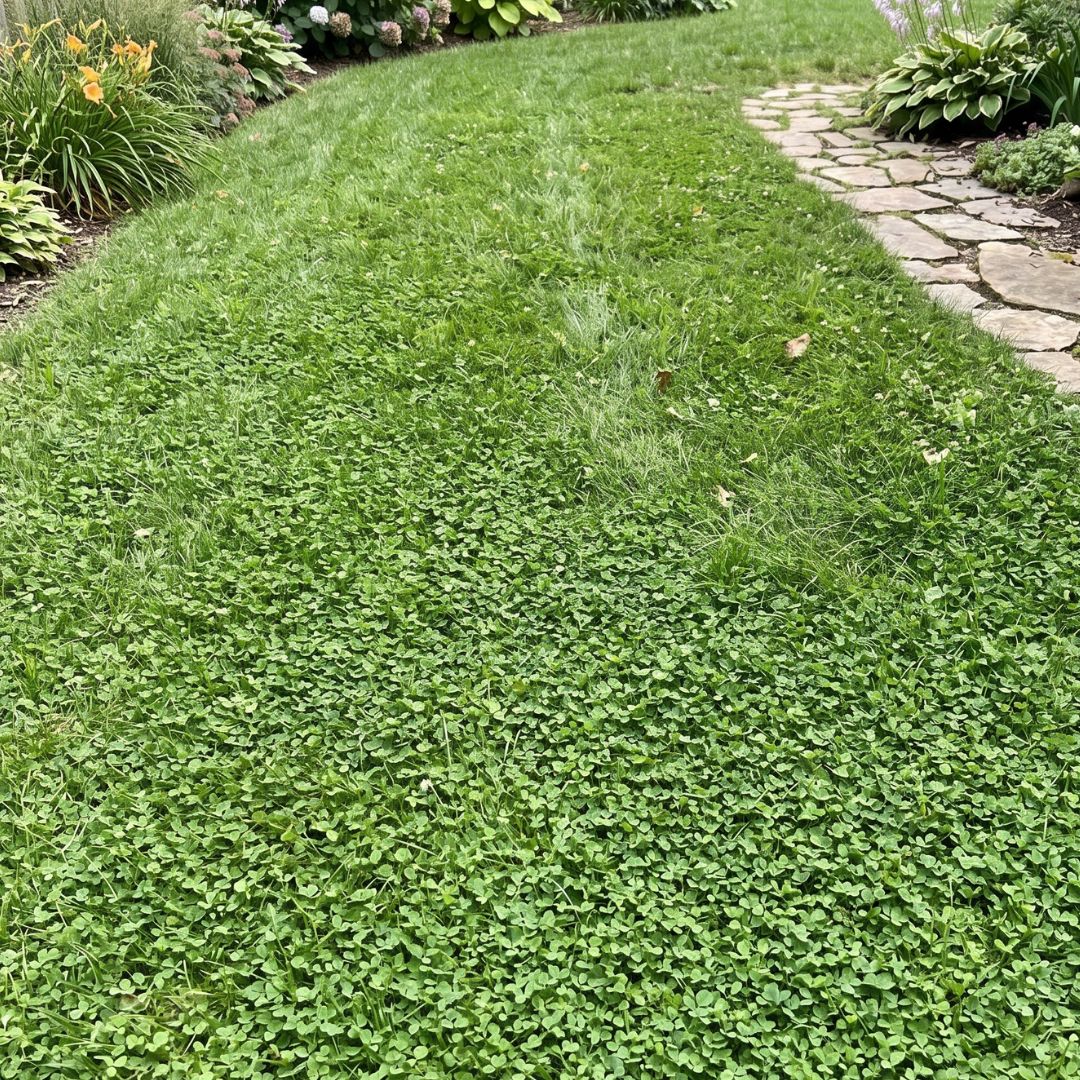
A lawn that feeds itself, needs mowing once or twice a year, and stays green through drought. Two decisions shape it: how often you’re willing to mow, and whether you’re ready to stop fertilising.
Sizing
Tell us your square footage
Plan the whole yard in one order — add a row per space and give each its own product: MicroTurf across the open lawn, pure fescue under the tree, CloverSport on the kids’ run. Every bag is sized from its product page’s coverage table.
Overseeding an existing lawn? You need roughly half the seed — the calculator adjusts when you switch.
The two decisions
How often do you want to mow, and will you stop fertilising?
Everything else on this page follows from these two answers, and the second one is where most clover lawns are won or lost.
Count last season’s mows
Not what you intended to do — what you actually did. A conventional lawn in most of the US gets cut twenty to thirty times a year. Write the real number down.
| Mows per year | What works | What will fail |
|---|---|---|
| 0–2 | Clover with a fine fescue base | Pure clover — it looks unkempt unmowed |
| 4–8 | Micro clover blended into grass | — |
| Weekly, and it must look conventional | Micro clover only — invisible at mow height | Full-size white clover — visible bloom |
| Weekly, and you want visible flowers | White Dutch clover | Micro clover, which barely blooms |
The distinction in the last two rows matters more than people expect, and it is the single commonest source of disappointment with clover lawns. More below, where the two sit side by side.
The fertiliser question
Clover fixes its own nitrogen through Rhizobium leguminosarum root nodules, which convert atmospheric nitrogen into a form the plant can use. UMD Extension documents white clover’s contribution as equivalent to roughly 100 lb of nitrogen per acre per year under good conditions — one to two standard fertiliser applications, produced by the lawn itself.
That is the entire point of a clover lawn. But it only works if you stop feeding.
Nitrogen fertiliser grows grass fast, and fast grass outcompetes clover. A fertilised clover lawn reverts to a grass lawn within two seasons, and you will have paid for clover seed to produce a conventional lawn.
One detail worth knowing: our micro clover is pre-inoculated with live Rhizobium bacteria. That means nitrogen fixation begins in the first season rather than whenever the right soil bacteria happen to find the roots. Uninoculated clover seed can take two or three years to start fixing meaningfully, or never, in soil that has been heavily treated.
And the sun test
Five checks across a clear day — 9am, 11am, 1pm, 3pm, 5pm. Count the ones where direct sun lands on the ground rather than filtered light. Multiply by two.
Micro clover needs three hours minimum. Fine fescue, which forms the base of the mix, is the most shade-tolerant cool-season grass and works down to the same three hours — so the mix as a whole has one threshold rather than two.
Does clover grow in shade is asked nearly 1,200 times a month, and the honest answer is: not below three hours. Between three and six it does well.
Below three hours the clover thins, the grass takes over, and the lawn gradually becomes a poor fescue lawn rather than a clover one. → Shade lawn seed
Before you sow
Why clover lawns disappoint
Four causes. Three you can fix before you sow.
Still fertilising
The commonest one by a wide margin. Feed the lawn, the grass surges, the clover thins, and by year two you have a grass lawn that cost more than grass seed. It usually happens by habit rather than by decision — a spring feed applied because that is what one does in spring.
Fix: stop completely. Not reduce — stop. The clover is the fertiliser now, and it needs the nitrogen deficit to have an advantage over the grass.
Not enough sun
“Minimum 3 hours of direct sun daily required. In full shade under dense tree canopy, clover thins and disappears.” Clover in two hours germinates and establishes, then slowly loses ground to the grass over two or three seasons. Like most slow failures, it is rarely connected back to the cause.
Fix: three hours, or fine fescue on its own in the shaded parts. A lawn can be micro clover in the open and pure fescue under the tree — they are the same fescue, so the transition is invisible.
Clover sown alone on bare soil
Clover does not form a dense enough surface by itself. Sown alone on bare ground it establishes in patches with visible soil between them, and weeds occupy that soil before the clover closes it. Clover spreads by stolons — stems running along the surface that root where they touch — so it does close eventually. It is the first season that catches people.
Fix: a fine fescue base with clover through it. The grass gives structure and immediate cover; the clover gives nitrogen, drought tolerance and softness. This is what MicroTurf is.
The one we cannot fix: in Zone 8 and above, the fescue base browns every summer
“Fine fescue goes semi-dormant in summer heat above Zone 7b.” The lawn will look tired through July and August and recover in autumn, every year. That is the species behaving normally, not the sowing failing, and no seed quality changes it.
You can still have a clover lawn in Zones 8 and 9 — the clover holds through heat better than the fescue does — but the grass component will idle every summer and the lawn will be thinner in August than in May. If you want a lawn that stays uniformly green through a southern summer, this is the wrong product and we would rather say so now than have you discover it in your first July.
Choose your clover lawn
The clover and grass mix — the base
MicroTurf · micro clover + fine fescue blend · 3+ hours · Zones 3–9 · from $35 per 1,000 sq ft at the XL bag.
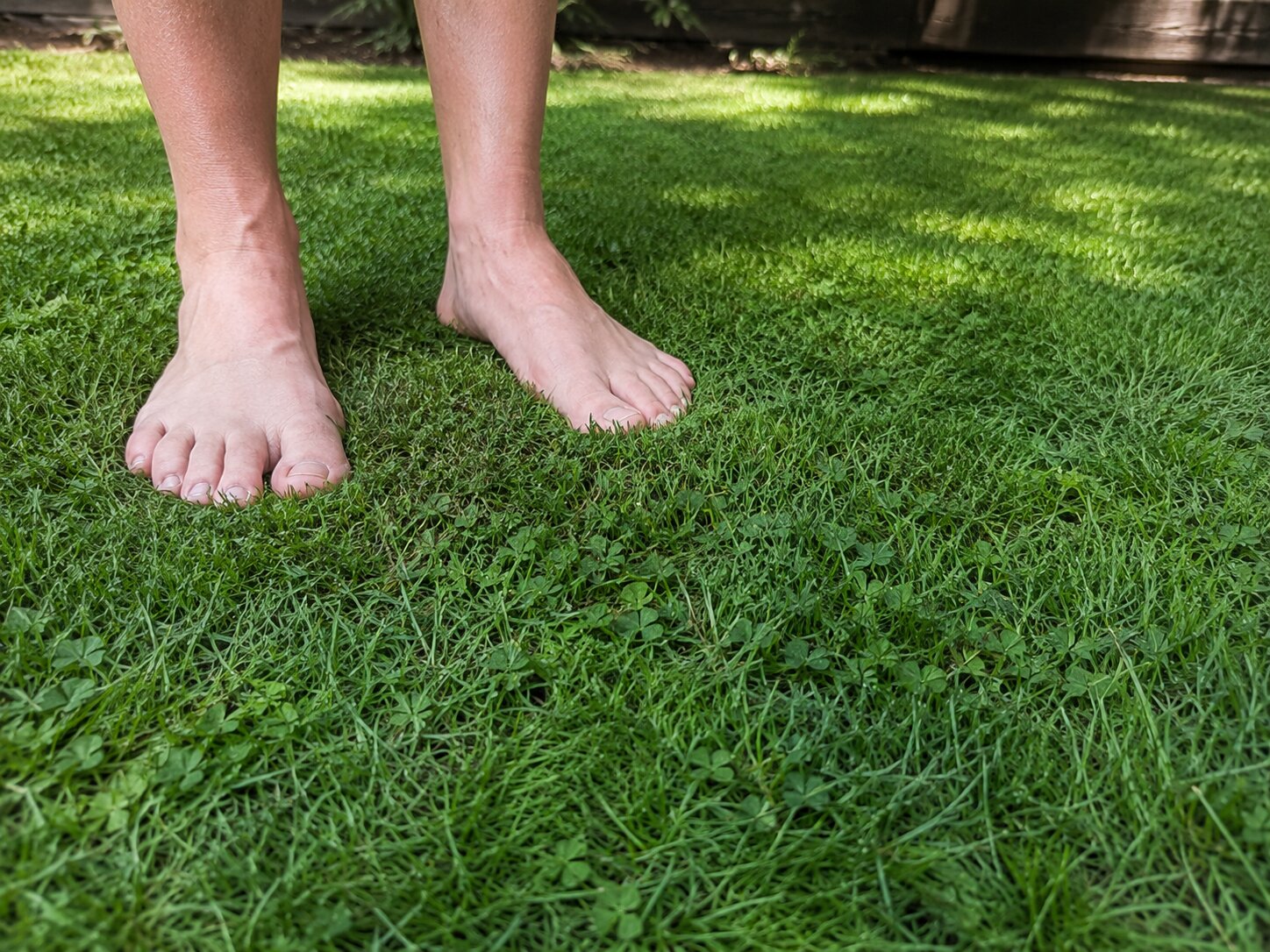
“The primary use case. A no-mow lawn mix that looks and functions like a conventional grass lawn. Fine fescue tops out at 3–5 inches unmowed; MicroClover stays invisible at mowing height. Mow 0–2 times per year or leave entirely.”
Two components doing two jobs:
| Component | Species | Role |
|---|---|---|
| Fine fescue blend | Creeping red, chewings and sheep fescue | Structural backbone. Naturally low-growing at 3–5 inches, fine-bladed, dark green. Shade tolerant to 3 hours. Drought tolerant once established. No nitrogen input required |
| Micro clover | T. repens dwarf, pre-inoculated | Nitrogen fixation. 2–4mm leaves, invisible at mow height. Weed suppression through density. Stolon self-repair. Pollinator support at low bloom frequency |
Three fescue species rather than one, because each covers a different weakness — creeping red spreads by rhizome and self-repairs, chewings holds the most shade, sheep fescue takes the poorest soil.
Rated Excellent for three distinct uses: a no-mow lawn with conventional appearance, eliminating synthetic fertiliser, and part shade down to three hours — “the best eco-mix for lawns under light tree canopy or north-facing aspects.”
| Bag | Price | New lawn | Overseeding | Per 1,000 sq ft |
|---|---|---|---|---|
| Tiny Bag | $6.99 | 65 sq ft | 130 sq ft | $108 |
| Small Bag | $7.63 | 130 sq ft | 260 sq ft | $59 |
| Medium Bag | $12.25 | 270 sq ft | 540 sq ft | $45 |
| Large Bag | $49.26 | 1,325 sq ft | 2,650 sq ft | $37 |
| XL Bag | $95.52 | 2,700 sq ft | 5,400 sq ft | $35 |
Choose your clover lawn
Micro clover on its own
FineFolio · pure micro clover · 3+ hours · Zones 3–9 · 2–4 in unmowed · $7.49 / 125 sq ft overseeded → $319.99 / 10,000 sq ft.
“Primary use case: overseeding into existing grass lawn. No turf removal needed. Broadcast, rake lightly, water. Full integration in one season.”
For adding clover to a lawn you already have rather than starting over — which is the cheapest route into a clover lawn by a wide margin, and the one most people should take.
Micro clover is a dwarf cultivar of Trifolium repens, the same species as white Dutch clover, bred for 2–4mm leaves against 8–15mm, lower growth and reduced bloom. NC State’s Plant Toolbox documents it as blending with turfgrass at a leaf scale smaller than a typical grass blade — effectively invisible in a mixed lawn. UMN Extension notes that fine-leaf cultivars integrate more seamlessly with existing grass than standard white clover, significantly reducing visual detectability.
The nitrogen benefit is identical to white clover. Same species, same Rhizobium relationship, same roughly 100 lb per acre per year. The difference is entirely visual.
Also rated Excellent for pet-friendly lawns — ASPCA confirmed non-toxic, soft underfoot, handles moderate pet traffic. “Overseed worn patches each spring.”
Also available pelleted, which suits broadcast spreaders and larger areas. The pellet coating adds weight, so the seed carries rather than drifting, and it holds a little moisture in the germination zone. Choose raw for hand-sowing small patches or border strips; pelleted for anything you would use a spreader on.

Choose your clover lawn
Harder-wearing options
CloverSport · high-traffic clover and grass · 3+ hours · $39.99 / 1,000 sq ft
“Built for daily foot traffic. Handles dogs, children, regular foot traffic.”
Perennial ryegrass germinates in 5–7 days for immediate cover, with tall fescue and clover establishing behind it. Choose this over MicroTurf where the lawn takes genuine daily use — children, dogs, a route across the garden.
StrawberryField · strawberry clover · 4+ hours. The only clover in our range rated High for foot traffic, and it tolerates saline and alkaline soil that defeats white clover. Useful near paths that get salted in winter, or in coastal gardens.
PlayGuard · “built for the lawns that take the most abuse” — wear-tolerant fescue plus self-repairing clover.
MicroTurf or GroundKeep — which mix?
The two are close and people choose wrong. Directly from the comparison:
| MicroTurf — fescue + micro clover | GroundKeep — fescue + white Dutch | |
|---|---|---|
| Clover leaf | 2–4mm | 8–15mm |
| Visible at mow height | No — blends invisibly | Yes — visible leaves and bloom |
| Bloom | Minimal, HOA-compatible | Moderate, May–September |
| Nitrogen fixation | High | Moderate |
| Pollinator value | Good | Excellent |
| Best for | HOA-compatible eco-lawn, lawn-like appearance | Maximum pollinators, visible bloom |
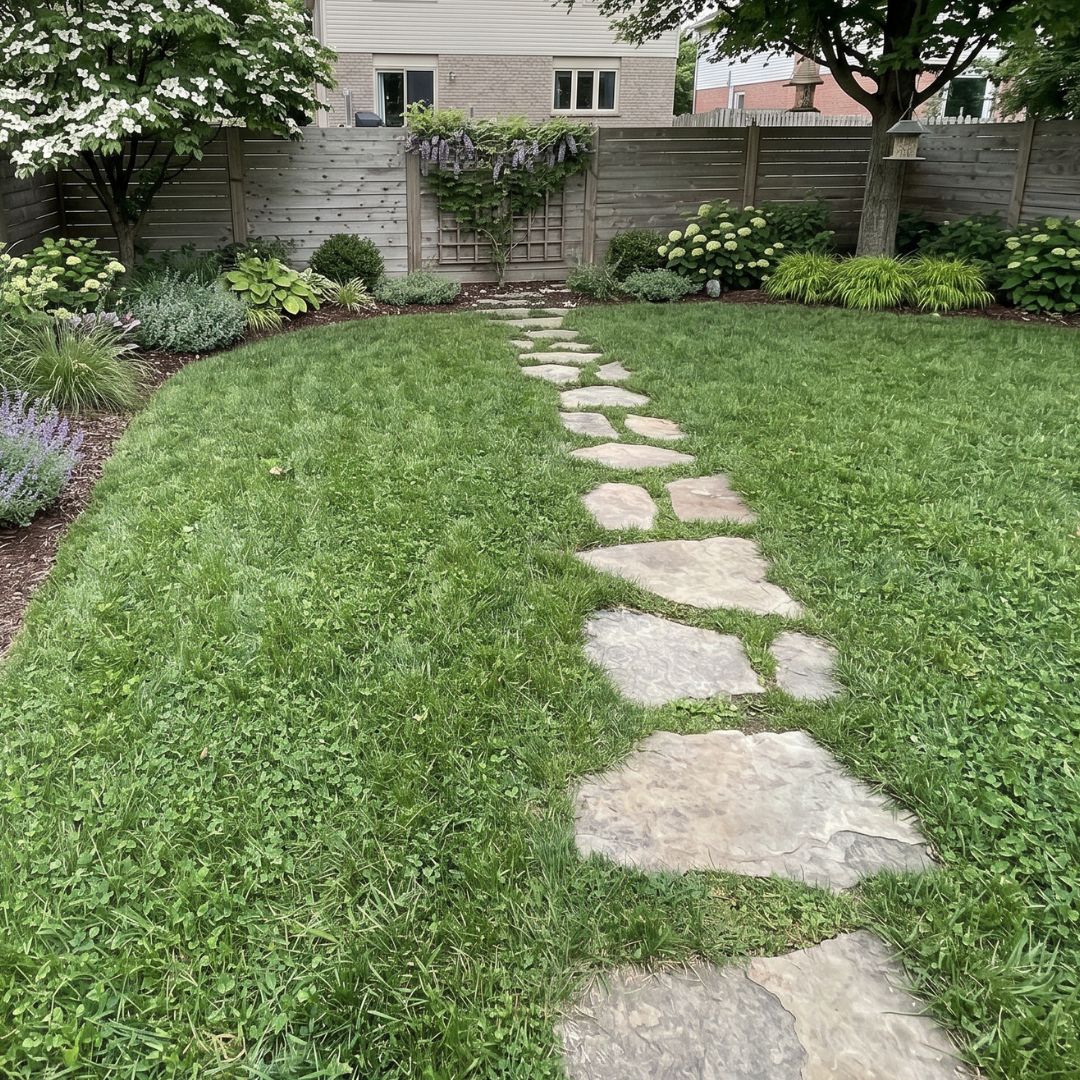
If you want a lawn that looks like a lawn, MicroTurf. If you want the bees and do not mind seeing the clover, GroundKeep — it runs $6.99 for 60 sq ft up to $35.15 for 1,250, a near-identical ladder to MicroTurf with the bloom turned on. → White clover lawn seed
Also worth knowing: TrialTray — four ground cover types side by side on a small patch, “so you can see which establishes best in your soil, light, and climate before buying for the whole area.” $14.99, and the sensible first purchase for anyone genuinely unsure.
The kits
One order, the whole lawn
Each kit is the clover-grass base, a companion clover for depth, a flowering accent and a small bag of repair mix. Untick anything you don’t want — the total updates.
Why the accents. Self-heal and English daisy sit at ground level between the grass and flower at and below four-inch mow height. They add bloom without adding height, and both are mow-tolerant in a way most flowering species are not. One bag covers a typical lawn regardless of size, because they are sown thinly across the whole area rather than in proportion to it.
Why the repair mix. Bare patches appear in year one on any new lawn — where water pooled, where a pet dug, where the seed washed. Fixing them in the first season stops weeds occupying ground the clover has not yet reached, and it is the cheapest intervention available.
Larger areas cost less than half the small-area rate per square foot — the Whole Lawn kit runs $50 per 1,000 sq ft against the Starter’s $114. Most of that saving happens between the smallest and mid-range bags rather than at the top of the ladder.
How to plant
How to plant a clover lawn
How to plant clover lawn and how to grow a clover lawn are asked 1,310 times a month between them. Here is the whole method. Both species germinate in 7–14 days at soil temperatures of 50–65°F. Micro clover comes first at 7–10 days; fine fescue follows at 10–14. That staggering is normal and it is what makes week two look wrong — see the expectations section.
For a new lawn on bare soil
- Prepare. Rake smooth and firm lightly. Remove existing vegetation and weeds — both species are slower than annual weeds, and a clean seedbed in the first season is the largest single factor in whether it establishes.
- Broadcast at the surface. Sow evenly. Do not bury — both fine fescue and micro clover need light contact with the soil surface to germinate.
- Rake lightly. A single pass with a leaf rake. Enough for contact, not enough to cover.
- Water lightly and consistently. Two light waterings a day for 7–14 days. Do not let the surface dry between waterings — this is the step that fails most often, and a single hot dry day at day five can cost the whole sowing.
For overseeding an existing lawn
The cheaper and easier route, and the one most people should take.
- Scalp-mow to 1–1.5 inches and remove the clippings. This is the critical step. Seed has to reach soil, and a normal-height lawn with clippings left on it will not let it through.
- Dethatch if there is a thick layer. Rake it out so the surface is open.
- Broadcast at roughly half the new-lawn rate.
- Rake lightly, then water as above.
- Hold mowing for 4–6 weeks while the seedlings establish.
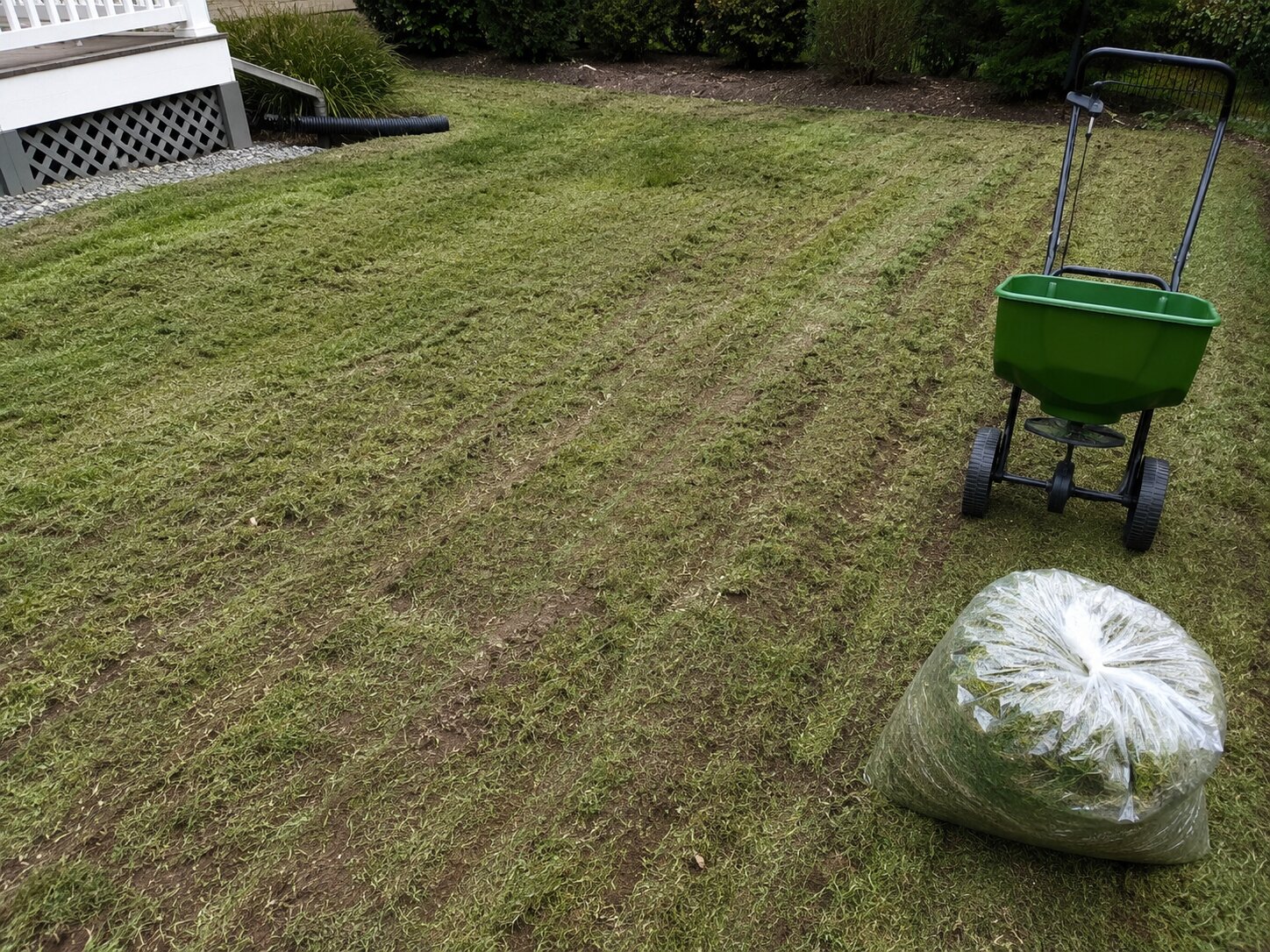
Full integration takes one season. You will see clover through the grass by the end of the first summer.
When to sow
Autumn beats spring in most zones
Soil at 50°F is the trigger. Autumn wins for three reasons: soil is warm while air is cooling, autumn rain does much of the watering, and roots establish before the plant faces its first summer.
| Zone | Window | Notes |
|---|---|---|
| 3–5 | Apr–May or Aug–Sep | Either works. Soil at 50°F. Spring sowing works well here — the autumn window is short and the summer is not punishing |
| 5b–7 | Aug–Sep preferred | Peak performance band. Autumn gives the strongest first-season establishment |
| 7b–8 | Spring, or early autumn | Marginal — fine fescue goes semi-dormant above Zone 7b; expect the summer rest period |
What to expect
Week two looks wrong. It isn’t.
The staggered germination is why: clover is up and fescue is not, so the lawn appears thin and uneven with visible soil between clumps. Both species are exactly on schedule.

On appearance in year one: the micro clover will be more visible in the first season than it ever will be again. Young plants are proportionally larger against sparse grass. As the fescue thickens, the clover disappears into it — which is the whole design.
Questions
What people ask before buying
How do I plant a clover lawn?
The planting section above has the full method for both new lawns and overseeding. The two things people get wrong are burying the seed — it needs light and surface contact — and fertilising at sowing, which grows grass that outcompetes the clover you just planted.
How do I grow a clover lawn?
Same method. The thing that separates success from failure is not technique but restraint: stop fertilising, do not use weed-and-feed, and let the lawn be slightly hungry so the clover has an advantage.
Does clover grow in shade?
Not below three hours of direct sun. Between three and six hours it does well — fine fescue is the most shade-tolerant cool-season grass and micro clover tolerates part shade comfortably.
Below three, the clover thins and the grass takes over. Use fine fescue on its own there.
When should I plant clover seed?
April–May or August–September, when soil reaches 50°F. Autumn is better in Zones 5b through 8; spring works well in Zones 3–5.
Is clover safe for dogs?
Yes. ASPCA Animal Poison Control lists Trifolium repens as non-toxic to dogs, cats and horses. Dogs grazing on it is normal and harmless.
It is also soft underfoot and self-repairing, which matters more for a dog lawn than the safety question does — clover fills worn patches by stolon without needing reseeding.
Does clover spread?
Yes, by stolons — stems that run along the soil surface and root where they touch. This is why a clover lawn self-repairs worn patches without reseeding, and why clover sown in patches eventually joins up.
It spreads sideways rather than seeding around, so it fills a lawn without escaping into beds the way seeding species do.
Is clover good for your lawn?
It fixes nitrogen so the lawn feeds itself, stays green in drought when grass browns, suppresses weeds through density, and feeds pollinators. It needs no fertiliser and half to none of the mowing.
The trade-off is appearance: it is a different-looking lawn. Micro clover exists precisely because some people want all of those benefits without the look, and it delivers the same nitrogen at a quarter of the leaf size.
How long does clover take to grow?
Germination in 7–10 days, a usable lawn by week six, full density in season two. Micro clover overseeded into existing grass integrates fully in one season.
Will clover take over my lawn?
In a mix, no — fine fescue and clover reach a stable balance and hold it. Clover dominates only where the grass is weak, which usually means shade, compaction or drought stress.
If clover is taking over, it is telling you something about the grass.
Do I still need to mow?
Once or twice a year if you want. Fine fescue tops out at 3–5 inches unmowed. You can also mow it weekly for a conventional look — micro clover stays invisible at standard mowing height either way, so the choice is entirely aesthetic.
What is the difference between micro clover and white clover?
Same species, different cultivar. Micro clover has 2–4mm leaves against 8–15mm, grows to 2–4 inches unmowed against 6–8, and blooms minimally rather than freely May to September.
Nitrogen fixation is identical — they are the same plant with the same root bacteria. Choose by how visible you want the clover to be.
Will it attract bees?
Micro clover blooms far less than white clover, so it supports pollinators at a much lower rate. If bees are the point, choose white Dutch clover or a dedicated bee lawn.
Is clover a weed?
It was a standard ingredient in American lawn seed mixes until the 1950s, valued for nitrogen fixation, drought tolerance and soft texture. It was reclassified as a weed when broadleaf herbicides came to market and everything broadleaf needed to be defined as a problem.
Penn State, UMN and UMD Extension all document white clover as an appropriate low-maintenance lawn component. The agronomy never changed; the marketing did.
Can I overseed clover into my existing lawn?
Yes, and it is the cheapest way in. Scalp-mow to 1–1.5 inches, remove clippings, broadcast at half rate, rake lightly, water twice daily for a week, and hold mowing for four to six weeks. Full integration in one season, no turf removal.
Why buy from us
Pre-inoculated seed, honest thresholds, real sources
Non-GMO, USA-grown seed. Pre-inoculated clover — live Rhizobium leguminosarum on the seed, so nitrogen fixation begins in the first season rather than whenever the right bacteria find the roots. Three fescue species rather than one, each covering a different weakness. Coverage stated in square feet on every product, and sizing by area rather than by bag.