
Lawn Alternatives
A lawn you mow once or twice a year instead of every week. The question is not whether it works — it’s how little mowing you’ll actually accept, and whether the look suits you.

Sizing
Size your lawn
Add a row per area — the open lawn, the bank, the shaded strip — and give each its own product. Every bag is sized from its product page’s coverage table.
The defining question
How little mowing will you actually accept?
Everything follows from this, and the honest version of the question includes what the lawn will look like in July.
Count last season’s mows
A conventional lawn gets cut twenty to thirty times a year. Write down what you actually did, not what you meant to do.
Then decide what you’ll accept when it’s long
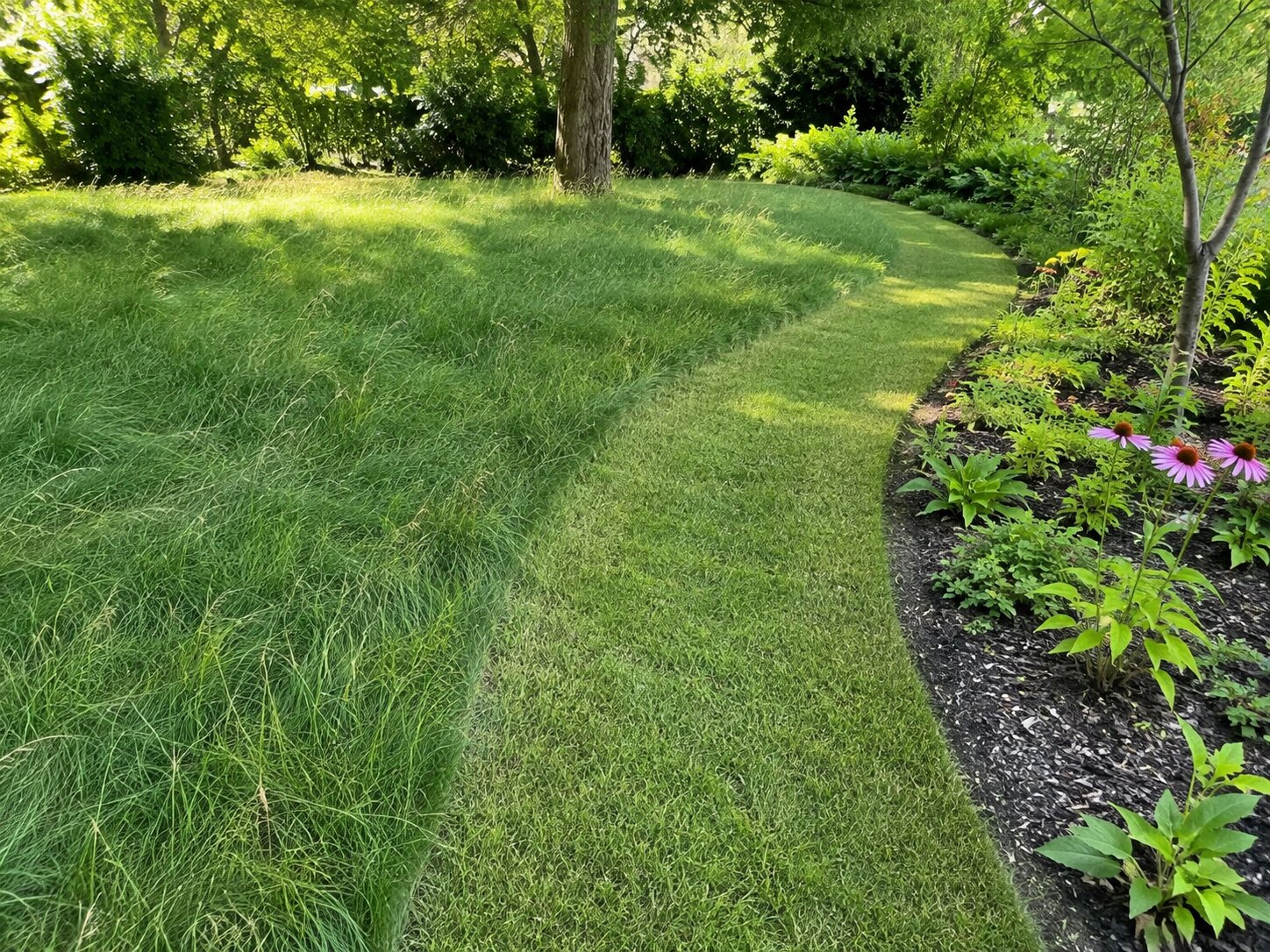
An unmown fine fescue lawn reaches 6 to 12 inches and drapes rather than standing upright. It moves in wind. It reads as meadow at the edges. Some people find it the most beautiful thing in the garden. Some find it untidy. There is no version of this product that gives you the first without risking the second.
| What you’ll accept | What works | What will fail |
|---|---|---|
| Never mow, 6–12 inches | No-mow fine fescue blend | Any conventional grass |
| Once or twice a year, 4–6 inches | Fine fescue, clover-fescue mixes | — |
| Monthly, conventional look | Micro clover in fine fescue | Pure no-mow fescue — it wants to be long |
| Weekly, striped | Nothing on this page | Every product here |
And the zone check
This matters more here than on any other page.
| Zone | Rating |
|---|---|
| 3–6 cool | Excellent — the primary range, north of roughly 37°N |
| Pacific Northwest | Excellent — the climate matches fine fescue closely |
| Western mountain | Excellent — mid-elevation aspen woodland to just below timberline |
| 7b–9 hot | Not recommended |
Fine fescue is a cool-season grass. Hot climates with long warm summers suit warm-season species this mix does not contain. If you are in Zone 8 or 9, say so now: what you want is a warm-season lawn, and we do not make a good one. → Ground cover chooser
Before you sow
Why no-mow lawns fail
Sown in the wrong window
The most preventable failure, and our own establishment guidance is unambiguous: “Do not seed between mid-May and mid-August — summer heat halts germination and warm-season weeds outcompete newly emerging fescue seedlings.” That is a three-month blackout. If it is June, wait — sowing now wastes the seed rather than delaying the lawn.
Fix: autumn, August 20 to October 20. Cooler temperatures, fewer competing weeds, and natural autumn moisture doing most of the watering. Spring, March 15 to May 15, is a workable second.
Weeds not cleared first
“Existing weed competition is the most common reason for poor first-season establishment.” Fine fescue is deliberately slow-growing — that is why it stays short. Weeds are not. Sowing into uncleared ground gives them a head start they never surrender.
Fix: till lightly, let the weeds germinate, kill them, then sow. Or apply a non-selective herbicide and observe the withdrawal period. It adds three weeks and saves the planting.
Heavy or wet soil
“Avoid heavy clay soils or consistently moist areas.” This mix is built for the opposite — “particularly well suited to low-fertility, dry, sandy or rocky soils where conventional grasses thin or fail.” Hard and sheep fescue in particular thrive in ground most lawns struggle with, and drown in ground most lawns like.
Fix: a clay-specific mix, or improve drainage before sowing. ClayBreak is the heavy-clay blend.
The one we cannot fix: it looks unkempt to some people
At 6 to 12 inches a no-mow lawn drapes and moves. It does not look like a conventional lawn and it is not trying to. If your neighbours, your partner or your covenant expect stripes, no seed quality changes that.
Buy a mower-friendly fine fescue and cut it monthly instead. You will still use 50–75% less water, still apply no fertiliser, and still keep the peace. We would rather sell you the mowable version than sell you the no-mow version and have you mow it anyway.
Choose your no-mow lawn
The base — five fescues, five jobs
NoMowLawn · five-species fine fescue blend · 3+ hours · Zones 3–7 · $36.99 / 1,000 sq ft → $174.99 / 10,000 sq ft · from $17 per 1,000 sq ft.
Most “no-mow” mixes are one or two fescues. This is five, and each covers a weakness the others have:
| Species | Habit | Role |
|---|---|---|
| Hard fescue | Bunch-forming | Primary drought resistance — the most drought-tolerant fine fescue. Thrives in dry, rocky or sandy soil. Excellent wear tolerance. Slow growing, low nitrogen demand |
| Sheep fescue | Bunch-forming | Poor-soil resilience — tolerates infertile dry soils where other fescues thin. Fine blue-green texture. Very low nitrogen demand |
| Chewings fescue | Bunch-forming | Shade performance — the densest bunch-former in shade. Upright, fine-bladed, highest shade tolerance of the bunch types |
| Red fescue | Slow-creeping | Sod infill — rhizomes spread slowly between the bunch grasses to knit the stand into a continuous, weed-resistant sod. Softens the texture |
| Creeping red fescue | Creeping | Self-repair — fills bare patches, including those created by tree surface roots |
Why the mix rather than one species. Bunch-forming fescues are tough and drought-hardy but grow in clumps with gaps between them. The two creeping types fill those gaps and knit the stand into a continuous sod. Together you get drought tolerance and a closed surface — neither habit delivers both alone.
Key figures: grows to 6–12 inches unmowed, forming a soft draping carpet. Deep roots to 9 inches — which is where the drought tolerance and the no-fertiliser claim both come from. A root system that deep reaches moisture and nutrients a 2-inch bluegrass root never sees. No nitrogen fertiliser, ever. 0–2 mows a year, or none. Zones 3–7, ASPCA non-toxic.
Rated Excellent for four uses: no-mow eco-lawn, shade under open canopy, dry sandy or rocky soil, and hard-to-mow areas — “the five-species blend creates a dense, self-repairing sod on slopes. 0–1 mow per year means less equipment on difficult terrain.” That last one is underrated. The best case for a no-mow lawn is often the bank you currently mow with a strimmer while standing at an angle.
Choose your no-mow lawn
Under trees and north-facing
The same mix, and it is one of its strengths: “Thrives in full sun to moderate shade. Particularly well suited under open-canopy trees — oak, hickory, elm, ash, birch, white pine. Creeping Red rhizomes fill bare patches created by surface roots.”
Below two hours it stops working — “no grass species performs in true deep shade under dense Sugar Maples or solid conifers.”
Note the distinction: open canopy — oak, ash, birch — works. Dense canopy — sugar maple, solid conifer — does not. Look up before you decide which you have. → Shade lawn seed for the sub-two-hour answer.
Choose your no-mow lawn
Replacing a conventional lawn
Removing the existing lawn is most of the work, and there are two routes.
Full replacement. Clear the turf, prepare, sow. Better result, more effort, and the only way to get a genuine no-mow surface — you cannot convert a bluegrass lawn to fine fescue by overseeding, because the bluegrass keeps growing and keeps needing mowing.
Overseeding. Sow into thinned existing grass. Less work, slower transition, and the result is a mixed lawn rather than a fescue one. It works better with a clover-fescue mix than pure fescue. → Clover lawn seed
Be realistic about which you are doing. Overseeding fine fescue into a healthy conventional lawn produces a conventional lawn with some fescue in it, and you will still be mowing weekly.
Adding flowers
Fine fescue on its own is green. A flowering layer sown through it gives bloom without losing walkability — self-heal, English daisy and yarrow all tolerate mowing at four inches. → Flowering lawn seed
Climate-specific alternatives
Where NoMowLawn’s profile does not fit: NorthGuard — cold northern sites · XeriKeep — low-water and xeriscape gardens · SaltGuard — coastal exposure · ClayBreak — heavy clay, which NoMowLawn explicitly avoids · PrairieBlue and RootNative — warm-season natives for full sun.
The kits
Two tiers, honestly
There is no Starter tier, and the reason is honest: NoMowLawn’s smallest bag covers 1,000 sq ft, so a 400 sq ft kit would cost more than the 1,000 sq ft one. If your area is under 1,000 sq ft, buy the Standard kit — stored cool and dry, the leftover seed stays viable for a second season’s patching.
Each kit is the fescue base, a flowering accent and repair seed.
Method
How to establish a no-mow lawn
Germination takes 1–2 weeks. The preparation matters far more than the sowing.
- Remove all existing weeds. “Prepare a site free of weeds before seeding.” Till lightly, let the weeds germinate, then kill them before sowing — or apply a non-selective herbicide and observe the withdrawal period. This step decides the outcome. Everything else on this list is routine.
- Prepare a firm, smooth seedbed. Loam or sandy soils work well; avoid heavy clay and consistently moist areas. Rake to a fine surface free of clumps over an inch across.
- Broadcast evenly. Use a broadcast or drop spreader for anything over a few hundred square feet — five species of different seed size do not distribute evenly by hand.
- Cover lightly. ⅛ to ¼ inch of soil, using a rake or seeding drag. This is one of the few products here that is lightly covered rather than surface-sown, because fescue seed is larger than clover or thyme.
- Roll to firm soil contact. A lawn roller earns its hire over any real area.
- Water lightly and consistently until germination, then reduce sharply. Established fine fescue needs very little — UMN Extension documents fine fescue lawns as requiring 50–75% less water than Kentucky Bluegrass.
First year
Mow once at four inches in late spring if it looks untidy while establishing. From year two, zero to two mows a year or none at all.
Never remove more than one-third of the total leaf height in one cut. If it has reached 12 inches and you want it at 6, do it in two passes a fortnight apart.
Do not fertilise. Ever. Fine fescue has a very low nitrogen demand and feeding it grows weeds and encourages the taller, softer growth that flops.
When to sow
The narrowest window on this site
And the most important thing on the page.
| Window | Dates | Quality |
|---|---|---|
| Autumn | Aug 20 – Oct 20 | Best. Cool temperatures, few weeds, natural moisture |
| Spring | Mar 15 – May 15 | Good second option |
| Summer | mid-May – mid-Aug | Do not sow. Heat halts germination; warm-season weeds win |
If you are reading this in June, order now and sow in late August. Sowing in July does not delay the lawn — it loses the seed.
What to expect
The summer rest is not drought damage
Fine fescue grows actively in spring and autumn and rests in summer. It will look tired in July and recover in September, every year, for the life of the lawn.

That is the species working as designed, not the lawn failing. Nobody warns people about this, and it is almost certainly the commonest reason a successful no-mow lawn gets declared a failure in its first August. The lawn is not dying. It is doing what a fine fescue lawn does, and it is using a fraction of the water a green-through-August bluegrass lawn would demand to stay green. Do not water it back into growth. Let it rest.
Questions
What people ask before buying
What is a no-mow lawn?
A lawn of fine fescue species that reach 6–12 inches and stop, so it can be left uncut or mown once or twice a year. It uses no fertiliser, needs 50–75% less water than conventional turf, and roots to around 9 inches — which is where both of those come from.
How do I create a no-mow lawn?
Clear the existing vegetation and weeds completely, prepare a fine seedbed, sow in autumn, water until germination. The method section has the detail. The weed clearance is the step people skip and the step that decides it.
How do I make a no-mow lawn from an existing lawn?
You have to remove the existing grass. Overseeding fine fescue into healthy conventional turf gives you a conventional lawn with fescue in it — the bluegrass or ryegrass keeps growing at its own rate and you keep mowing.
Is No Mow May good for your lawn?
For pollinators, yes — a month of uncut grass provides forage when little else flowers.
For the lawn itself it is neutral to mildly harmful: conventional grass grows long, then gets cut back hard, and removing more than a third of the leaf height at once stresses it. A permanent no-mow lawn is the year-round version and avoids that shock entirely.
Is No Mow May bad for your lawn?
Only in the cutting. Six inches of growth taken back to two in one pass removes far more than a third of the leaf area. Cut it in stages a fortnight apart, or plant something built to be long.
Is clover a good lawn alternative?
Yes, and often better than pure fescue — it fixes its own nitrogen and stays green longer in drought. Most of our no-mow kits include it, and a clover-fescue mix is the more forgiving choice if you are not certain about the no-mow look.
What are the alternatives to a traditional grass lawn?
Fine fescue for a lawn that stays a lawn. Clover for softness and self-feeding. Creeping thyme for flowers and fragrance in full sun. Moss for deep shade. Sedge for dry shade under trees.
Which one depends on your light and how much you walk on it.
How often do I really need to mow?
Zero to two times a year. Many people mow once in late spring to tidy it and leave it otherwise. You can mow it monthly if you prefer a shorter look — it simply will not need it.
Will it look messy?
It will look different. At 6–12 inches it drapes and moves rather than standing upright.
Mown edges and a cut path through it make the difference between reading as deliberate and reading as neglected. That single detail changes most people’s reaction, and it costs two passes with a mower a year.
How much water does it need?
50–75% less than Kentucky Bluegrass once established, per UMN Extension. In practice most established no-mow lawns in Zones 3–7 need no supplemental irrigation at all in a normal year.
Does it work in shade?
Down to about two hours of direct sun, and it is particularly good under open-canopy trees — oak, hickory, elm, ash, birch, white pine. Under dense sugar maple or solid conifer, no.
Can I walk on it?
Moderately. Hard fescue has excellent wear tolerance and the creeping species self-repair, but this is not a play lawn. For daily traffic, a clover and ryegrass mix handles it better.
Why buy from us
Five species, honest zone ratings
Non-GMO, USA-grown seed. Five fescue species rather than one or two, each contributing a different tolerance — drought, poor soil, shade, sod infill and self-repair. An honest zone rating, including the zones where we tell you not to buy it. And a stated sowing blackout, because a bag sold in June is a bag wasted.