
Lawn alternatives in Tennessee
From the Smokies to the Mississippi, Tennessee straddles the transition zone — cool-season east, warm-season west.
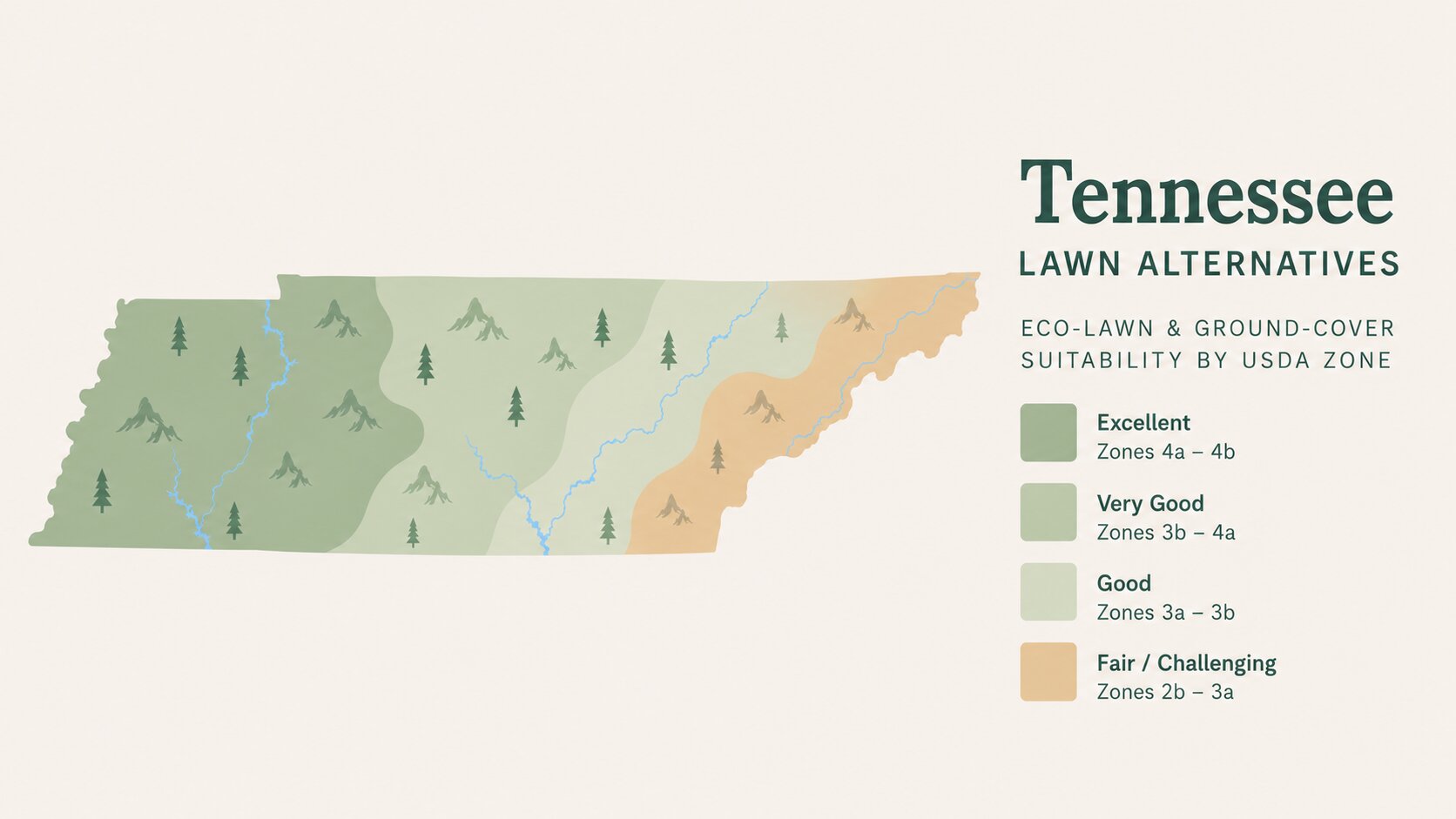
The short version
Tennessee sits in USDA zones 6a–8a. Below: the low-input lawns that genuinely suit the state’s climate, an honest note on what doesn’t, and where to go next — all matched to verified species data.
Know your zone first
Tennessee stretches across the turf transition zone. Per the 2023 USDA Plant Hardiness Zone Map and University of Tennessee Extension, the state spans zone 6a in the high Smokies to 8a around Memphis — Nashville sits in 7a–7b, Knoxville around 7a.
From the cool Appalachian mountains and Cumberland Plateau in the east, across the Nashville Basin, to the warm, humid Mississippi bottomlands in the west, the climate warms as you move west. That puts Tennessee squarely where both cool- and warm-season species have a place.
| Part of state | USDA zones | Representative cities |
|---|---|---|
| East TN Valleys & Smokies | ~6a–7b | Knoxville, Chattanooga, Johnson City |
| Cumberland Plateau & Highland Rim | ~6b–7a | Cookeville, Crossville |
| Middle TN / Nashville Basin | ~7a–7b | Nashville, Murfreesboro, Clarksville |
| West TN / Mississippi River | ~7b–8a | Memphis, Jackson, Dyersburg |
Zone data: 2023 USDA Plant Hardiness Zone Map (planthardiness.ars.usda.gov); University of Tennessee Extension (extension.tennessee.edu). Species data from our Verified Data Layer.
Low-input lawns that suit Tennessee
Honest note: let east-vs-west guide you
Tennessee straddles the transition zone: cool-season fine fescue thrives in the cool Appalachian east and shade but struggles through the hot, humid summers of Middle and West Tennessee, where warm-season dichondra takes over. Creeping thyme works in sunny spots but needs sharp drainage to handle the humidity, and buffalograss prefers drier climates than rainy Tennessee.
Shop these for your climate
Getting it right here
East vs west. Lean cool-season (fescue, clover, sedge) in the cool mountains; lean warm-season (dichondra) in the warm west; Middle Tennessee blends both.
Plan for humidity and clay. Choose heat- and humidity-tolerant species, amend the clay basin soils, and give thyme sharp drainage.
Time it to the species. Sow warm-season options in late spring; sow cool-season fescue and clover in fall.
Find your exact zone
Look up your ZIP at the USDA Plant Hardiness Zone Map, then match species using our zone reference and planting calendar.
Common questions for Tennessee
What USDA zone is Tennessee?
Is Tennessee a simple east-west split?
Does Tennessee’s soil need special attention?
When should I plant in Tennessee?
Plan your Tennessee lawn
Find your lawn alternative
Matched to your zone and site.
Nearby & similar-climate states
Planning across the region? Compare lawn-alternative guidance for Alabama, Arkansas, Georgia, Kentucky, Mississippi.