
Sedge lawns
The native answer to dry shade — soft, fine-textured sedge forms a low, low-mow carpet exactly where turf gives up.

The short version
Native sedge — most often Pennsylvania sedge (Carex pensylvanica) — is the best lawn alternative for dry to medium shade under trees. It’s low-mow, drought-tolerant once established, and not listed as toxic by the ASPCA. The one catch: it establishes best from plugs, not seed.
Sedge at a glance
- Botanical
- Carex pensylvanica (+ C. pansa, C. texensis)
- USDA zones
- 3–8
- Light
- Part shade to full shade
- Soil
- Dry to medium, well-drained
- Height
- 6–12 in; mow 2–4 in, 1–3×/yr or none
- Traffic
- Low — not for heavy use
- Drought
- Good once established
- Establishment
- Best from plugs (poor from seed)
- Pet-safety
- Not listed as toxic by ASPCA
Sources: NC State Extension, Missouri Botanical Garden, Lady Bird Johnson Wildflower Center, USDA PLANTS.
A grass-like native, not a grass
Sedges (Carex) look grassy but are their own family — “sedges have edges,” as the saying goes. For lawns, the star is Pennsylvania sedge (Carex pensylvanica), a fine-textured, arching native of eastern and central North America that spreads slowly by rhizomes into a soft, meadow-like carpet 6–12 inches tall. It’s semi-evergreen and performs best where summers aren’t brutally hot.
It thrives where nothing else will
Dry shade is its home turf. Per NC State Extension, Pennsylvania sedge is a top lawn substitute for dry, shaded ground where turfgrass thins out.
Barely needs mowing. Leave it unmown, or cut to 2–4 inches just one to three times a year.
Native and drought-tough. Once established it’s drought-tolerant and supports local wildlife — and it’s deer-resistant.
Plugs, not seed (usually)
Here’s what many sellers won’t tell you: Pennsylvania sedge establishes poorly from seed. The dependable route is plugs, planted about a foot apart, which knit together over a season or two. Some other sedges — Texas sedge (C. texensis) and California meadow sedge (C. pansa) — can be grown from seed, so the right method depends on the species. We’ll always point you to the approach that actually works for your region.
Close to no-maintenance
Light: part to full shade; not blazing full sun (except cooler climates with steady moisture). Soil: dry to medium and well-drained; it dislikes heavy clay and compaction. Mowing: none, or 1–3 cuts a year to 2–4 inches. Water: keep moist while establishing, then it’s largely self-sufficient.
Pet & child safety
Sedge (Carex) is not on the ASPCA toxic-plant list — like ornamental grasses, it’s treated as not listed as toxic to dogs, cats and horses. As with any plant, discourage pets and children from grazing large amounts. See our toxicity table for the full picture.
Which sedge for which region
Pennsylvania sedge is the default because it covers the broadest native range (eastern and central North America) and the deepest shade tolerance, but it isn’t the only option. In Texas and similar warm, drier regions, Texas sedge (Carex texensis) handles more heat and, unlike Pennsylvania sedge, can be grown reliably from seed rather than needing plugs. On the West Coast, California meadow sedge (Carex pansa) is the regional native equivalent, also seedable, and tolerant of coastal conditions. If you’re outside the Northeast or Midwest, ask which sedge is actually native to your region before defaulting to Pennsylvania sedge — a regionally-matched species establishes more reliably than importing one built for a different climate.
Common problems and what they usually mean
- Visible gaps between plugs for a long time. Normal — sedge plugs knit together slowly, typically over a full season or two, not weeks. Spacing plugs closer together speeds this up but costs more per square foot.
- Weeds in the gaps before the sedge fills in. The establishment period between plugs is exactly when weeds get a foothold — hand-weeding through year one matters more here than with a faster-closing ground cover.
- Thinning in a sunnier-than-expected spot. Pennsylvania sedge wants part to full shade; a spot that gets more direct sun than it looks like (morning sun through bare winter trees, for instance) can thin it out over a season.
- Standing water or constant dampness. Sedge in a lawn context wants dry-to-medium, well-drained soil despite the “wetland sedge” reputation many Carex species have — the lawn-suited species specifically dislike heavy, waterlogged clay.
Common questions
Is sedge good for a shady lawn?
Can I grow a sedge lawn from seed?
How often do you mow sedge?
Is sedge pet-safe?
Will sedge take foot traffic?
Sedge & shade
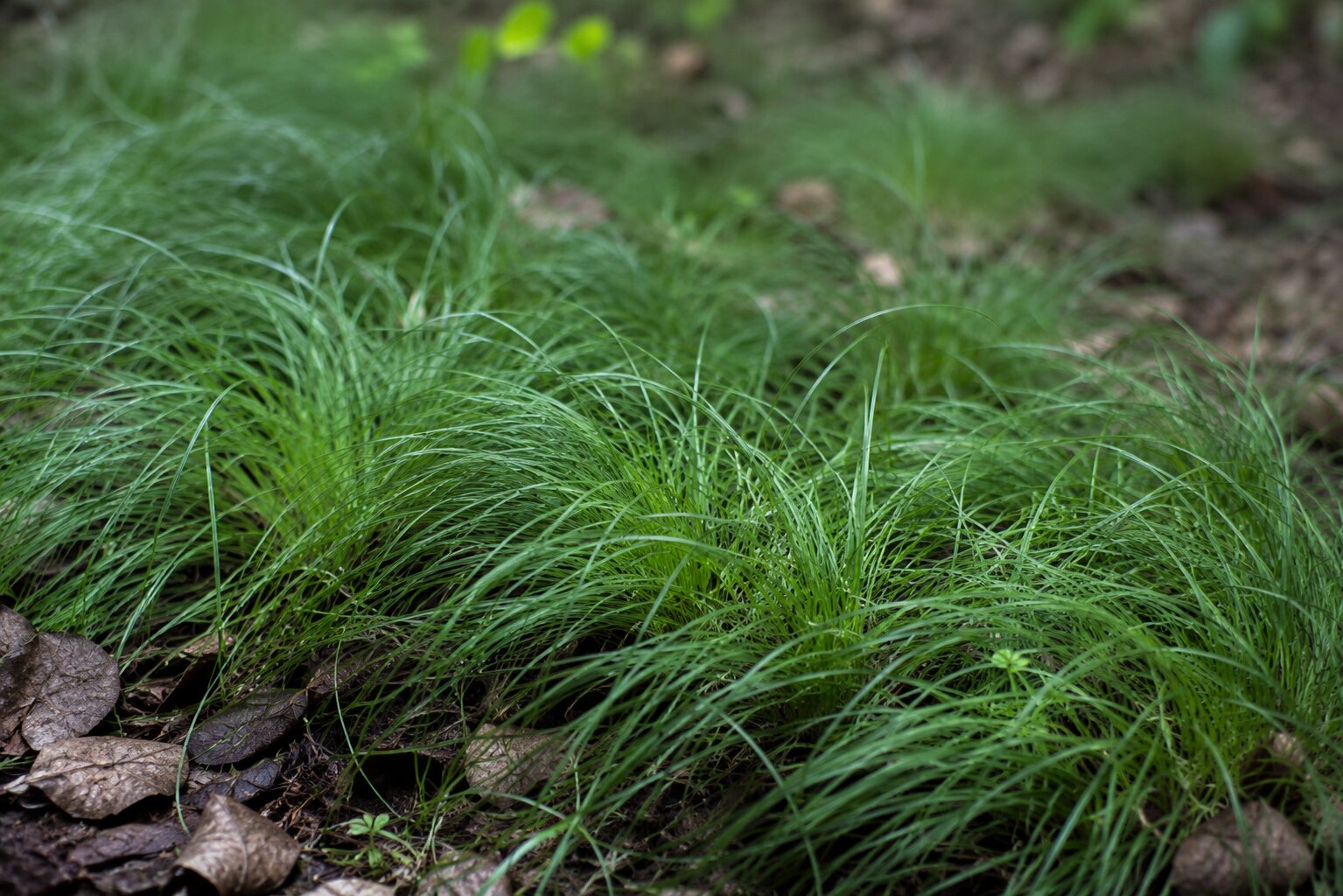
A single species is an ingredient. The blend is the answer.
Dry Shade Understory Mix — Festuca + Carex (sedge). DEEP/dry shade under trees, where fescue alone fails. Shademeadow Shade Wildflower Mix — sedge + self-heal. Shade meadow. Buy the blend when the job needs more than one plant — the grass carries the wear, the clover feeds it, the flowers feed the bees. Buy the single species when you want one plant, one look, one job.
Sources
- NC State Extension — Pennsylvania sedge (Carex pensylvanica) as a lawn substitute for dry, shaded ground where turfgrass thins.
- USDA Plant Hardiness Zone Map — The USDA hardiness zones used to match sedge species to region.