Lawn alternatives in New York
From the Adirondacks to New York City, the Empire State is cool-season lawn country — cold-hardy in the north, milder downstate.
The short version
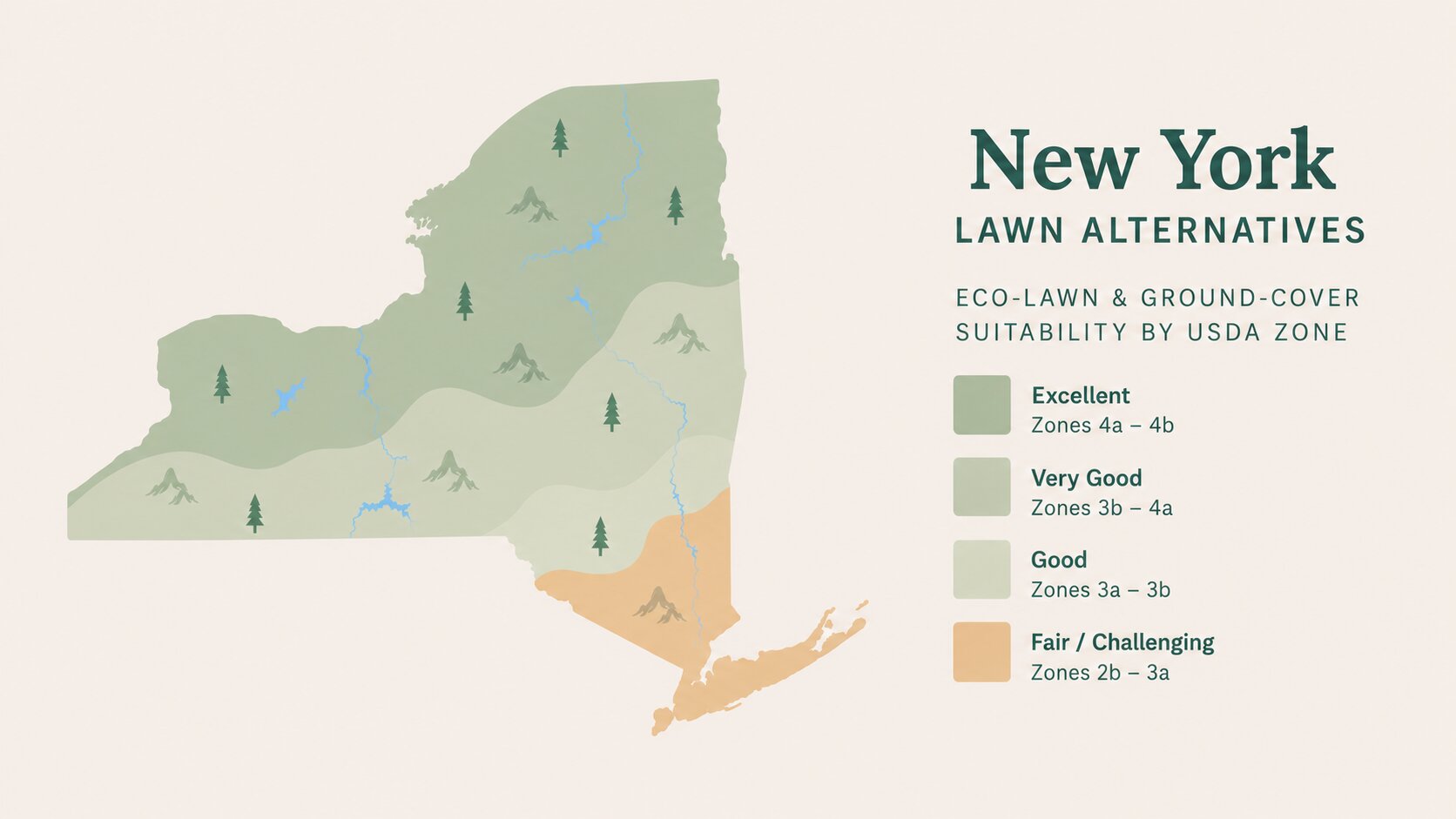
New York sits in USDA zones 4a–7b. Below: the low-input lawns that genuinely suit the state’s climate, an honest note on what doesn’t, and where to go next — all matched to verified species data.
Know your zone first
New York swings from frigid to mild. Per the 2023 USDA Plant Hardiness Zone Map and Cornell Cooperative Extension, the state spans zone 4a in the Adirondacks to 7b in New York City and Long Island — Buffalo, Rochester and Syracuse sit around 5b–6b, Albany around 5b–6a.
It’s a humid continental climate: cold, snowy winters (severe in the Adirondacks and the lake-effect west), warm humid summers, and milder, maritime conditions downstate. That makes cold-hardy cool-season species the natural choice nearly statewide.
| Part of state | USDA zones | Representative cities |
|---|---|---|
| Adirondacks & North Country | ~4a–5a | Lake Placid, Plattsburgh, Watertown |
| Western NY & Finger Lakes | ~5b–6b | Buffalo, Rochester, Syracuse, Ithaca |
| Hudson Valley & Capital | ~5b–6b | Albany, Poughkeepsie, Kingston |
| NYC & Long Island | ~7a–7b | New York City, Long Island |
Zone data: 2023 USDA Plant Hardiness Zone Map (planthardiness.ars.usda.gov); Cornell Cooperative Extension (cals.cornell.edu). Species data from our Verified Data Layer.
Low-input lawns that suit New York
Honest note: cool-season leads here
Across most of New York, cold winters favour cool-season species — warm-season buffalograss and dichondra don’t suit the humid climate, and only the mild New York City and Long Island edge is warm enough for dichondra at all. In the cold Adirondacks, choose the hardiest zone-3 cool-season options and work with a short season.
Shop these for your climate
Getting it right here
North vs downstate. The cold Adirondacks need the hardiest cool-season species; upstate and the Hudson Valley take the full palette; warm NYC/Long Island can also try dichondra.
Mind the lakes. Lake-effect snow blankets the west, while the Atlantic moderates downstate — both shape your local conditions.
Sow in the Northeast window. Late summer to early fall is ideal; the northern season is short.
Find your exact zone
Look up your ZIP at the USDA Plant Hardiness Zone Map, then match species using our zone reference and planting calendar.
Common questions for New York
What USDA zone is New York?
Can I plant dichondra in New York?
Does lake effect matter in New York?
When should I plant in New York?
Plan your New York lawn
Find your lawn alternative
Matched to your zone and site.
Nearby & similar-climate states
Planning across the region? Compare lawn-alternative guidance for Connecticut, Massachusetts, New Jersey, Pennsylvania, Vermont.