
Lawn alternatives in Connecticut
Classic New England: cool, humid and four-season. Connecticut is cool-season lawn country, where fescue and clover shine.
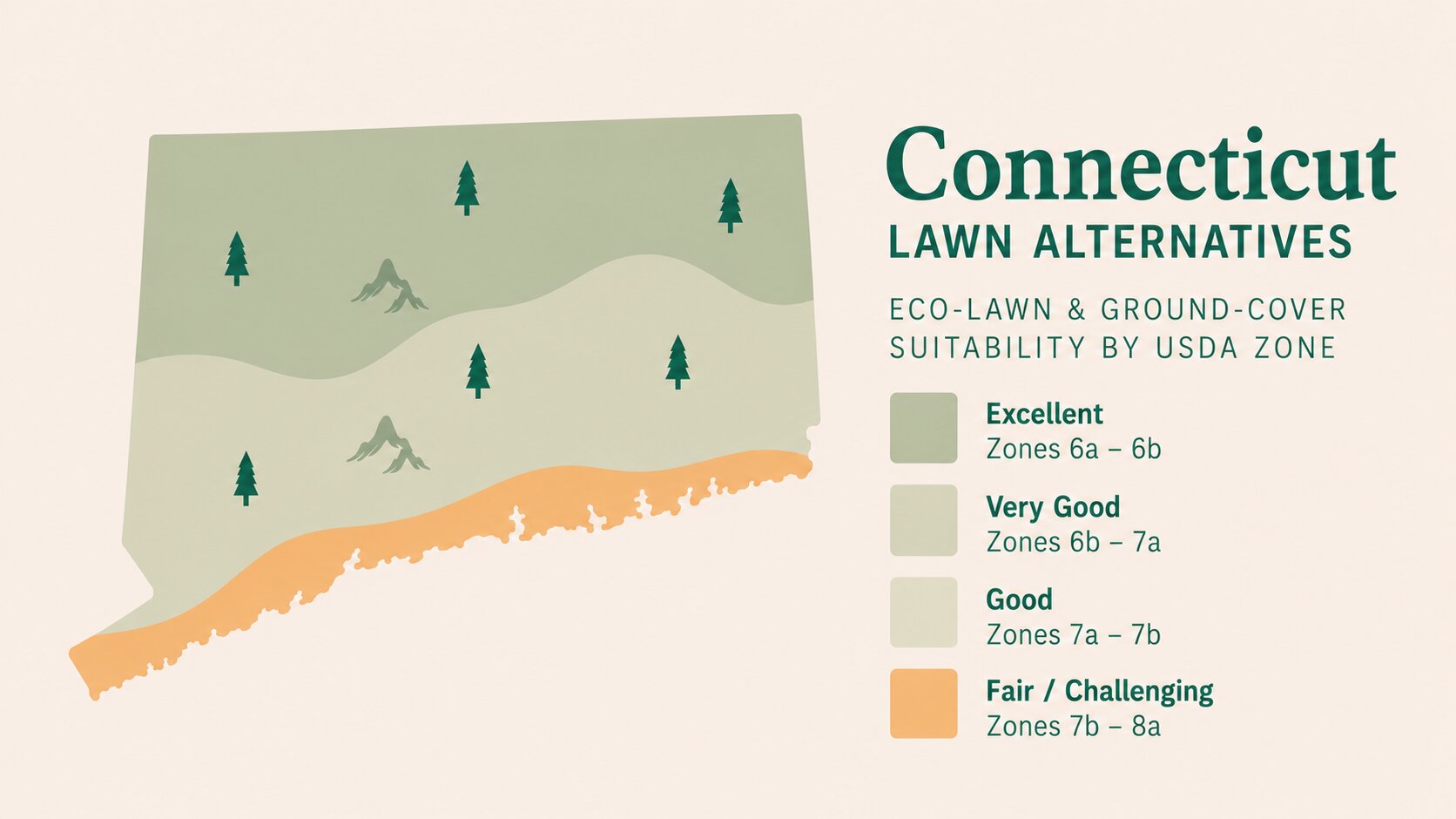
The short version
Connecticut sits in USDA zones 6a–7b. Below: the low-input lawns that genuinely suit the state’s climate, an honest note on what doesn’t, and where to go next — all matched to verified species data.
Know your zone first
Connecticut is small but varied. Per the 2023 USDA Plant Hardiness Zone Map and UConn Extension, the state now spans zones 6a to 7b — the cold Northwest Hills are 6a, the interior around Hartford is 6b, and Long Island Sound moderates the coast to 7a–7b.
It’s a cool-to-temperate climate with cold-but-moderate winters, warm humid summers and reliable rainfall. That makes Connecticut firmly cool-season territory — the natural home of fescue and clover lawns.
| Part of state | USDA zones | Representative cities |
|---|---|---|
| Northwest Hills | ~6a | Norfolk, Cornwall, Torrington |
| Central interior / River Valley | ~6b | Hartford, New Britain, Middletown |
| Long Island Sound coast | ~7a | New Haven, Bridgeport, Stamford |
| Southernmost shoreline | ~7b | Norwalk, Greenwich |
Zone data: 2023 USDA Plant Hardiness Zone Map (planthardiness.ars.usda.gov); University of Connecticut Extension (homegarden.cahnr.uconn.edu). Species data from our Verified Data Layer.
Low-input lawns that suit Connecticut
Honest note: skip the warm-season grasses
Warm-season species like buffalograss and dichondra want hot, dry summers and won’t thrive in Connecticut’s cooler, humid New England climate — this is cool-season country. Lean into fescue, clover and native sedge instead.
Shop these for your climate
Getting it right here
Sow in the New England window. Late summer to early fall is ideal for cool-season seed; early spring is a workable second choice.
Shade is well covered. Native Pennsylvania sedge and fine fescue handle the shade under Connecticut’s mature trees.
Coast vs hills. The shoreline runs about a zone milder than the Northwest Hills, but the same cool-season species suit the whole state.
Find your exact zone
Look up your ZIP at the USDA Plant Hardiness Zone Map, then match species using our zone reference and planting calendar.
Common questions for Connecticut
What USDA zone is Connecticut?
When should I plant a low-input lawn in Connecticut?
What grows well in shade in Connecticut?
Does the coast need different species than inland Connecticut?
Plan your Connecticut lawn
Find your lawn alternative
Matched to your zone and site.
Nearby & similar-climate states
Planning across the region? Compare lawn-alternative guidance for Massachusetts, New York, Rhode Island.