
Lawn alternatives in New Jersey
The Garden State sits in the mid-Atlantic transition zone — where a forgiving, low-input lawn beats fussy grass.
The short version
New Jersey sits in USDA zones 6b–8a. Below: the low-input lawns that genuinely suit the state’s climate, an honest note on what doesn’t, and where to go next — all matched to verified species data.
Know your zone first
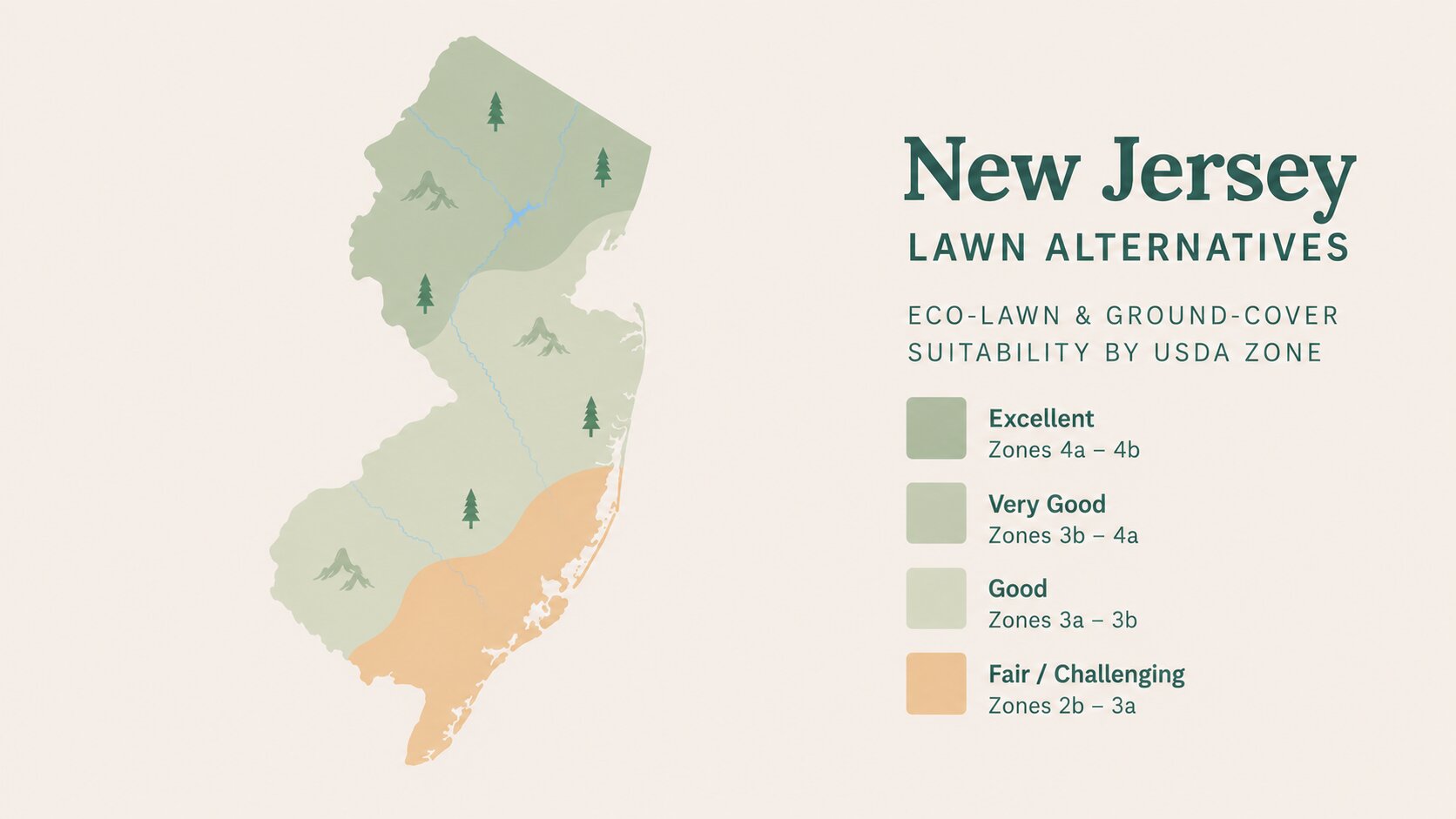
New Jersey is small but varied. Per the 2023 USDA Plant Hardiness Zone Map and Rutgers Cooperative Extension, the state spans zone 6b in the northwestern highlands to 8a at the southern tip of Cape May — Newark and the urban corridor sit around 7a–7b.
Most of New Jersey lies in the turf transition zone: warm-season grasses can’t take the winters, and cool-season grasses go summer-dormant in the humid heat. That in-between climate is exactly where low-input lawns earn their place.
| Part of state | USDA zones | Representative cities |
|---|---|---|
| NW Skylands / highlands | ~6b | Newton, Sparta, Hackettstown |
| North Jersey / urban corridor | ~7a–7b | Newark, Jersey City, Paterson |
| Central Jersey | ~7a–7b | New Brunswick, Princeton, Trenton |
| South Jersey / Pine Barrens & Shore | ~7a–8a | Vineland, Atlantic City, Cape May |
Zone data: 2023 USDA Plant Hardiness Zone Map (planthardiness.ars.usda.gov); Rutgers Cooperative Extension (njaes.rutgers.edu). Species data from our Verified Data Layer.
Low-input lawns that suit New Jersey
Honest note: summer dormancy is normal here
In New Jersey’s transition-zone summers, cool-season lawns often go brown and dormant during hot, dry spells — that’s survival, not failure, and a low-input lawn rides it out better than thirsty turf. In the warmer south and along the Shore, warm-season dichondra is worth a look; buffalograss prefers drier climates than humid New Jersey.
Shop these for your climate
Getting it right here
Northwest vs south. The cooler Skylands suit the hardiest cool-season species; the warm, sandy south and Shore open up thyme and warm-season options.
Mind your soil. Amend the north’s clay for drainage and the Pine Barrens’ sand for moisture — and lean on New Jersey natives where you can.
Time it to the season. Sow cool-season clover and fescue in early fall; sow warm-season options in late spring.
Find your exact zone
Look up your ZIP at the USDA Plant Hardiness Zone Map, then match species using our zone reference and planting calendar.
Common questions for New Jersey
What USDA zone is New Jersey?
Does New Jersey’s soil vary from north to south?
Does the whole state need the same species?
When should I plant in New Jersey?
Plan your New Jersey lawn
Find your lawn alternative
Matched to your zone and site.
Nearby & similar-climate states
Planning across the region? Compare lawn-alternative guidance for Delaware, New York, Pennsylvania.