Description
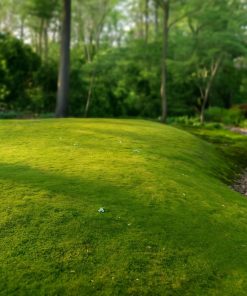
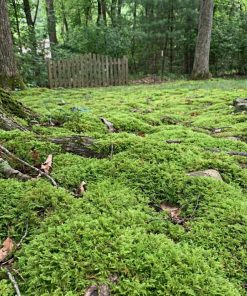
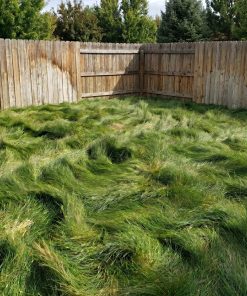
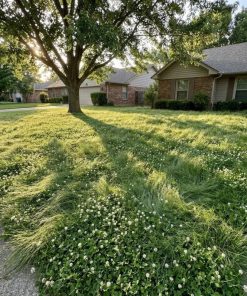
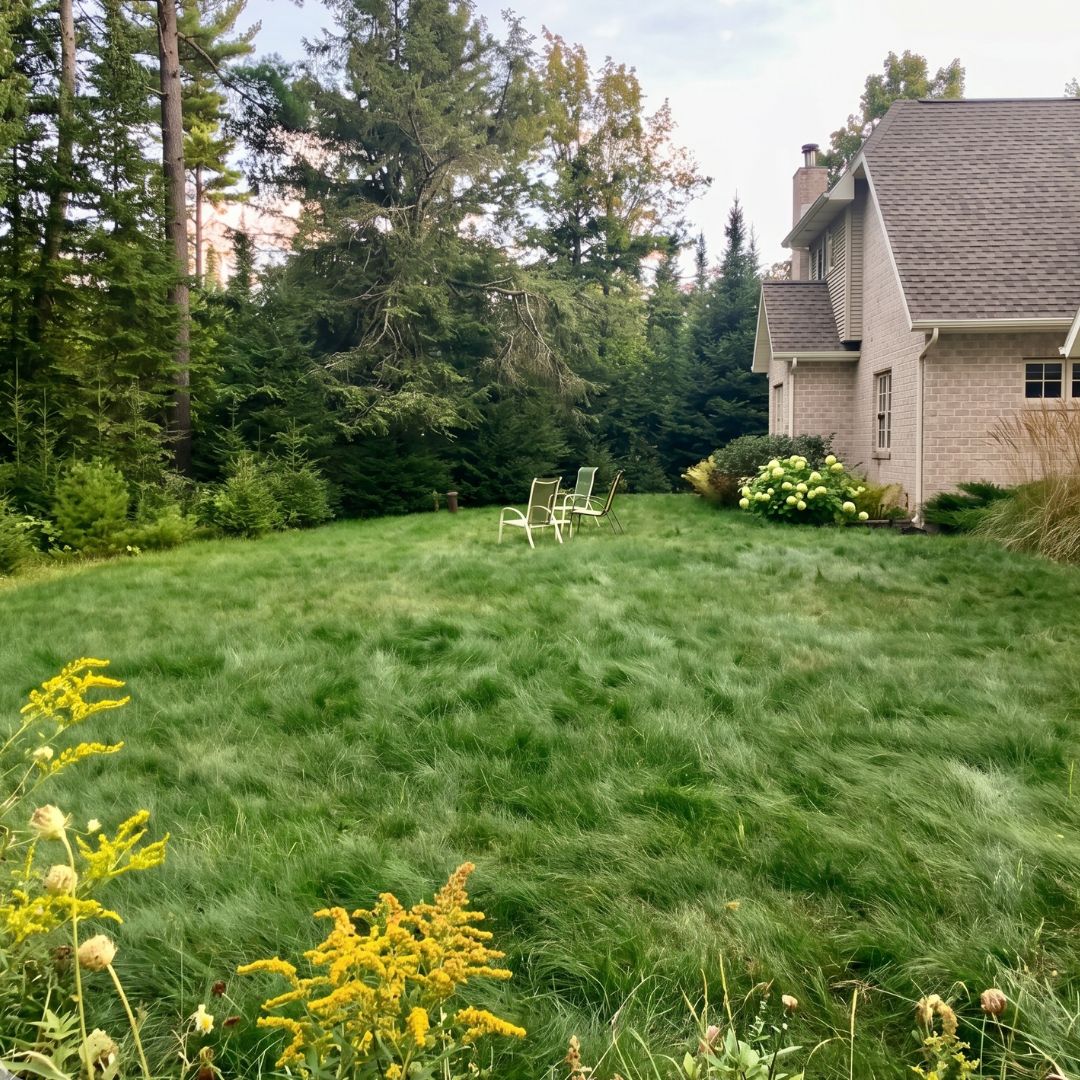
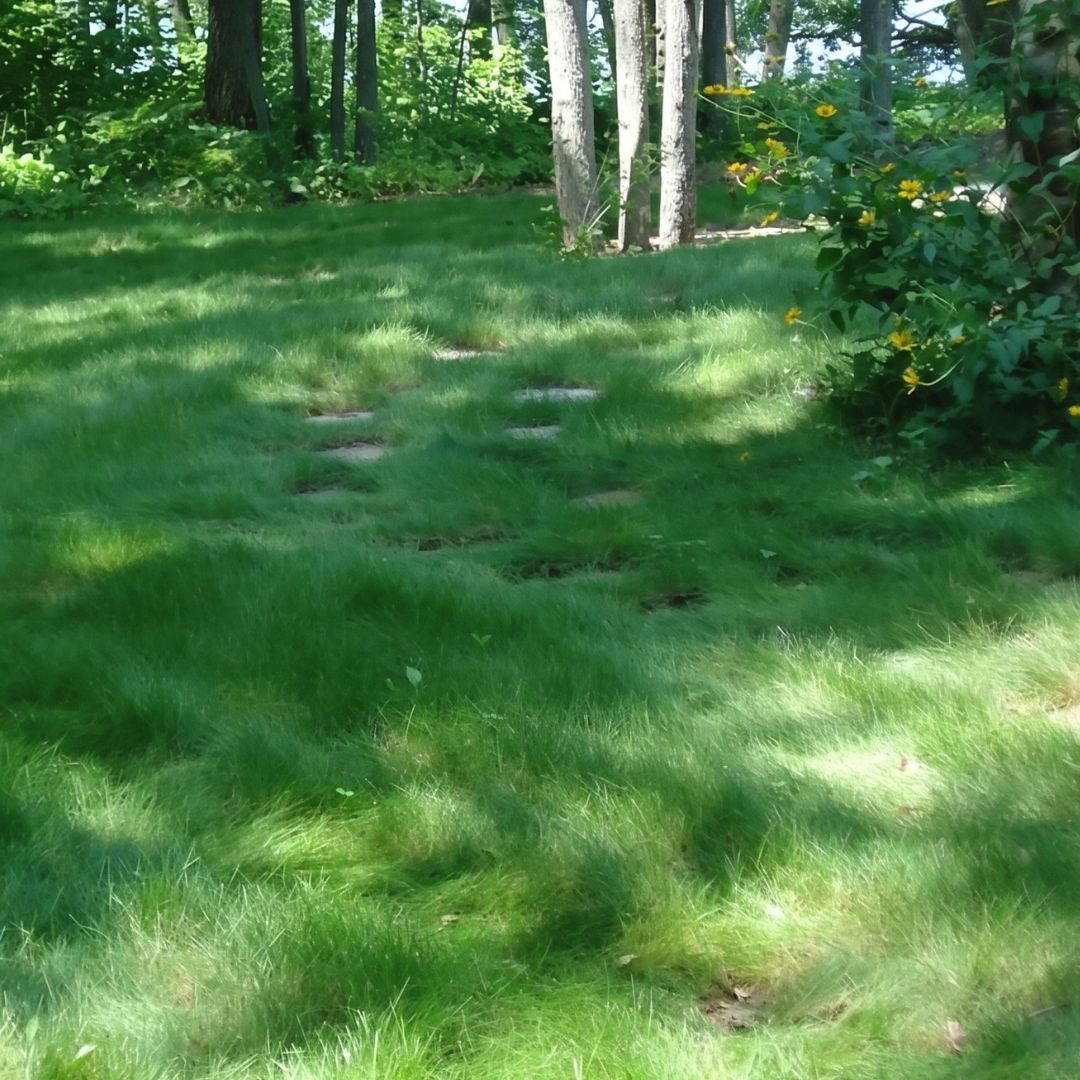
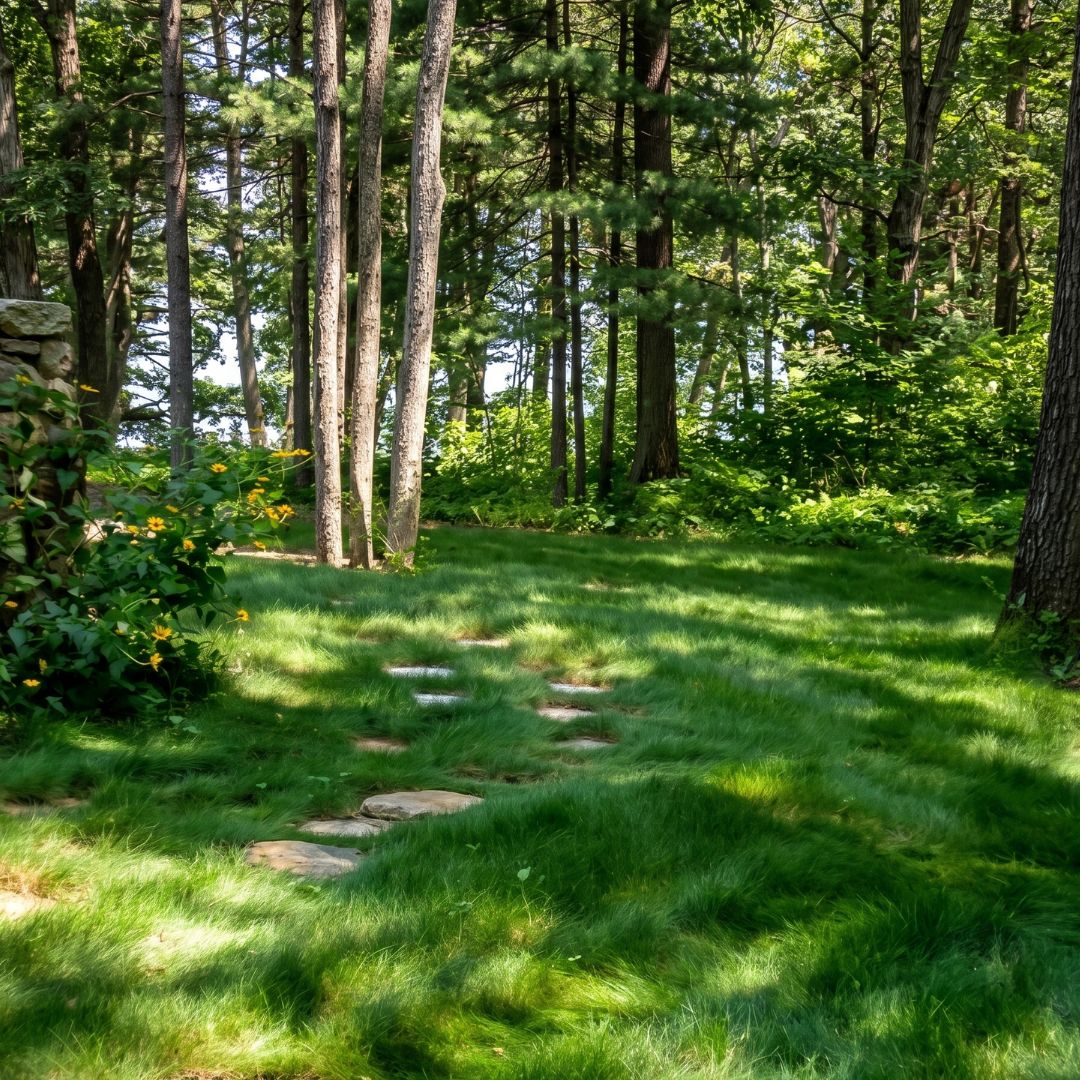
NoMowLawn is a premium five-species fine fescue eco-lawn seed — Hard Fescue, Sheep Fescue, Chewings Fescue, Red Fescue, and Creeping Red Fescue — a drought-tolerant eco-lawn that mows once or twice a year or not at all. Grows to 6–12 inches unmowed to form a soft, draping green carpet. No nitrogen fertiliser — ever. Deep roots to 9 inches. Full sun to moderate shade. Tolerates dry, sandy, or rocky soils. Non-GMO, USA-grown. Zones 3–7. ASPCA non-toxic.
NoMowLawn Seed Specifications
| Species | Common Name | Growth habit | Role in Mix | ASPCA |
|---|---|---|---|---|
| Festuca brevipila / F. longifolia | Hard Fescue | Bunch-forming | Primary drought resistance — most drought-tolerant fine fescue; thrives in dry, rocky or sandy soils; excellent wear tolerance; slow growing; low nitrogen demand | Non-toxic |
| Festuca ovina | Sheep Fescue | Bunch-forming | Poor-soil resilience — tolerates infertile, dry soils where other fescues thin; fine blue-green texture; very low nitrogen demand | Non-toxic |
| Festuca commutata | Chewings Fescue | Bunch-forming | Shade performance — densest bunch-former in shade; upright growth; fine-bladed; highest shade tolerance of the bunch-forming fescues | Non-toxic |
| Festuca rubra | Red Fescue | Slow-creeping | Sod infill — rhizomes spread slowly between bunch grasses to knit the stand into a continuous weed-resistant sod; softens overall texture | Non-toxic |
| Festuca rubra subsp. | Creeping Red Fescue | Creeping via rhizomes | Self-repair and gap fill — spreads more actively via rhizomes to fill bare areas and repair worn patches; holds slopes; tolerates moist shade soils | Non-toxic |
Do not apply nitrogen fertiliser. Nitrogen damages fine fescue turf and is strongly discouraged — it is far worse than no fertiliser at all. Fine fescue evolved in low-nitrogen soils and requires only a bare minimum of nitrogen. Mulched autumn leaves provide all the nutrition NoMowLawn needs. Note also: phosphorus fertilisers are not allowed near lakes and streams in many communities due to water quality impacts.
Why Five Species Makes the Difference
Most fine fescue products contain one or two species. NoMowLawn contains five — a deliberate combination of bunch-forming and creeping fescues that together create a more durable, more weed-resistant, and more adaptable lawn than any single-species blend can deliver. The three bunch-formers — Hard, Sheep, and Chewings Fescue — are exceptionally drought-resistant and thrive in the low-nitrogen conditions where conventional grasses fail. They provide the dense vertical structure of the stand. The two creeping species — Red and Creeping Red Fescue — spread gradually via underground rhizomes to fill the gaps between bunch grasses, knitting the stand into a continuous, weed-suppressing sod over time.
The root system is the critical performance advantage. Fine fescue roots in this blend reach up to 9 inches deep — compared to 2–4 inches for Kentucky Bluegrass. This depth achieves two things: it reduces surface water loss through direct evaporation, and it allows the plant to access soil moisture unavailable to shallow-rooted conventional grasses. UMN Extension documents established fine fescue as requiring 50–75% less mowing than Kentucky Bluegrass. The practical result is a lawn that goes dormant during extended dry periods and fully recovers when moisture returns — without irrigation and without the permanent damage that drought causes in shallow-rooted grasses.
NoMowLawn grows actively in spring and fall — the shoulder seasons when most weeds are less competitive and the soil is naturally moist. In summer, growth slows or pauses. This cool-season growth pattern is the reason fine fescue thrives with so little input: it is doing its productive growing when natural conditions support it, and resting when they do not.
Mowing Options
| Approach | Appearance | Notes |
|---|---|---|
| No mowing | Soft green carpet at 6–12 in; 2-ft seed heads in June, falling by late summer | Maximum ecological value. Leaves drape to create a meadow-like carpet. Seed heads are brief and the lawn reverts to 6–12 inches by late summer. |
| Once per year — late spring | Tidy maintained appearance; seed heads removed | The most popular approach. Mow to 4 inches when seed heads appear in late May–June. This single cut is typically all that is needed. Never mow below 3.5–4 inches. |
| Twice per year — spring + autumn | Neat year-round; denser growth the following spring | Second mow in late autumn to 2–3 inches encourages denser stems the following spring. Recommended for lawns under deciduous trees where leaf fall accumulates. |
| Monthly — conventional look | Traditional lawn appearance | Mow monthly at 3.5–4 inches throughout the growing season. Still significantly less frequent than Kentucky Bluegrass or tall fescue. Never remove more than one-third of total leaf height in a single cut. |
Best Uses for NoMowLawn
| Application | Performance | Notes |
|---|---|---|
| No-mow or low-mow eco-lawn | Excellent | The primary use case. Grows actively spring and fall, rests in summer. Mow 0–2 times per year or leave as a soft green carpet. No nitrogen fertiliser. Tolerates dry, sandy, or rocky soil. |
| Shade — under trees, north-facing | Excellent | Thrives in full sun to moderate shade. Particularly well suited under open-canopy trees — oak, hickory, elm, ash, birch, white pine. Creeping Red rhizomes fill bare patches created by surface roots. |
| Dry, sandy, or rocky soils | Excellent | Particularly well suited to low-fertility, dry, sandy, or rocky soils where conventional grasses thin or fail. Hard and Sheep Fescue thrive in exactly these conditions. No soil amendments required. |
| Hard-to-mow areas — slopes, borders, paths | Excellent | The five-species blend creates a dense, self-repairing sod on slopes. Creeping Red rhizomes anchor the soil. 0–1 mow per year means less equipment on difficult terrain. |
| Consistently moist or heavy clay soils | Not suitable | Fine fescue does not perform in consistently damp soils or heavy clay soils with less than 4 inches of loamy topsoil. For wet or clay sites see our clover range. |
| Deep shade — Sugar Maple, dense conifers | Not suitable | No grass species performs in true deep shade under dense Sugar Maples or solid conifer canopy. For very deep shade consider ground cover alternatives. |
Zone & Climate Compatibility
| Zone / Region | Performance | Notes |
|---|---|---|
| Zone 3–6 — Cool North & Midwest | Excellent | The primary target range — north of approximately 37°N latitude. All five species fully cold-hardy. Strong cool-season growth in spring and fall. Fall seeding (Aug 20–Oct 20) preferred. Spring seeding (March 15–May 15) also viable. |
| Pacific Northwest coastal — Zones 6–8 | Excellent | Coastal PNW climate matches fine fescue requirements well — cool summers, adequate rainfall. Performs strongly in Oregon and Washington outside the dry eastern regions. |
| Western mountain zones — Zones 4–7 | Excellent | Mid-elevation aspen woodland zones through just below timberline. Hard and Sheep Fescue handle the dry, rocky mountain soils well. Requires minimum 25 inches annual precipitation or supplemental irrigation in dry periods. |
| Zone 7b–9 — Hot humid South | Not recommended | Hotter climates with long warm summers suit warm-season grasses rather than cool-season fine fescues. Not recommended for hot drought-prone sites, south-facing hillsides, or dry sandy soils in the south. |
Seeding Rates
Sow per 1,000 sq ft for lawn applications. For low-maintenance non-lawn areas (borders, slopes, hard-to-mow zones), sow per 2,000 sq ft. Seed in early fall (Aug 20–Oct 20) for best results, or in spring (March 15–May 15). Do not seed between mid-May and mid-August.
| Size | Lawn | Low-maintenance | Best For |
|---|---|---|---|
| Small Bag | 1,000 sq ft | 2,000 sq ft | Small lawn · test area · border strip |
| Medium Bag | 5,000 sq ft | 10,000 sq ft | Full suburban lawn |
| Large Bag | 10,000 sq ft | 20,000 sq ft | Large property · slopes · commercial |
How to Establish NoMowLawn
Germination takes 1–2 weeks. Fall seeding (Aug 20–Oct 20) gives the best results — cooler temperatures, fewer competing weeds, and natural autumn moisture. Spring seeding (March 15–May 15) is a good second option. Do not seed between mid-May and mid-August — summer heat halts germination and warm-season weeds outcompete newly emerging fescue seedlings.
- Remove all existing weeds. Prepare a site free of weeds before seeding. Existing weed competition is the most common reason for poor first-season establishment. Till lightly, allow weeds to germinate, then kill before seeding — or apply a non-selective herbicide and allow the required withdrawal period.
- Prepare a firm, smooth seedbed. Loam or sandy soils work well. Avoid heavy clay soils or consistently moist areas. Rake to a fine, smooth surface free of clumps over 1 inch diameter.
- Broadcast at per 1,000 sq ft. Fill a broadcast or drop spreader and distribute evenly. Cover the seed with ⅛ to ¼ inch of soil using a rake or seeding drag.
- Roll to firm soil contact. Roll with a lawn roller or cultipacker to ensure good seed-to-soil contact. This step significantly improves germination uniformity.
- Mulch lightly with straw. Apply a light covering of oat straw, winter wheat straw, or marsh hay to retain moisture and moderate soil temperature during germination.
- Water thoroughly at first, then deeply and infrequently. Water the site thoroughly immediately after seeding. Thereafter, deep infrequent soakings are better than frequent light sprinklings — they encourage deep root growth that improves drought tolerance.
- Do not apply any fertiliser. No starter fertiliser, no nitrogen, no phosphorus. Mulched autumn leaves provide all the nutrition the stand requires. Nitrogen application will damage the turf.
- First mow no lower than 3.5–4 inches. Never mow below 3.5 inches — close mowing damages roots and weakens the stand permanently. Mow in late spring when seed heads appear, or leave entirely for a natural meadow appearance.
For full planting instructions, zone-by-zone timing, and establishment troubleshooting see our No-Mow Lawn Guide →
Sources
- UMN Extension — Fine Fescue Lawns (mowing requirements, water use, drought tolerance): extension.umn.edu
- Penn State Extension — Fine Fescues (shade tolerance, species comparison): extension.psu.edu
- ASPCA Animal Poison Control — Festuca spp. non-toxicity: aspca.org