
Bee Lawn
A low, walkable lawn that flowers through the season and feeds sixty-plus bee species. Two things decide whether it suits you: how tall you’re allowed to let it grow, and how big an area you’re planting.
Sizing
Size the strip
Add a row per area — the boundary strip in bee lawn, the rest of the yard in clover-fescue — and give each its own product. Every bag is sized from its product page’s coverage table. Areas over 1,000 sq ft: read the cost section first.
The defining question
What blooms when, and what will the HOA accept?
Find your height limit first
Before anything else, check your covenant, deed restriction or local ordinance for a maximum lawn height. That single number decides which product you can use, and it is the commonest reason a bee lawn becomes a problem after planting rather than before.
| Height limit | What works | What will fail |
|---|---|---|
| Under 4 inches | MicroBee — mini white clover, blooms at reduced height | Anything with a visible flower stem |
| 4–8 inches | PollinatorLawn — clover, self-heal, yarrow | — |
| No limit | Flowering lawn or meadow | — |
“The primary use case. Presents as a premium fine fescue lawn — dark green, fine-bladed, uniform. Mini White Clover blooms significantly less and stays lower than standard White Dutch Clover — far less visible than a regular clover lawn. Blooms are still present and still support pollinators, but at a much reduced visual profile suitable for most HOA-governed front lawns.”
Then decide which months matter
A bee lawn feeds pollinators continuously because different species bloom in sequence. One species gives you six weeks; four give you five months.
| Species | Blooms | Height |
|---|---|---|
| English daisy | April–July | 3–6 in |
| White Dutch clover | May–September | 4–8 in, 2–4 mown |
| Creeping thyme | May–July | 2–4 in |
| Self-heal | June–August | 2–6 in |
| Yarrow | June–September | 4–8 in |
Overlapping them is the entire design. UMN Extension documents white Dutch clover alone as supporting 55+ bee species; the full blend supports 60+.
And the sun
Three hours minimum for the fescue and clover base. Below that the sward thins and the flowers go with it. → Shade lawn seed
MicroBee is more shade-tolerant than the full blend: its Enchantment chewings and Celestial creeping red “both perform well in shade down to 3–4 hours direct sun.”
Before you sow
Why bee lawns fail
Mown through the bloom
Cutting during flowering removes the forage entirely — the lawn is still there, the bees are not.
Fix: mow before the first flush or after seed set, not during. In practice that means one cut in late spring and one in early autumn.
Weeds win the first season
“Cool-season weeds compete strongly with slower-establishing wildflowers in the first season.” Self-heal takes 14–21 days to germinate and yarrow 14–28. Annual weeds take five.
Fix: a genuinely clean seedbed. Apply a non-selective herbicide 2–3 weeks before sowing, or smother with cardboard the autumn before a spring sowing. This is the step that decides it, and it is not one you can shortcut.
Wrong soil or wrong zone
“Avoid consistently moist or heavy clay soils with poor drainage.” And “PollinatorLawn is designed for Zones 3–7 — northern and temperate.”
Fix: in Zone 8 and above, expect the fescue base to idle through summer. The clover holds; the grass does not.
The one we cannot fix: it is expensive per square foot
PollinatorLawn runs roughly $300 per 1,000 sq ft against $37 for fine fescue and $74 for creeping thyme. That is not a markup. It is what a five-species blend of slow, low-yielding wildflower seed costs — self-heal and yarrow produce a fraction of the seed per plant that grass does, and both take three to four weeks to germinate.
A bee lawn is a strip, a verge or a front garden. Not an acre. At 2,500 sq ft you are looking at over $750 in base seed alone.
Choose your bee lawn
The full bee lawn — 200 to 1,000 sq ft
PollinatorLawn · four fine fescues + white clover + self-heal + yarrow · 3+ hours · Zones 3–7 · $61.99 / 200 sq ft · $300.99 / 1,000 sq ft.
“The primary use case. Replace a conventional lawn with the only blend documented to support 60+ bee species while remaining walkable, mowable, and lawn-like. The most ecologically productive product in the Competitive Lawn range.”
Four fescues form the sward, each with a role:
| Species | Role |
|---|---|
| Creeping red fescue | Self-spreading rhizomes fill gaps between bunch grasses. Sustains the sward between flower patches |
| Chewings fescue | Dense upright structure; highest shade tolerance of the bunch fescues |
| Hard fescue | Drought resilience — the most drought-tolerant fine fescue. Thrives in low-nitrogen soils |
| Sheep fescue | Poor-soil resilience; tolerates infertile, rocky or sandy ground |
Plus white Dutch clover as primary bee forage, with self-heal and yarrow adding the summer sequence.
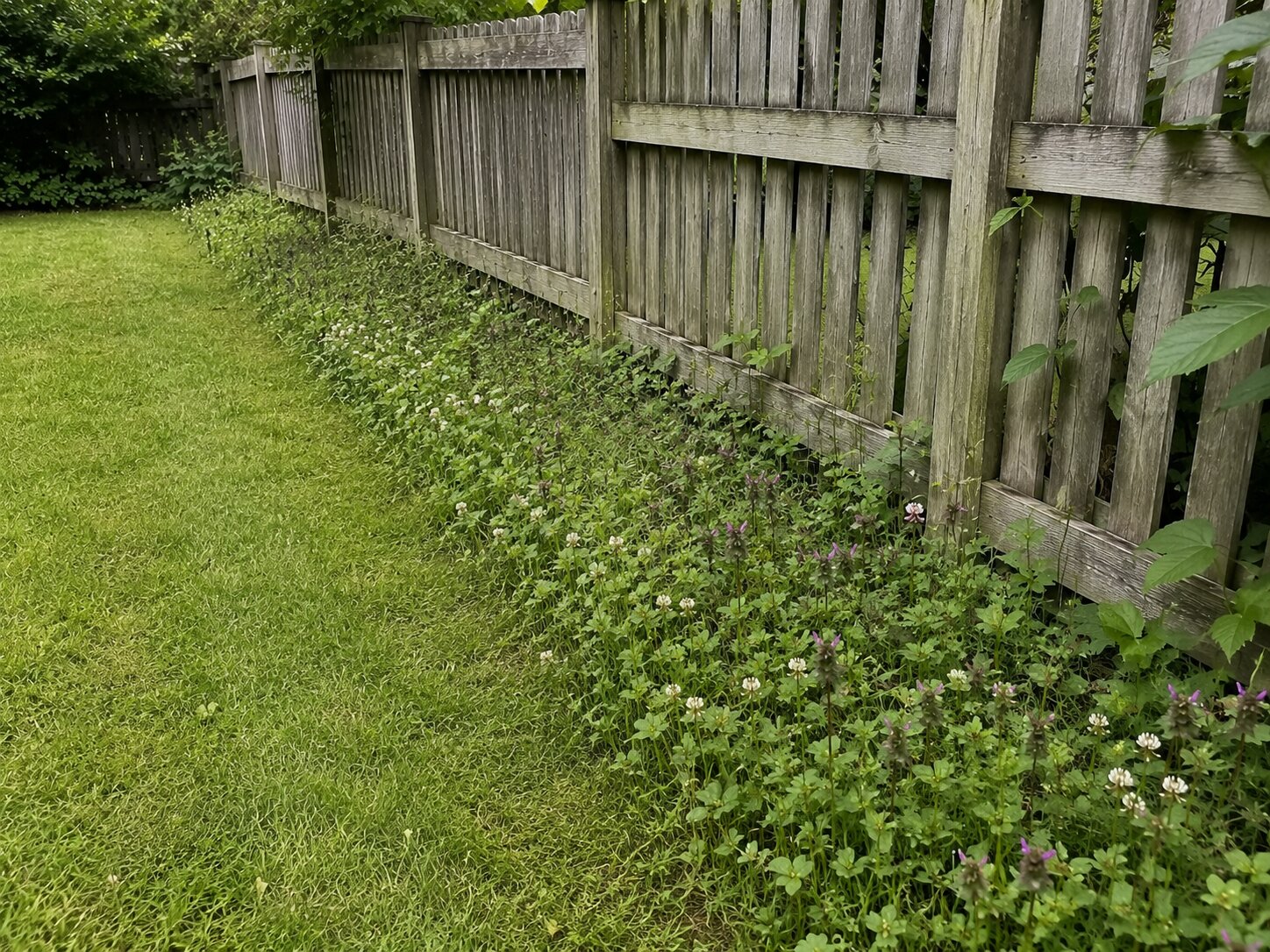
Four rated Excellent uses, and two are underused. Overseeding into an existing lawn — “can be overseeded into an existing fine fescue or Kentucky Bluegrass lawn to add the flowering wildflower layer without full renovation. Overseed after aerating in early autumn.” For anyone with a lawn already, this is dramatically cheaper than starting over. And the pollinator corridor — “a strip along a fence line, property boundary, or garden edge creates a pollinator corridor connecting habitat patches across suburban landscapes. Effective even in a 3–4 foot-wide strip.“
Choose your bee lawn
The HOA-friendly version
MicroBee · four named-cultivar fine fescues + mini white clover · 3+ hours · Zones 3–7 · $43.99 / 200 sq ft · $207.99 / 1,000 sq ft.
Reads as a conventional premium lawn — dark green, fine-bladed, uniform — while still supporting pollinators. Mini white clover stays below mowing height and blooms far less visibly.
Named cultivars, not generic species:
| Species | Cultivar | Selected for |
|---|---|---|
| Creeping red fescue | Celestial Strong | Rhizome spread; dense weed-suppressing sod over time |
| Chewings fescue | Enchantment | Dark green colour, shade tolerance |
| Hard fescue | Viking H2O | Specifically selected for low water use |
| Sheep fescue | Blue Mesa | Fine blue-green blades, dry rocky soils |
That level of specification is unusual in consumer lawn seed, and it is worth knowing what you are buying. Viking H2O in particular is a water-conservation selection rather than a generic hard fescue.
Choose your bee lawn
What each plant does
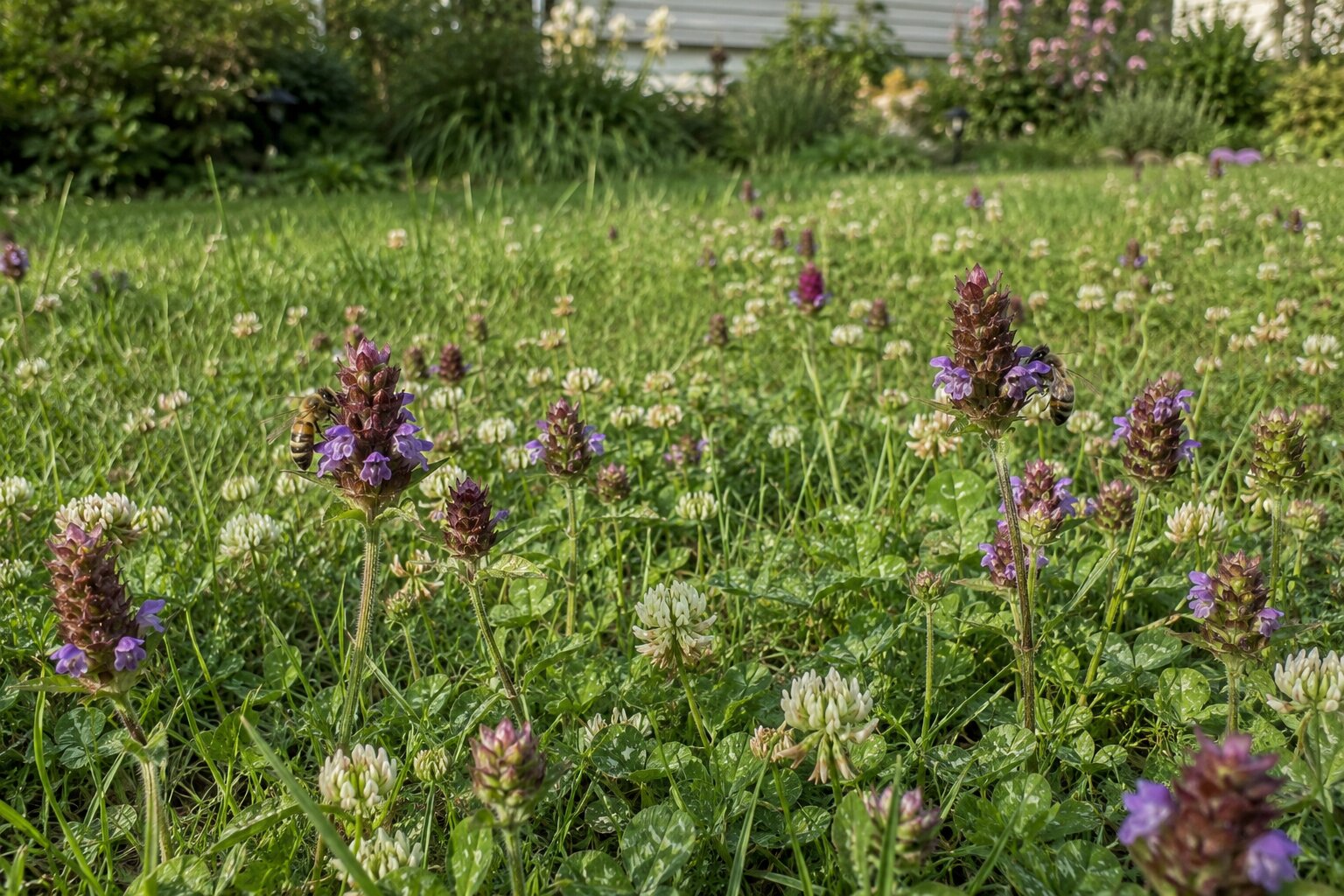
White Dutch clover — the workhorse. May to September, 55+ bee species on its own, and it fixes nitrogen so the lawn feeds itself.
Self-heal (Prunella vulgaris) — June to August, purple-pink spikes. Blooms at and below 4-inch mow height, which makes it one of the very few flowers that survives regular mowing.
Yarrow (Achillea millefolium) — June to September, flat white heads suiting shorter-tongued bees. Deep-rooted, drought-resistant, rhizomatous.
English daisy — April to July, the earliest forage in the range and the only thing blooming before May.
Fine fescue — no bloom, but it is what makes this a lawn rather than a meadow. Without it you have a wildflower patch you cannot walk on.
The kits
Two tiers, priced in the open
We do not offer a whole-lawn tier. At 2,500 sq ft the base seed alone exceeds $750, and there is a better answer: bee lawn in the area you look at, clover-fescue in the rest. The cost is shown deliberately — a bee lawn is a premium planting for a defined area, and anyone who discovers that at checkout does not come back.
Method
How to establish a bee lawn
Four species, four germination rates — the widest spread of anything we sell: clover 7–10 days, fescue 7–14, self-heal 14–21, yarrow 14–28.
- Remove existing vegetation completely. A weed-free seedbed matters more here than anywhere. Apply a non-selective herbicide 2–3 weeks before sowing, or smother with cardboard the autumn before a spring sowing.
- Prepare a firm, smooth seedbed. Rake to a fine surface. Loam or sandy soils work well; avoid consistently moist or heavy clay with poor drainage.
- Broadcast, then cover lightly. ⅛–¼ inch of soil using a rake or seeding drag, then roll or tamp for firm contact. Unlike most products on this site, this one is lightly covered rather than surface-sown.
- Mulch lightly. “Apply a thin covering of oat straw or marsh hay to retain moisture during establishment.” With yarrow taking up to 28 days, holding surface moisture that long is the practical difficulty, and mulch is what solves it.
- Water consistently for 2–3 weeks — long enough for the yarrow, not just the clover.
- Do not apply nitrogen fertiliser. “Fine fescue evolved in low-nitrogen soils and is harmed by nitrogen application.” The clover supplies what is needed, and feeding grows grass that swamps the flowers.
First mow: wait until the fescue reaches 4 inches, then cut to 3. After that, once in late spring and once in early autumn.

When to sow
Autumn, strongly
The autumn preference is stronger here than on any other page, because the slow-germinating species need three to four weeks of consistent surface moisture. Autumn rain delivers that; July does not.
| Window | Dates | Quality |
|---|---|---|
| Autumn | Aug 20 – Oct 20 | Strongly preferred. Cooler temperatures reduce weed competition and autumn rain supports establishment without irrigation |
| Spring | Mar – May | Workable, especially Zones 3–5 |
| Zone | Suitability |
|---|---|
| 3–5 cool | Excellent — Minnesota, Wisconsin, Michigan, the Great Lakes |
| 5b–7 mid | Excellent — Pennsylvania, New York, Ohio, Indiana, Illinois, Kansas, Missouri |
| 7b–8 | Marginal — fine fescue struggles in summer heat and humidity |
What to expect
Season one is a lawn, not a bee lawn
Bloom, not coverage, is the milestone here — and it takes two seasons.
The grass and clover establish in season one; the slower flowering species put down roots and flower the following year. Anyone expecting bees in the first summer will be disappointed, and telling them now is the difference between a second-year success and a first-year refund request.
Questions
What people ask before buying
How do I plant a pollinator garden?
A bee lawn is not a pollinator garden — you walk on one and not the other. A garden is taller, more diverse and unmown; a bee lawn stays under 8 inches and takes foot traffic.
If you want a garden rather than a lawn, you want a meadow mix.
When should I mow the lawn in spring for bees?
After the first bloom flush, not during it. In most zones that means late May or early June. Cutting through flowering removes the forage exactly when bees need it most.
Do clover lawns attract bees?
Yes — UMN Extension documents white Dutch clover as supporting 55+ bee species on its own. A plain clover lawn is already a bee lawn; this blend adds species that flower at different times to extend the season.
Does not mowing help bees?
Yes, which is what No Mow May is about. A permanent bee lawn is the year-round version and avoids the shock of cutting long growth back hard.
Do bees nest in lawns?
Some solitary species nest in bare or sparse ground, which is one reason a slightly open sward is better habitat than a dense one. They are not aggressive and most people never notice them.
Does lawn fertiliser kill bees?
Fertiliser itself is not the issue; the herbicide in combination weed-and-feed products is, because it kills the clover and dandelions bees forage on. A clover lawn needs neither.
Are lawn products safe for bees?
The safest answer is a lawn that needs no products. Clover fixes its own nitrogen and a dense sward suppresses most weeds — and fine fescue “is harmed by nitrogen application” anyway.
Will a bee lawn get me stung?
Foraging bees on clover are not defensive — they are working, not guarding a nest. People walk barefoot on clover lawns routinely.
If someone in the household has a sting allergy, that is a genuine reason to choose differently, and MicroBee’s reduced bloom is the middle option.
Is a bee lawn safe for dogs?
The fescue and clover are ASPCA-confirmed non-toxic. Yarrow is not on the safe list, so choose MicroBee, which contains none.
How small can a bee lawn be and still do something?
Effective even in a 3–4 foot-wide strip. A boundary planting connects habitat patches across suburban gardens, which is ecologically more useful than an isolated square in the middle of a lawn. It is also the affordable way in — a strip along a fence line costs a fraction of a full lawn.
Can I add it to my existing lawn?
Yes, and it is much cheaper than starting over. Aerate in early autumn and overseed the flowering layer straight into fine fescue or Kentucky bluegrass. No renovation needed.
What if my HOA objects?
MicroBee is built for exactly that — it presents as a premium fine fescue lawn with the clover below mow height. Check the covenant’s stated maximum height first, and note that many are written about height rather than species.
Will it survive being walked on?
Yes — that is the difference between a bee lawn and a meadow. The four-fescue base takes ordinary household traffic. It is not a sports surface.
Why buy from us
Named cultivars, documented blends
Non-GMO, USA-grown seed. Named cultivars rather than generic species — Celestial Strong, Enchantment, Viking H2O and Blue Mesa in MicroBee, each selected for a specific property. Blends documented against published research rather than assembled by appearance, and honest about cost per square foot rather than quiet about it.