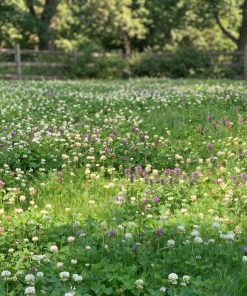

Description
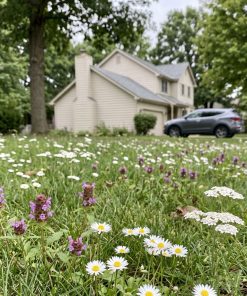
Self-Heal Seeds is 100% Prunella vulgaris — Self-Heal or Heal-All. A native North American perennial of the mint family, it grows 2–6 inches in lawn conditions, blooms purple-pink from June to August, and spreads by self-rooting stolons to form a dense, low ground cover. One of the most bee-attractive plants per square inch available for lawn use. Zones 3–9. Non-GMO.
Self-Heal at a Glance
| Feature | Detail |
|---|---|
| Height | 2–6 inches (lawn conditions); up to 12 inches unmowed |
| Bloom colour | Purple-pink whorled spikes |
| Bloom time | June–August; some blooms possible into September |
| Spread | By stolons (self-roots where stems contact soil) and seed |
| Mow tolerance | Excellent — blooms at and below 4 inch mow height |
| Traffic tolerance | Good — tolerates walking and moderate pet use |
| Deer resistance | Yes |
| Germination | 14–21 days at 55°F+ soil temperature |
| Zones | 3–9 |
| Sun | Full sun to part shade — highly adaptable |
Why Self-Heal Belongs in a Flowering Lawn
Self-heal is not just a wildflower — it behaves like a lawn plant. It actively outcompetes weeds, spreads to fill bare patches by stolon, and unlike most wildflowers, it continues to bloom at mow height. The flowering spikes rise from a low basal rosette, meaning even a mow at 4 inches does not remove the bloom — new flower spikes emerge from the same plant within 1–2 weeks of cutting.
It is a core component of PollinatorLawn and MicroBee (our existing bee lawn products), WildLawn, ShadeMeadow and SunMeadow. Bought as a single-species product, it allows you to add its flowering benefit to any existing lawn at any time.
How to Use Self-Heal Seeds
Overseeding into an existing lawn
- Mow existing lawn short (2–3 inches). Scarify lightly to expose some soil.
- Mix seed with dry sand (1:10 ratio). Broadcast at per 1,000 sq ft.
- Water in. Keep moist for 2–3 weeks.
- Or dormant-seed in late autumn/winter over frozen ground — seeds germinate in spring.
- First visible plants in 3–6 weeks. First bloom in year 1 if sown by June; year 2 if sown in autumn.
New lawn or bare ground
- Sow at per 1,000 sq ft on a weed-free, raked surface.
- Mix with sand or combine with fine fescue seed for a full lawn planting.
- Press/roll to ensure soil contact. Keep moist for 2–3 weeks.
Self-Heal as a Companion
Self-heal is one of the easiest flowering lawn species to pair with other plants. It grows at a similar height to Yaak Yarrow and English Daisy, making all three natural companions in a custom flowering lawn blend. The purple-pink of Self-Heal contrasts well with the white of both Yarrow and English Daisy across the flowering season.
Frequently Asked Questions
Will it take over the lawn?
Self-heal spreads moderately by stolons but does not become aggressive in the way some groundcovers do. In a lawn context it fills in around grass and other plants without displacing them. Regular mowing keeps it in check.
Is it edible?
Yes — Self-heal has centuries of use as an edible and medicinal herb across Europe and North America. The leaves and flowers are edible raw or cooked, with a mild flavour. It is also used in traditional herbal practice as an anti-inflammatory.