Description
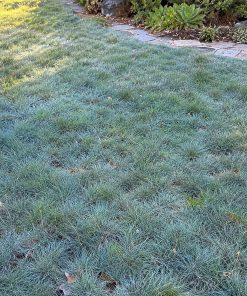
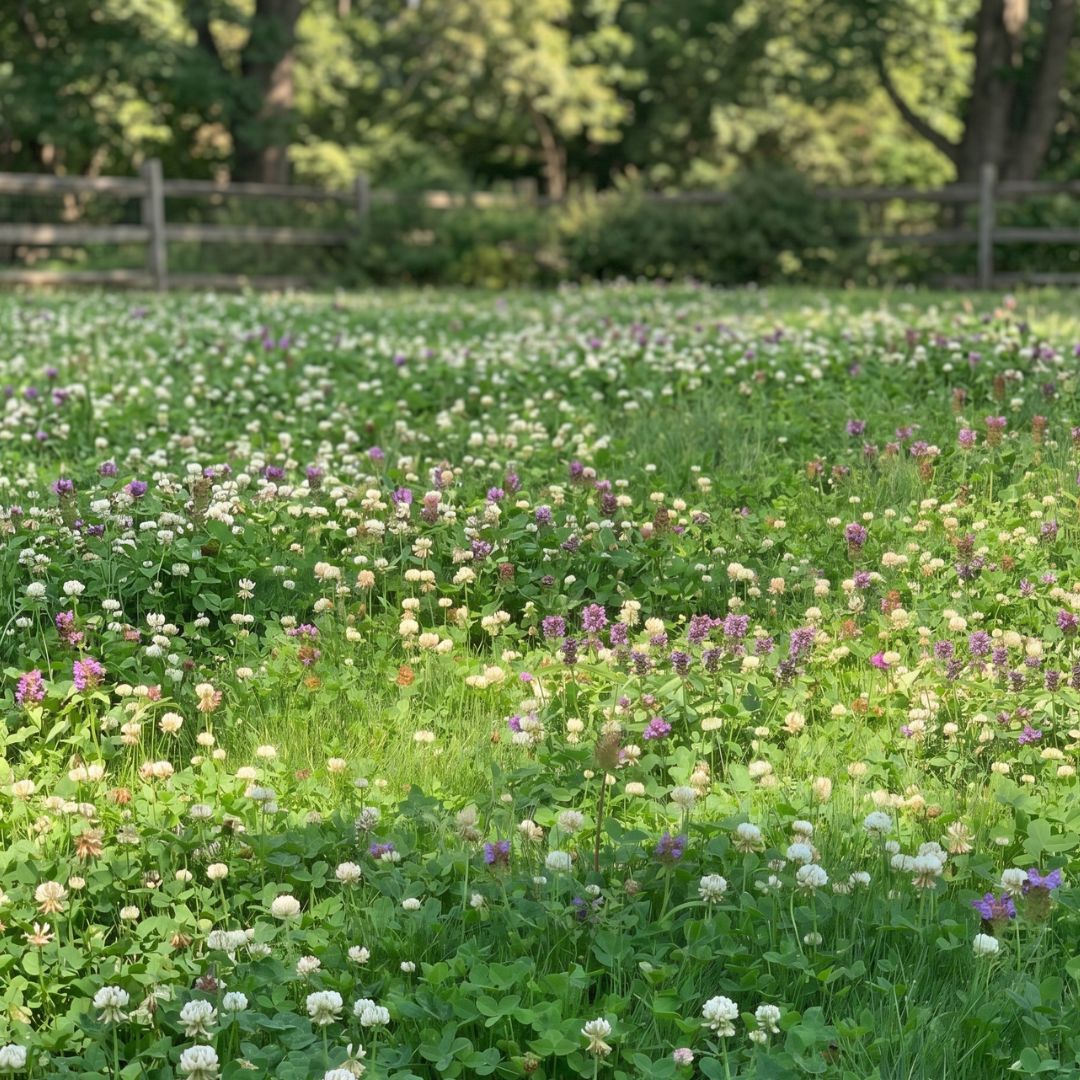
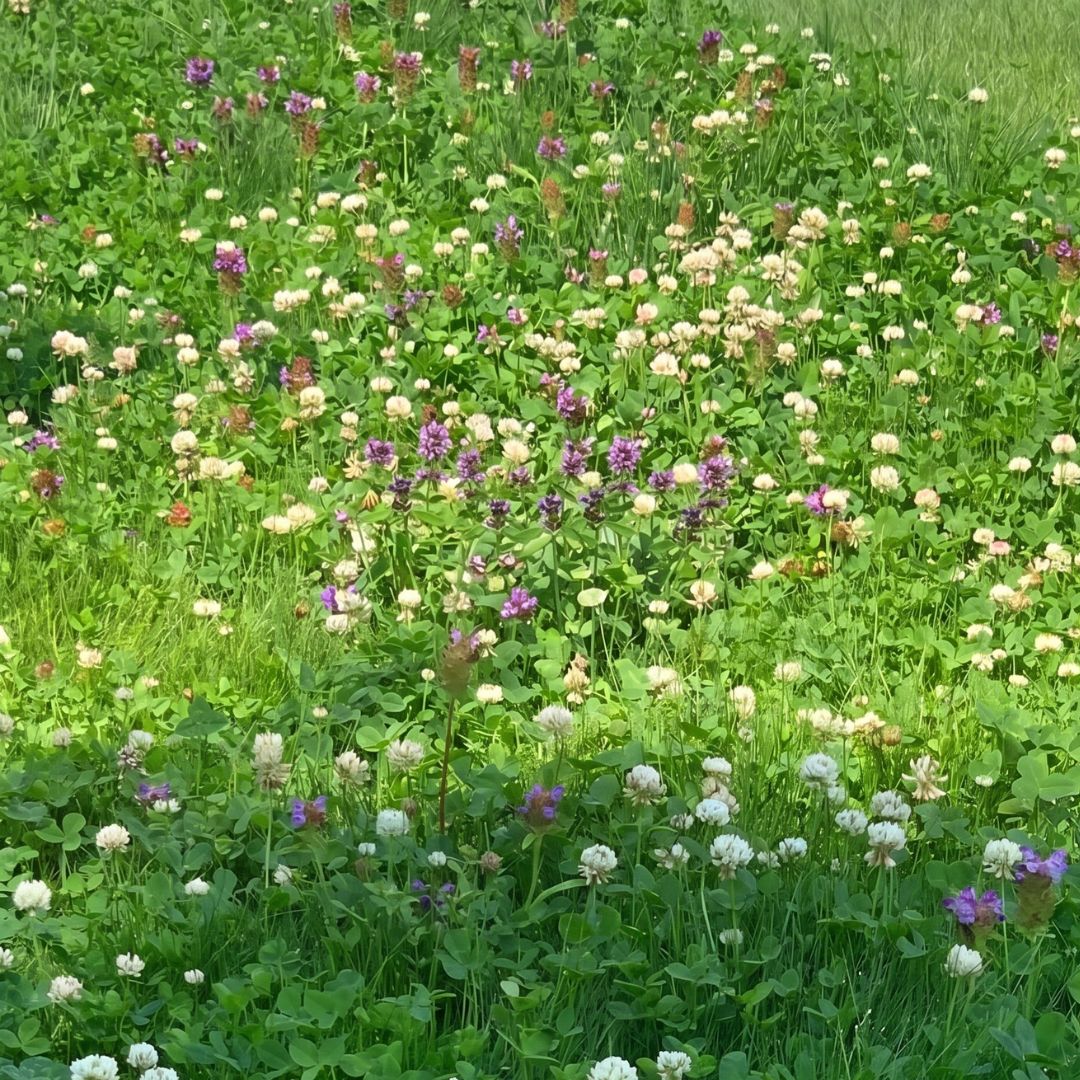
PollinatorLawn is a pollinator bee lawn seed — four fine fescues (Creeping Red, Chewings, Hard & Sheep), White Dutch Clover, Self-Heal (Prunella vulgaris), and Yaak Yarrow (Achillea millefolium var.) in a single blend. University of Minnesota research documents more than 60 bee species supported by the White Dutch Clover and Self-Heal combination in this mix. Mow 0–2 times per year. No fertiliser. Full sun to partial shade. Non-GMO, USA-grown. Zones 3–7. ASPCA non-toxic.
PollinatorLawn Seed Specifications
| Species | Common Name | Role in Mix | Bloom | ASPCA |
|---|---|---|---|---|
| Festuca rubra | Creeping Red Fescue | Self-spreading via rhizomes; fills gaps between bunch grasses; shade tolerant; sustains the sward between flower patches | — | Non-toxic |
| Festuca commutata | Chewings Fescue | Dense upright structure; highest shade tolerance of the bunch fescues; fine-bladed; primary shade component of the fine fescue backbone | — | Non-toxic |
| Festuca trachyphylla | Hard Fescue | Drought resilience — most drought-tolerant fine fescue; thrives in low-nitrogen soils; sustains the stand through dry summers | — | Non-toxic |
| Festuca ovina | Sheep Fescue | Poor-soil resilience; fine blue-green blades; tolerates infertile, rocky, or sandy soils where other fescues thin; low nitrogen demand | — | Non-toxic |
| Trifolium repens | White Dutch Clover | Primary bee forage — UMN documents 60+ bee species with clover + Self-Heal combination; nitrogen fixation eliminates synthetic fertiliser; stolon self-repair | May–Sep white | Non-toxic |
| Prunella vulgaris | Self-Heal | Key pollinator wildflower — purple tubular flowers highly attractive to bumblebees and native bees; one of two species in the documented 60+ bee species combination; stays low when mowed | Jun–Sep purple | Non-toxic |
| Achillea millefolium var. | Yaak Yarrow | Low-growing native wildflower; white flower clusters attract native bees, butterflies, hoverflies, and beneficial insects; extends the ecological value of the blend beyond bees | Jun–Aug white | Non-toxic |
University of Minnesota research: UMN Extension documents more than 60 bee species supported by the White Dutch Clover and Self-Heal combination in this blend — including native bumblebees, solitary ground-nesting bees, and sweat bees critical to North American pollination. This is the most rigorously documented bee lawn research available. Source: UMN Extension — Bee Lawns →
Why PollinatorLawn — The Research-Backed Bee Lawn
The bee lawn concept was developed at the University of Minnesota by researchers studying why native bee populations have declined significantly over the past 50 years. The conventional lawn is part of the answer — an estimated 40 million acres of near-monoculture grass in the US that provides zero forage for bees or other pollinators. The UMN research team identified the specific plant combination that transforms a conventional lawn into functional pollinator habitat while still functioning as a lawn — a surface people can walk on, mow occasionally, and maintain as their front yard. White Dutch Clover and Self-Heal are the two most critical species. Together, UMN Extension documents them supporting over 60 bee species — including native bumblebees that are at risk of local extinction in many parts of the northern US.
The four fine fescue species provide the structural foundation. Fine fescue grows slowly and tops out at 6–8 inches unmowed — slow enough not to crowd out the flowering plants, dense enough to suppress weeds, and low enough in nitrogen demand that no fertiliser is needed. White Dutch Clover fixes nitrogen and self-repairs bare patches via stolon spread. Self-Heal adds a second flowering layer — its purple tubular flowers are particularly attractive to long-tongued bumblebee species that cannot access the smaller clover flowers. Yaak Yarrow rounds out the bloom with flat white flower clusters that provide landing platforms for a wider range of insects including hoverflies and native butterflies.
The result is the most ecologically productive lawn in the Competitive Lawn range — a blend that mows 0–2 times per year, feeds 60+ bee species through the growing season, fixes its own nitrogen, self-repairs bare patches, tolerates shade, and looks like a flowering lawn rather than an unkempt garden.
Bloom Calendar
| Period | What’s blooming | Primary pollinators |
|---|---|---|
| May – June | White Dutch Clover begins; Yaak Yarrow opens | Honeybees, bumblebees, sweat bees, hoverflies |
| June – August | Peak — White Clover, Self-Heal & Yaak Yarrow simultaneously | 60+ documented bee species; butterflies; beetles; hoverflies |
| September | White Clover and Self-Heal continue into early autumn | Late-season bumblebee queens building winter reserves |
Best Uses for PollinatorLawn
| Application | Performance | Notes |
|---|---|---|
| Pollinator bee lawn — full lawn replacement | Excellent | The primary use case. Replace a conventional lawn with the only blend documented to support 60+ bee species while remaining walkable, mowable, and lawn-like. The most ecologically productive product in the Competitive Lawn range. |
| Overseeding into fine fescue or Kentucky Bluegrass | Excellent | Can be overseeded into an existing fine fescue or Kentucky Bluegrass lawn to add the flowering wildflower layer without full renovation. Overseed at per 1,000 sq ft after aerating in early autumn. |
| Pollinator corridor — boundaries and borders | Excellent | A PollinatorLawn strip along a fence line, property boundary, or garden edge creates a pollinator corridor connecting habitat patches across suburban landscapes. Effective even in a 3–4 foot-wide strip. |
| Under open-canopy trees | Excellent | Fine fescue thrives under open canopy trees — oak, elm, ash, birch, white pine. White Dutch Clover requires minimum 3 hours direct sun. Self-Heal and Yarrow both tolerate dappled shade. |
| HOA — no visible flowers allowed | Not suitable | White Dutch Clover, Self-Heal, and Yarrow are all visible when blooming. For HOA-governed properties see MicroTurf or GroundKeep. |
| Zone 8+ warm humid South | Not suitable | Fine fescue is a cool-season grass. PollinatorLawn is designed for Zones 3–7 — northern and cool-climate states. |
Zone & Climate Compatibility
| Zone | Performance | Notes |
|---|---|---|
| Zone 3–5 — Cool North & Midwest | Excellent | The primary range — Minnesota, Wisconsin, Michigan, the Great Lakes, New England. Where the UMN bee lawn research was conducted. All seven species cold-hardy and well-adapted. Fall seeding (Aug–Oct) preferred. |
| Zone 5b–7 — Mid-Atlantic & Midwest | Excellent | Pennsylvania, New York, Ohio, Indiana, Illinois, Kansas, Missouri. Strong performance across this broad zone. Fall seeding gives best establishment. Hard Fescue sustains the stand through Zone 6b–7 summers. |
| Zone 7b–8 Transitional | Marginal | Fine fescue struggles in Zone 7b+ summer heat and humidity. White Dutch Clover and Self-Heal are more heat-tolerant than the fescue base. Fall seeding only — and only on shadier, cooler aspects. |
Seeding Rates
Sow per 1,000 sq ft for new lawns on bare soil. For overseeding into existing fine fescue or Kentucky Bluegrass, sow per 1,000 sq ft after aerating. Seed in fall (Aug 20–Oct 20) for best results, or spring (March 15–May 15). Do not seed in summer.
| Size | Coverage | Best For |
|---|---|---|
| Small Bag | 200 sq ft | Test patch · border strip · pollinator corridor |
| Medium Bag | 1,000 sq ft | Small front or back yard |
How to Establish PollinatorLawn
Fine fescue germinates in 7–14 days; White Dutch Clover in 7–10 days; Self-Heal in 14–21 days; Yaak Yarrow in 14–28 days. Fall seeding (Aug 20–Oct 20) is strongly preferred — cooler temperatures reduce weed competition and the autumn rains support establishment without supplemental irrigation.
- Remove existing vegetation. Prepare a weed-free seedbed. Cool-season weeds compete strongly with slower-establishing wildflowers in the first season. Apply a non-selective herbicide 2–3 weeks before seeding if needed, or smother with cardboard the autumn before spring seeding.
- Prepare a firm, smooth seedbed. Rake to a fine surface. Loam or sandy soils work well. Avoid consistently moist or heavy clay soils with poor drainage.
- Broadcast at per 1,000 sq ft. Cover seed with ⅛–¼ inch of soil using a rake or seeding drag. Roll or tamp for firm soil contact.
- Mulch lightly. Apply a thin covering of oat straw or marsh hay to retain moisture during germination. Fine fescue, clover, and Self-Heal all germinate faster with consistent surface moisture.
- Water consistently for 2–3 weeks. Keep the surface moist during germination. Fine fescue and clover appear first; Self-Heal and Yarrow emerge more slowly. All species should be visible within 3–4 weeks.
- Do not apply nitrogen fertiliser. Fine fescue and the flowering wildflowers all evolved in low-nitrogen conditions. White Dutch Clover provides all the nitrogen the stand requires. Nitrogen fertiliser will damage the fine fescue and favour weed grasses.
- Mow once in late spring when seed heads appear. Mow to 4 inches in late May or early June before the fine fescue seed heads fully develop. This is typically the only mow needed. Mow a second time in autumn if desired. Never mow below 3.5 inches.
For the full bee lawn establishment guide including year-one weed management and first bloom expectations see our No-Mow Lawn Guide → and Pollinator Lawn Guide →
Sources
- UMN Extension — Bee Lawns (60+ bee species documentation, plant species, establishment): extension.umn.edu
- UMN Extension — Fine Fescue Lawns (low-input management, mowing, water use): extension.umn.edu
- Xerces Society — Pollinator-friendly lawn plants (Self-Heal, Dutch Clover, Yarrow forage value): xerces.org
- ASPCA Animal Poison Control — Festuca spp., Trifolium repens, Prunella vulgaris non-toxicity: aspca.org