Description
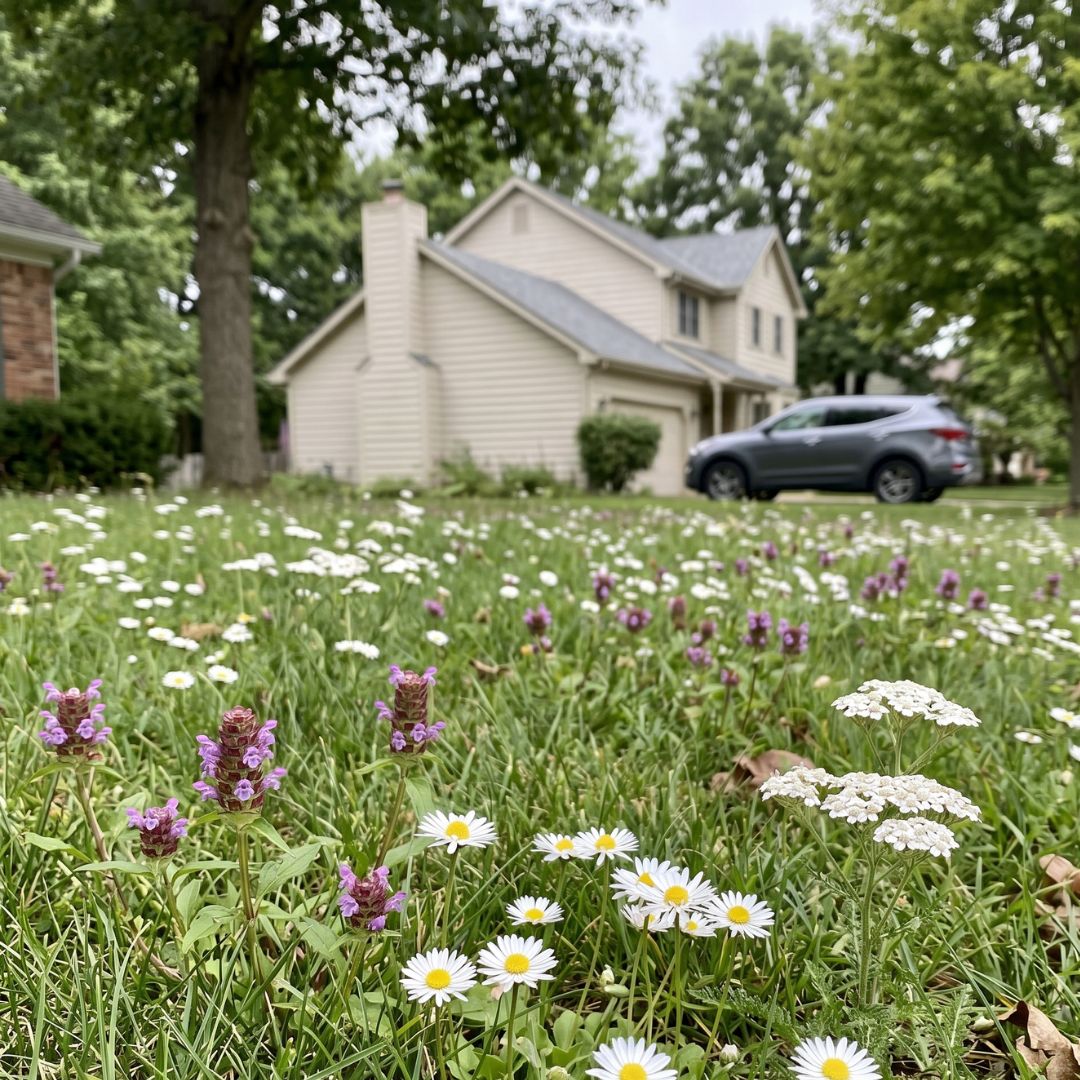
WildLawn combines a Fine Fescue Blend with three flowering lawn companions — English Daisy (Bellis perennis), Self-Heal (Prunella vulgaris) and Yaak Yarrow (Achillea millefolium var. Yaak) — to create a walkable, mowable lawn that produces flowers from May through September. Non-GMO. Zones 3–9.
What’s in WildLawn
| Component | Species | Role in the mix | Height | Bloom |
|---|---|---|---|---|
| Fine Fescue Blend | Festuca spp. | Lawn base — provides the turf structure and walkability | 4–8 inches (mowed) | No bloom |
| English Daisy | Bellis perennis | Ground-level blooms, white/pink, classic lawn daisy | 3–6 inches | May–July |
| Self-Heal | Prunella vulgaris | Purple-pink bee forage, mow-tolerant, spreads by stolons | 4–10 inches | June–September |
| Yaak Yarrow | Achillea millefolium var. Yaak | White native yarrow, turf-type, drought tolerant, rhizomatous | 4–8 inches | June–September |
WildLawn vs SunMeadow — Which Is Right?
| WildLawn | SunMeadow | |
|---|---|---|
| Mowable? | Yes — mow at 4–6 inches 1–2×/yr | No — tall meadow, unmowed |
| Walkable? | Yes — fine fescue base holds foot traffic | Light only |
| Max height unmowed | 6–12 inches | 12–36 inches |
| Grass component? | Yes — fine fescue base | None |
| Looks like a lawn? | Yes, with flowers in it | No — meadow aesthetic |
| Best for | Front/back lawns, low-mow lifestyle | Field edges, unmowed meadow areas |
| Establishment | Standard grass seeding | Wildflower seeding |
The WildLawn Aesthetic
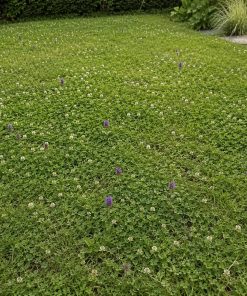
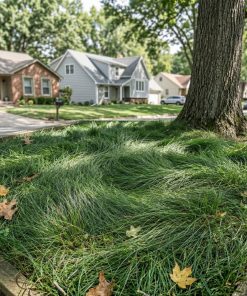
When mowed at 4–6 inches, WildLawn reads as a slightly rough, naturalistic lawn — the fine fescue provides a green background, with English Daisies and Self-Heal visible at the mow height. Left unmowed, the Yaak Yarrow and Self-Heal rise to 8–10 inches with Daisies at ground level — a soft, textured flowering carpet rather than a tall meadow.
The three flowering species are all mow-tolerant: Yaak Yarrow is specifically bred for turf use; Self-Heal is documented to survive and bloom below 3 inches; English Daisy produces rosette-form growth that sits below mow height between flushes. None of them require a long unmowed period to flower — they bloom at mow height.
Mowing Options
| Mowing strategy | Frequency | Height | Result |
|---|---|---|---|
| No-mow | None | — | 10–12 inch naturalistic flowering carpet. Daisies, Self-Heal and Yarrow all visible. |
| Low-mow | 1–2× year | 4–6 inches | Tidier look. Flowers bloom between cuts. Best of both worlds. |
| Light mow | Monthly | 4 inches | More traditional lawn appearance with sporadic wildflower flush. |
| Regular mow | Weekly | 3 inches | Grass-dominated lawn with minimal flowering. Not recommended for WildLawn. |
Establishment Guide
New lawn from scratch
- Prepare a clean, weed-free seedbed. Till or scarify the surface. WildLawn establishes best on cleared ground.
- Sow at per 1,000 sq ft. Broadcast in two perpendicular passes for even coverage.
- Rake lightly to a depth of ¼ inch. Roll or tamp to ensure seed-to-soil contact.
- Water in and keep moist for 10–14 days. Once grass has germinated, reduce watering.
- First mow: when the fine fescue reaches 4 inches, mow to 3 inches. Do not mow again until summer — allow flowering species to establish.
Overseeding an existing lawn
- Mow existing lawn as low as possible. Scarify or core-aerate to expose bare soil.
- Sow at per 1,000 sq ft. Rake in lightly.
- The flowering species establish more slowly in competition with existing grass — expect their first appearance in year 2.
When to plant
| Region | Spring | Autumn |
|---|---|---|
| Zones 3–5 | April–June | August–September |
| Zones 6–7 | March–May | September–October |
| Zones 8–9 | February–April | October–November |
Soil & Site
| Factor | Requirement |
|---|---|
| Sun | Full sun to part shade (3–6 hrs). Fescue and wildflowers all shade-adaptable. |
| Soil | Most soils. Fine fescue adapts to poor, sandy or clay soils. |
| pH | 5.5–7.5 |
| Drainage | Well-drained to average. Does not tolerate waterlogged soil. |
| Traffic | Moderate — fine fescue base provides real walkability. |
Frequently Asked Questions
Can I use WildLawn as a complete front garden lawn?
Yes — WildLawn is specifically designed as a lawn replacement. The fine fescue base makes it walkable and gives it a lawn-like appearance. Mow at 4–6 inches once or twice a year for a tidy look that most neighbours will read as a slightly unconventional but well-kept lawn.
Will the English Daisy spread?
English Daisy (Bellis perennis) spreads slowly by seed. It will naturalise throughout the lawn over years 2–3, filling gaps and increasing density. It does not become invasive and can be reduced by closer mowing if it becomes too dominant.
Is it suitable for dogs?
No — and the Pet-Safe rating on this product says so. WildLawn contains yarrow (Achillea millefolium), which the ASPCA lists as toxic to dogs and cats if eaten. Dogs crossing the lawn are not the concern; dogs that graze on plants are. For a lawn dogs will actually use, choose DogLawn, built for dogs, or MicroBee for a flowering lawn without yarrow.