Description
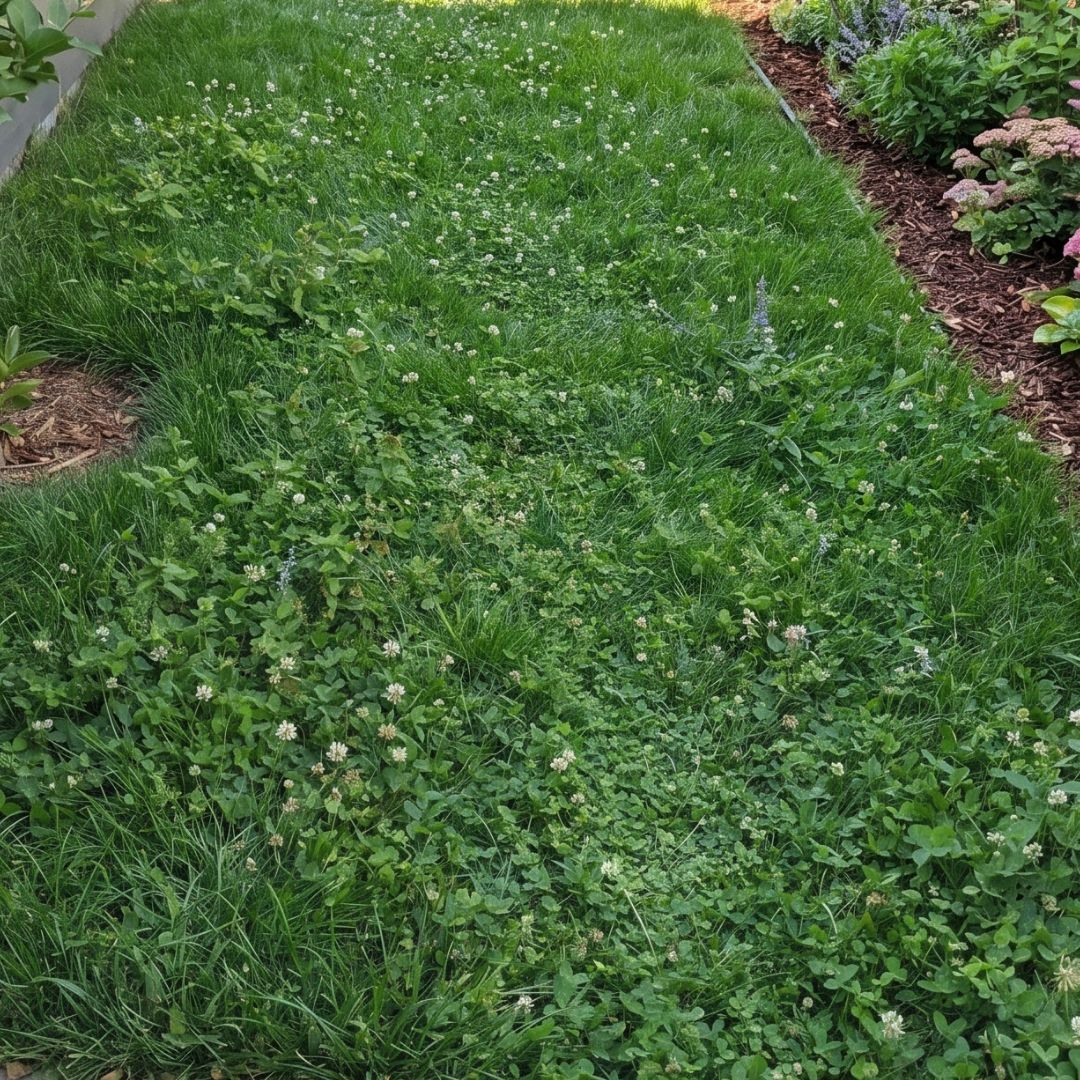
MicroBee is an HOA-friendly bee lawn seed — four premium named fine fescues (Creeping Red, Chewings, Hard & Sheep) combined with Mini White Clover (Trifolium repens var.). Mini White Clover stays below mowing height and produces no visible bloom in the lawn surface — making MicroBee the only bee lawn in this range that is fully HOA-compatible while still feeding 55+ bee species documented by University of Minnesota research. No visible wildflowers. No fertiliser. 0–2 mows per year. Non-GMO, USA-grown. Zones 3–7. ASPCA non-toxic.
MicroBee Seed Specifications
| Species | Common Name | Named Cultivar | Role in Mix | ASPCA |
|---|---|---|---|---|
| Festuca rubra | Creeping Red Fescue | Celestial Strong | Self-spreading rhizomes fill gaps; shade-tolerant; sustains the sward between clover patches; creeping growth creates a dense, weed-suppressing sod over time | Non-toxic |
| Festuca commutata | Chewings Fescue | Enchantment | Dense upright structure; highest shade tolerance of the bunch fescues; fine-bladed, dark green colour; primary shade component of the fine fescue backbone | Non-toxic |
| Festuca trachyphylla | Hard Fescue | Viking H2O | Drought resilience and water conservation — Viking H2O is specifically selected for low water use; most drought-tolerant fine fescue; thrives in low-nitrogen soils | Non-toxic |
| Festuca ovina | Sheep Fescue | Blue Mesa | Poor-soil resilience; fine blue-green blades; tolerates dry, rocky soils where other fescues thin; low nitrogen demand; adds cool-season texture diversity | Non-toxic |
| Trifolium repens var. | Mini White Clover | Dwarf / micro variety | Pollinator forage and nitrogen fixation — stays below mowing height so no visible leaf or bloom at standard cut; feeds 55+ bee species; fixes N/1,000 sq ft/yr; stolon self-repair fills bare patches | Non-toxic |
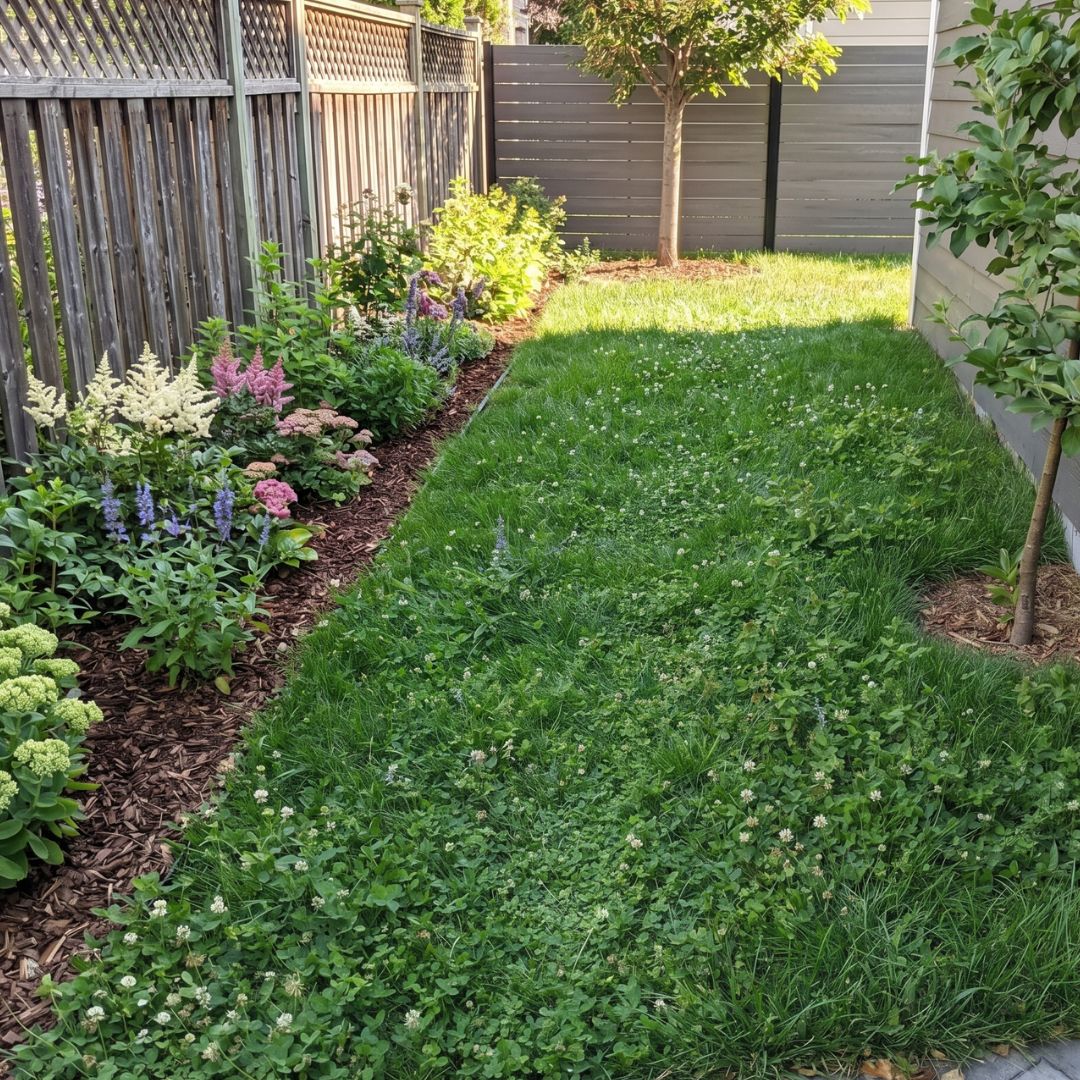
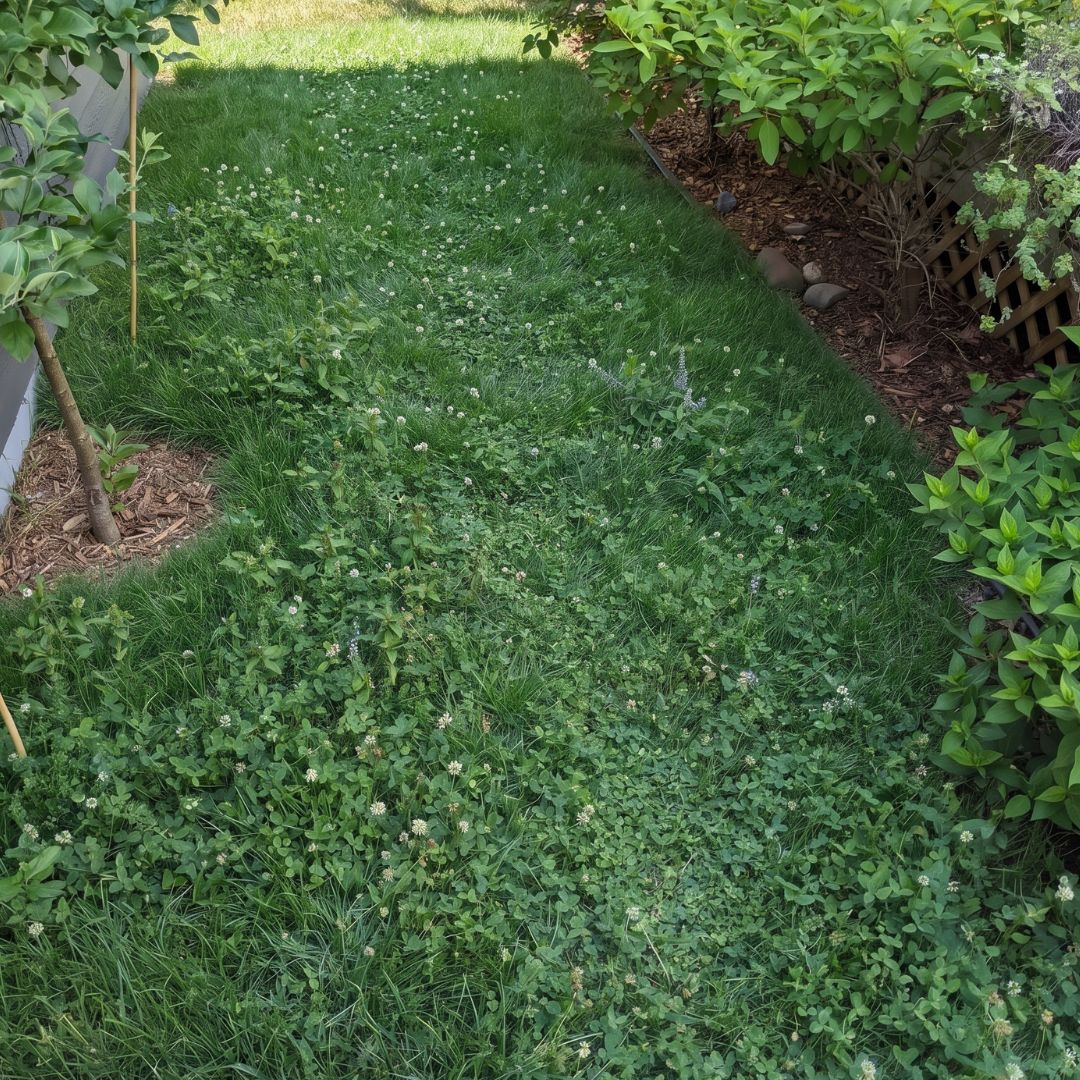
Low bloom profile: Mini White Clover blooms significantly less than standard White Dutch Clover and stays closer to the ground — the visual impact in the lawn is substantially reduced compared to a regular clover lawn. While the clover does bloom and is still attractive to pollinators, the bloom frequency and height are low enough to suit most HOA-governed and appearance-conscious front lawns where a standard clover lawn would not be acceptable. All five species ASPCA confirmed non-toxic to dogs, cats, and horses.
Why MicroBee — The HOA-Compatible Pollinator Lawn
Most bee lawn products create a visible choice between ecology and neighbourhood aesthetics. White Dutch Clover blooms visibly. Self-Heal produces purple flower spikes. Yarrow produces flat white flower clusters. All of these are beneficial — but all are visible, and in HOA-governed neighbourhoods or on front lawns where a conventional appearance is required, they create practical barriers to adoption. MicroBee removes that barrier. The Mini White Clover in this blend is a specifically selected dwarf variety that stays lower to the ground and blooms significantly less than standard White Dutch Clover. While blooms are still present and still attractive to pollinators, the reduced bloom frequency and lower growing habit makes this a far more suitable lawn companion in HOA-governed settings than regular clover. The nitrogen fixation and stolon spread contribute to lawn health continuously, with the clover’s nitrogen fixation and stolon spread contributing to lawn health year-round.
University of Minnesota research documents White Dutch Clover providing forage for more than 55 bee species in Minnesota alone. The mini variety in MicroBee produces proportionally smaller but functionally equivalent blooms — the forage value is maintained even as the visual footprint in the lawn is reduced. For lawns where the full bloom of PollinatorLawn is welcome, that product delivers more ecological value. For lawns where appearance must conform to HOA standards or front-yard norms, MicroBee is the correct product.
The four fine fescue cultivars in MicroBee are named NTEP-tested varieties specifically selected for complementary performance — Celestial Strong Creeping Red for self-spreading sod formation, Enchantment Chewings for shade density and dark colour, Viking H2O Hard Fescue for water conservation, and Blue Mesa Sheep Fescue for low-fertility soil resilience. This is a meaningfully higher quality ingredient standard than generic fine fescue blends that use VNS (Variety Not Stated) seed.
MicroBee vs PollinatorLawn — Which Is Right?
| Property | MicroBee Fine Fescue + Mini Clover | PollinatorLawn Fine Fescue + Clover + Wildflowers |
|---|---|---|
| HOA compatible | Low bloom profile — less visible than standard clover, suitable for most HOAs | No — visible bloom from clover, Self-Heal & Yarrow |
| Bee species supported | 55+ (mini clover) | 60+ (clover + Self-Heal + Yarrow) |
| Appearance | Conventional lawn appearance | Flowering lawn — visible bloom May–Sep |
| Cultivar quality | Named NTEP cultivars throughout | Named NTEP fescue cultivars |
| Best for | HOA front lawns, appearance-first properties, buyers who want ecology without visible change | Back gardens, non-HOA properties, buyers who want maximum ecological impact with a flowering lawn |
Best Uses for MicroBee
| Application | Performance | Notes |
|---|---|---|
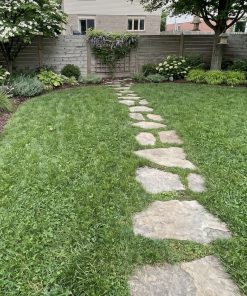
| HOA front lawn — appearance required | Excellent | The primary use case. Presents as a premium fine fescue lawn — dark green, fine-bladed, uniform. Mini White Clover blooms significantly less and stays lower than standard White Dutch Clover — far less visible than a regular clover lawn. Blooms are still present and still support pollinators, but at a much reduced visual profile suitable for most HOA-governed front lawns. |
| Eco-lawn with conventional appearance | Excellent | For buyers who want to support pollinators without the flowering lawn aesthetic. All eco-lawn benefits — no fertiliser, low mowing, drought tolerance — delivered through a lawn that looks conventional. |
| Full sun to moderate shade | Excellent | Enchantment Chewings Fescue and Celestial Creeping Red both perform well in shade down to 3–4 hours direct sun. Mini White Clover requires minimum 3 hours to maintain nitrogen fixation and forage value. |
| Overseeding into existing fine fescue | Excellent | Overseed at per 1,000 sq ft after aerating. Named cultivar fine fescues will strengthen an existing stand. Mini White Clover establishes within one season and begins nitrogen fixation from year one. |
| Buyers who want maximum bloom and wildflowers | Not the right product | If visible flowering is desired see PollinatorLawn which adds Self-Heal and Yaak Yarrow for 60+ bee species and a flowering lawn appearance from May through September. |
Zone & Climate Compatibility
| Zone | Performance | Notes |
|---|---|---|
| Zone 3–5 — Cool North & Midwest | Excellent | The primary range. All four named fescue cultivars and Mini White Clover are cold-hardy to Zone 3. Fall seeding (Aug–Oct) preferred for strongest establishment and fewest competing weeds. |
| Zone 5b–7 — Mid-Atlantic & Midwest | Excellent | Strong performance throughout. Viking H2O Hard Fescue sustains the stand through Zone 6b–7 summer heat. Fall seeding September–October gives best results. |
| Zone 7b+ — Warm South | Not suitable | Fine fescue is a cool-season grass. MicroBee is designed for Zones 3–7. For warm-season lawns with pollinator value consider adding White Dutch Clover to your existing turf. |
Seeding Rates
Sow per 1,000 sq ft for new lawns on bare soil. For overseeding into existing fine fescue, sow per 1,000 sq ft after aerating. Seed in fall (Aug–Oct) for best results, or spring (Mar–May). Do not seed in summer.
| Size | Coverage | Best For |
|---|---|---|
| Small Bag | 200 sq ft | Test patch · border strip · small overseed |
| Medium Bag | 1,000 sq ft | Small front or back yard · HOA lawn |
How to Establish MicroBee
Fine fescue germinates in 7–14 days; Mini White Clover in 7–10 days. Fall seeding (Aug–Oct) strongly preferred — cooler temperatures and less weed pressure give both species the best start. Spring seeding (Mar–May) works well in Zones 3–5.
- Prepare a weed-free seedbed. Remove all existing vegetation. Fine fescue and Mini White Clover both establish more slowly than aggressive annual weeds — a clean seedbed in the first season is the most important factor in establishment success.
- Broadcast at per 1,000 sq ft. Cover seed with ⅛–¼ inch of soil. Roll or tamp for firm soil contact. Both species require good seed-to-soil contact.
- Keep surface moist for 2–3 weeks. Water lightly twice daily until germination. Fine fescue appears first at 7–14 days; Mini White Clover follows. Both should be visible within 3 weeks under good conditions.
- Do not apply nitrogen fertiliser. Fine fescue evolved in low-nitrogen soils and is harmed by nitrogen applications. Mini White Clover fixes all the nitrogen the stand requires from year one.
- First mow at 3.5 inches after 6 weeks. Allow full root development before mowing. Maintain at 2.5–3.5 inches for a conventional lawn appearance. At this height Mini White Clover leaves and bloom remain below the blade — the HOA-compatible appearance is maintained throughout the growing season.
Sources
- UMN Extension — Bee Lawns and White Dutch Clover (55+ bee species documentation): extension.umn.edu
- UMN Extension — Fine Fescue Lawns (low-input management, mowing, water use): extension.umn.edu
- ASPCA Animal Poison Control — Festuca spp. and Trifolium repens non-toxicity: aspca.org