

Description
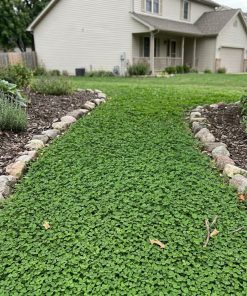
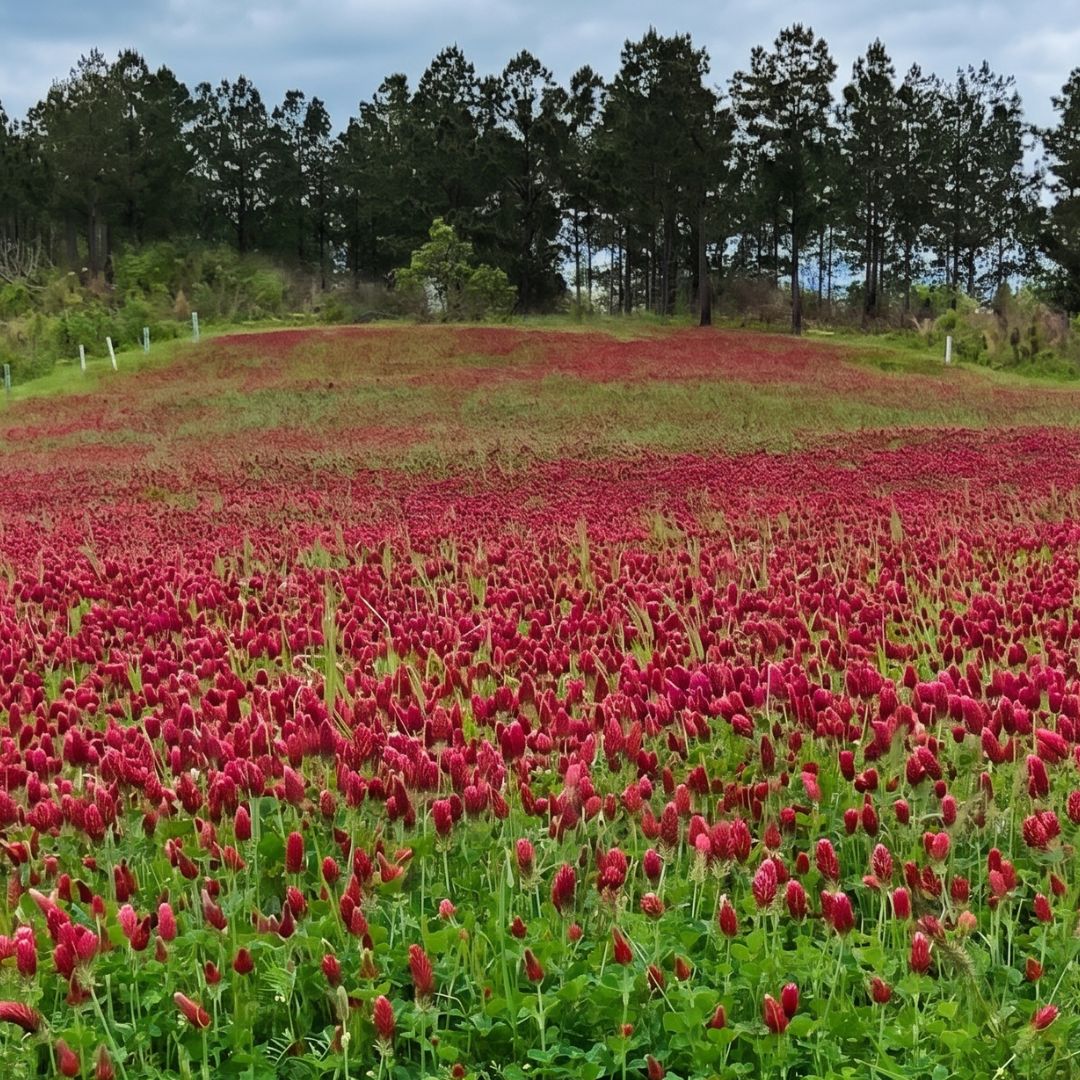
ScarletStitch is a premium crimson clover seed for cover crop rotation, lawn transition, and ornamental seasonal colour — non-GMO, USA-grown Trifolium incarnatum that produces brilliant scarlet-red flower spikes from April through June and fixes up to 150 lb of nitrogen per acre. Annual in Zones 3–7, self-seeding and short-lived perennial in Zones 8–10. The fastest-acting nitrogen-fixing clover available for home lawns and gardens.
ScarletStitch Seed Specifications
| Species | Common Name | Type | Zone | Height | Bloom | ASPCA |
|---|---|---|---|---|---|---|
| Trifolium incarnatum | Crimson Clover | Annual (Z3–7) · Short-lived perennial (Z8–10) | 3–10 | 12–18 in at bloom | Apr–Jun | Not listed toxic |
ASPCA confirmed: Trifolium incarnatum is not listed as toxic to dogs, cats, or horses per ASPCA Animal Poison Control.
Why Choose Crimson Clover Seed
Crimson clover (Trifolium incarnatum) is the fastest-acting nitrogen-fixing clover available for home use. Penn State Extension documents nitrogen fixation from T. incarnatum at N per acre per growing season — significantly higher than the /acre/year typical of white Dutch clover, and delivered in a single season rather than spread across years. For a homeowner transitioning away from synthetic fertiliser, one winter of crimson clover before reseeding with a perennial clover or grass can replace multiple years of nitrogen application.
The ornamental case is equally strong. Crimson clover is one of the most visually striking annual lawn plants available — upright scarlet-red flower spikes reaching 12–18 inches, blooming in April and May when most other lawn alternatives are still establishing. The Xerces Society documents it as a critical early-season nectar source for queen bumblebees emerging from winter dormancy, weeks before white Dutch clover or red clover bloom.
Its annual lifecycle is the key to how ScarletStitch is best used: it dies after setting seed, leaving behind a nitrogen-enriched seedbed ready for permanent planting. In the right zone with good conditions it self-seeds prolifically, returning each spring with no intervention. Used deliberately as part of a lawn transition plan — seed autumn, bloom spring, turn under before summer, plant perennial clover or grass into enriched soil — it compresses a two-year fertility programme into a single cycle.
Best Uses for ScarletStitch Crimson Clover Seed
| Application | Performance | Notes |
|---|---|---|
| Cover crop & lawn transition | Excellent | The primary use case. Seed autumn, bloom spring, turn under before permanent seeding. Fixes 70– N/acre in a single season — compresses years of fertility building into one cycle. |
| Early-season pollinator support | Excellent | Blooms Apr–Jun — weeks before white Dutch or red clover. Critical early-season nectar for queen bumblebees emerging from dormancy. Xerces Society confirmed high pollinator value. |
| Ornamental seasonal colour | Excellent | 12–18 inch scarlet-red flower spikes. One of the most visually striking annual lawn plants available. Seeded in autumn meadow strips or borders for spring impact. |
| Self-seeding annual lawn — Zones 3–7 | Excellent | Allow seed heads to fully mature and shatter before mowing — crimson clover returns reliably each spring without reseeding in most zones. |
| Winter cover & erosion control | Very Good | Dense autumn germination covers bare soil through winter, preventing erosion and weed establishment. Fixes nitrogen throughout the overwintering period. |
| Permanent perennial lawn | Not ideal | Annual lifecycle means it dies after bloom each year. For a permanent perennial clover lawn see HearthClover White Dutch or FineFolio MicroClover. |
Crimson Clover vs White Dutch Clover
| Property | ScarletStitch Crimson | HearthClover White Dutch |
|---|---|---|
| Lifecycle | Annual / self-seeding | Perennial |
| Bloom colour | Scarlet-red upright spikes | White globe flowers |
| Bloom season | Apr–Jun (earliest) | May–Sep |
| Height at bloom | 12–18 inches | 4–8 inches |
| N-fixation rate | 70– N/acre (fastest) | ~ N/acre/yr (steady) |
| Ground cover | Seasonal only | Year-round perennial mat |
| Best for | Cover crop, transition, early colour, pollinators | Permanent lawn, year-round coverage |
Zone & Climate Compatibility
| Zone | Behaviour | Best Seeding Window |
|---|---|---|
| Zone 3–7 | Annual — dies after setting seed. Self-seeds prolifically if seed heads allowed to shatter before mowing. | Sep–Oct for April bloom · Apr–May for June bloom |
| Zone 7b–9 | Annual or short-lived biennial. Turn under after bloom or allow to self-seed for following spring. | Oct–Nov · blooms Mar–May |
| Zone 9–10 | Winter annual. Excellent winter cover crop in mild climates. Blooms Feb–Apr. Can behave as short-lived perennial in ideal conditions. | Nov · blooms Feb–Apr |
How to Plant ScarletStitch Crimson Clover
Crimson clover germinates in 5–10 days at soil temperatures of 40–65°F. For spring bloom: seed in September–October. For summer bloom in cool zones: seed in April–May.
- Prepare the seedbed. Rake bare soil smooth and firm lightly. For overseeding into existing grass, mow short to 1.5 inches and rake out thatch to expose soil surface.
- Broadcast at the surface. Sow per 1,000 sq ft for ornamental and lawn use. For cover crop use, sow at per 1,000 sq ft. Do not bury — seed requires surface light contact.
- Rake lightly for soil contact. A single pass with a leaf rake is sufficient. Do not cover deeply.
- Water lightly and consistently. Keep the surface moist with light daily watering for the first 7–10 days until germination. Do not let the surface dry between waterings.
- For cover crop use — turn under before seed set. Incorporate into the soil when 25% of plants are in bloom for maximum nitrogen return. If self-seeding is the goal, allow all seed heads to fully mature and shatter before mowing.
- For lawn transition — follow with permanent seeding. After turning under, wait 2–3 weeks for decomposition, then sow your permanent lawn seed into the nitrogen-enriched seedbed.
For a full lawn transition plan using ScarletStitch followed by a perennial clover, see our Clover Lawn Guide. For the permanent clover options see HearthClover White Dutch → and FineFolio MicroClover →
Sources
- Penn State Extension — Crimson Clover Trifolium incarnatum: N-fixation, cover crop establishment: extension.psu.edu
- NC State Extension — Trifolium incarnatum plant profile (growth habit, bloom season): plants.ces.ncsu.edu
- Xerces Society — Crimson clover as early-season pollinator forage: xerces.org
- USDA PLANTS — Trifolium incarnatum native range and ecology: plants.usda.gov
- ASPCA Animal Poison Control — Trifolium incarnatum toxicity: aspca.org
Related guides:
Single-species clover:
StrawberryField Strawberry Clover
Multi-clover blends:
Clover-grass mixes: