Lawn alternatives in Michigan
Cold winters and Great Lakes microclimates define Michigan — and cool-season lawns are at home from Detroit to the U.P.
The short version
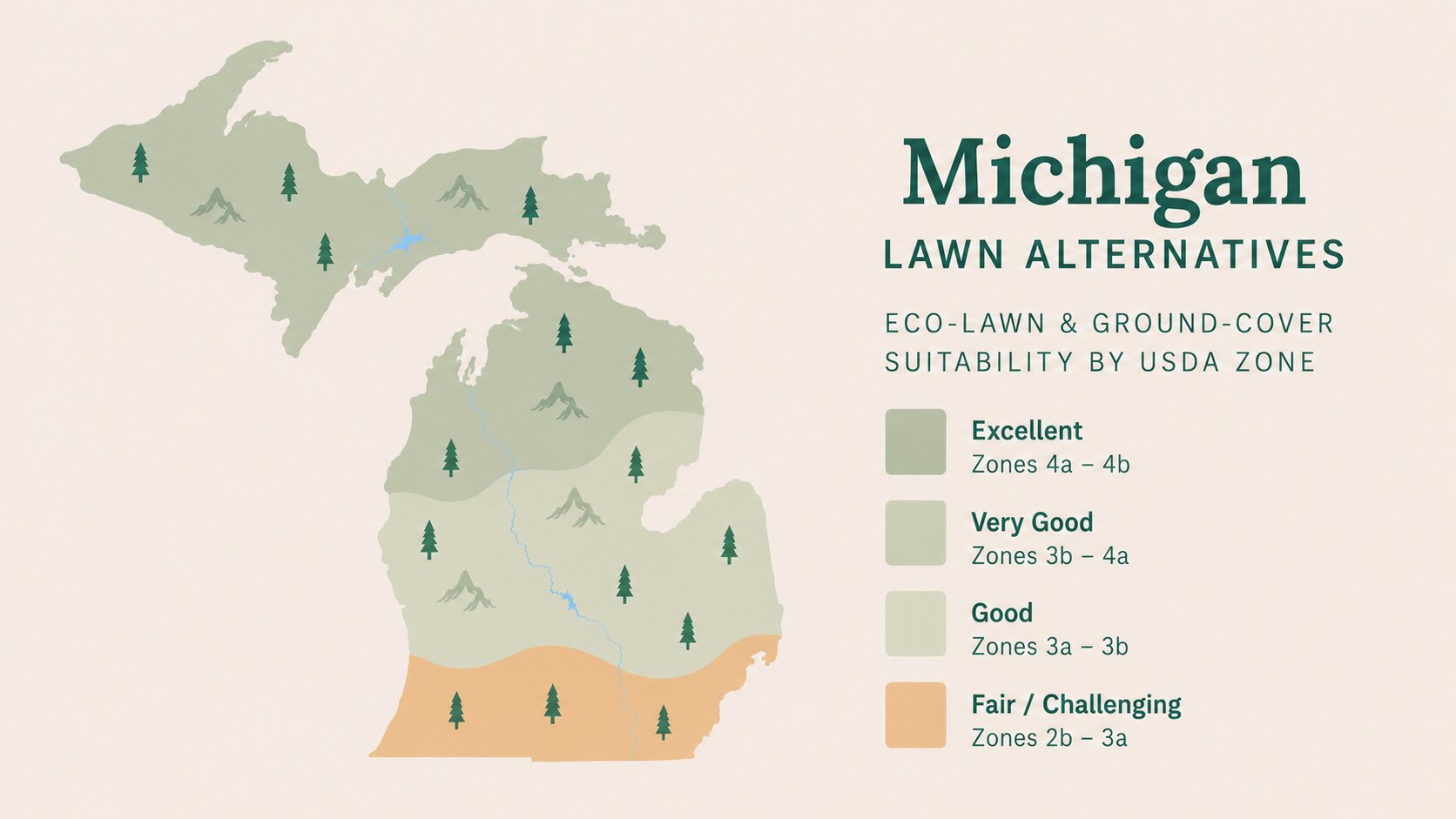
Michigan sits in USDA zones 4a–6b. Below: the low-input lawns that genuinely suit the state’s climate, an honest note on what doesn’t, and where to go next — all matched to verified species data.
Know your zone first
Michigan is shaped by its lakes. Per the 2023 USDA Plant Hardiness Zone Map and MSU Extension, the state spans zone 4a in the western Upper Peninsula and northern interior to 6b in the southeast and along the Lake Michigan shore — Detroit sits in 6b, Grand Rapids 6a, with new 7a slivers right on the lakeshore.
The Great Lakes are the headline: they warm the immediate shoreline into a milder “fruit belt” while the interior runs colder. It’s a cold-continental climate with snowy winters and warm humid summers — firmly cool-season lawn country.
| Part of state | USDA zones | Representative cities |
|---|---|---|
| Upper Peninsula | ~4a–5b | Marquette, Houghton, Sault Ste. Marie |
| Northern Lower Peninsula | ~4b–5b | Traverse City, Petoskey, Gaylord |
| Central & Lake Michigan shore | ~5b–6b | Grand Rapids, Lansing, Kalamazoo, Holland |
| Southeast / Detroit | ~6a–6b | Detroit, Ann Arbor, Flint |
Zone data: 2023 USDA Plant Hardiness Zone Map (planthardiness.ars.usda.gov); Michigan State University Extension (canr.msu.edu). Species data from our Verified Data Layer.
Low-input lawns that suit Michigan
Honest note: cool-season all the way
Michigan’s cold winters and short northern seasons rule out warm-season species — buffalograss and dichondra won’t establish here, especially up north. Lean entirely on cool-season fescue, clover and native sedge. And respect the lakes: the shoreline can run a full zone or two milder than land just inland.
Shop these for your climate
Getting it right here
North vs south. The cold U.P. and northern Lower Peninsula need the hardiest cool-season species; the milder south and lakeshore open up the full palette plus thyme.
Mind the lake effect. Shoreline sites are warmer (and snowier); interior pockets are colder — check your exact zone before choosing.
Time it right. Sow cool-season seed in late summer to early fall; northern gardeners have a shorter window, so don’t wait too late.
Find your exact zone
Look up your ZIP at the USDA Plant Hardiness Zone Map, then match species using our zone reference and planting calendar.
Common questions for Michigan
What USDA zone is Michigan?
Does having two peninsulas complicate planting in Michigan?
How does the Great Lakes effect work in Michigan?
When should I plant in Michigan?
Plan your Michigan lawn
Find your lawn alternative
Matched to your zone and site.
Nearby & similar-climate states
Planning across the region? Compare lawn-alternative guidance for Indiana, Ohio, Wisconsin.