Lawn alternatives in Arizona
In the desert, water is everything. Arizona is where low-input lawns earn their keep — but honestly, sometimes the answer is less lawn.
The short version
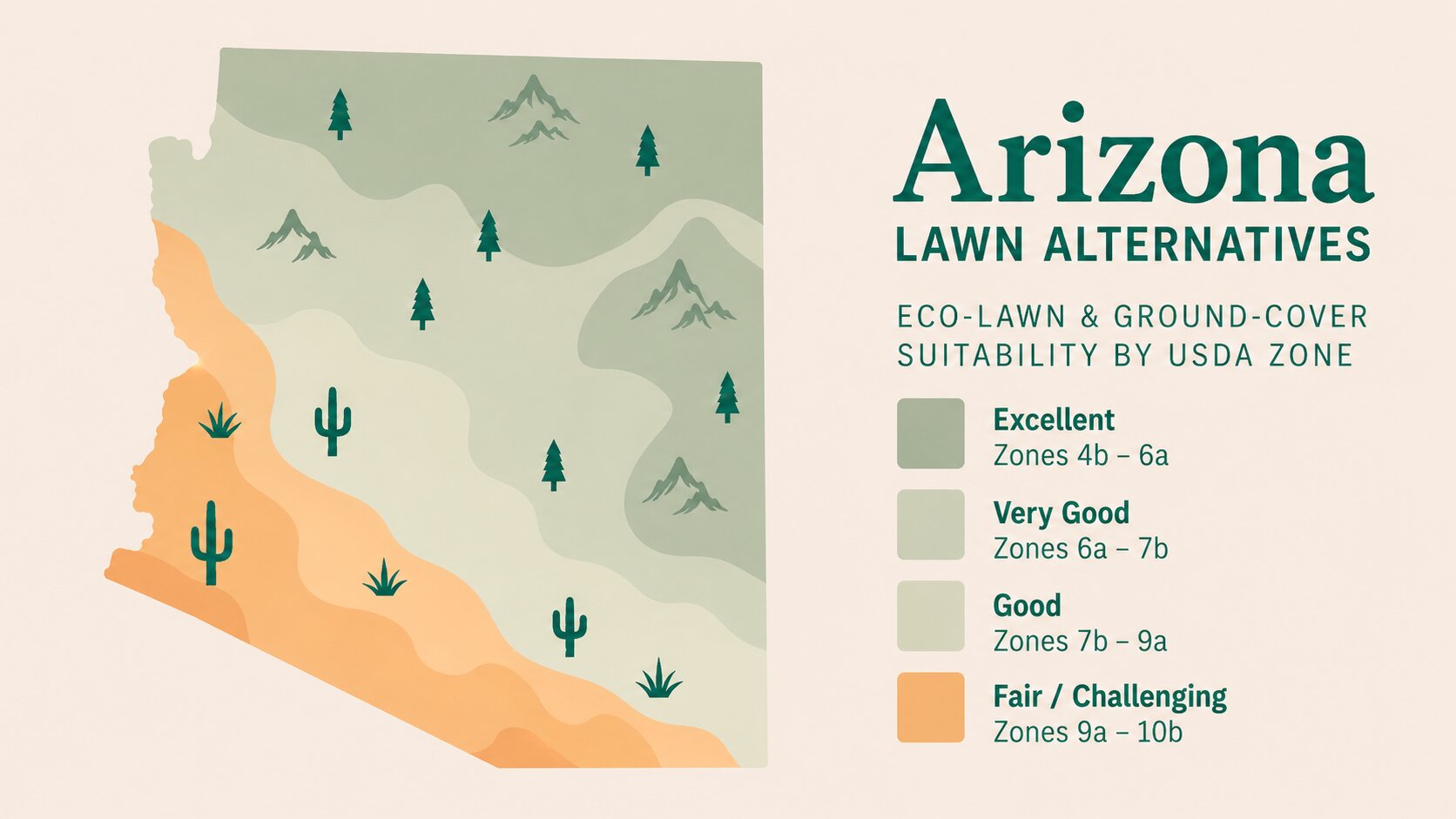
Arizona sits in USDA zones 5b–10b. Below: the low-input lawns that genuinely suit the state’s climate, an honest note on what doesn’t, and where to go next — all matched to verified species data.
Know your zone first
Arizona’s climate splits sharply by elevation. Per the 2023 USDA Plant Hardiness Zone Map and the University of Arizona Cooperative Extension, zones run from about 5b in the high country to 10b in the low desert — Flagstaff sits in 6a, while Phoenix, Tucson and Yuma are firmly in the 9–10 range.
It’s an arid state — roughly 12 inches of rain a year against a US average near 38 — with intense summer heat in the desert and real cold up north. Water, not winter, is the limiting factor for most Arizonans.
| Part of state | USDA zones | Representative cities |
|---|---|---|
| High country | ~5b–7a | Flagstaff, White Mountains, Greer |
| Central transition | ~7a–8b | Prescott, Sedona, Verde Valley |
| Low desert | ~9a–10b | Phoenix, Tucson, Yuma |
Zone data: 2023 USDA Plant Hardiness Zone Map (planthardiness.ars.usda.gov); University of Arizona Cooperative Extension. Species data from our Verified Data Layer.
Low-input lawns that suit Arizona
Honest note: in the desert, sometimes less lawn is the win
Even a “low-water” living lawn needs irrigation to establish, and in the extreme low desert some species (clover, fescue) ask for more water than really makes sense — a planted desert xeriscape can beat any lawn there. Arizona also has turf-replacement rebates, but many require non-turf desert landscaping and may exclude turf-looking seed lawns, so check the rules before you count on one (see our rebate reference).
Shop these for your climate
Getting it right here
Water is the headline. Plan establishment irrigation, match species to your zone, and look at rebates before you start.
Match elevation, not just “Arizona.” The high country and the low desert are different worlds — a Flagstaff lawn and a Phoenix lawn share almost nothing.
Time to the heat. Sow warm-season options in late spring; in the cold high country, treat it like a northern lawn and sow cool-season seed in late summer or early fall.
Find your exact zone
Look up your ZIP at the USDA Plant Hardiness Zone Map, then match species using our zone reference and planting calendar.
Common questions for Arizona
What USDA zone is Arizona?
Is Arizona really that different from north to south?
Is water the main concern in Arizona?
When should I plant in Arizona?
Plan your Arizona lawn
Find your lawn alternative
Matched to your zone and site.
Nearby & similar-climate states
Planning across the region? Compare lawn-alternative guidance for California, Nevada, Utah, New Mexico.