
Thymus serpyllum Red Flowered: The Crimson Carpet
The showiest creeping thyme — a fragrant, drought-proof, pet-safe mat that erupts in magenta-red bloom each summer.
The short version
Red creeping thyme (Thymus serpyllum, sold as ‘Coccineus’ or ‘Red’) is the same tough, walkable, not-listed-as-toxic groundcover as common creeping thyme — but with vivid crimson-magenta flowers. It needs full sun and sharp drainage, hardy in USDA zones 3–9, and once established it shrugs off drought and needs no mowing.
Quick facts
- Botanical
- Thymus serpyllum (‘Coccineus’ / ‘Red’)
- USDA zones
- 3–9
- Sun
- Full sun only (6+ hrs) — fails in shade
- Height
- 2–4 in (no mowing needed)
- Soil
- Sandy, gritty, sharp drainage; lean — not wet clay
- Bloom
- Magenta-red, June–September (peak early summer)
- Foot traffic
- Light–moderate (not dog runs)
- Drought
- High once established
- Pollinators
- High — bees and butterflies
- Pet safety
- ✓ Not on the ASPCA toxic list for dogs, cats & horses
Why people plant it
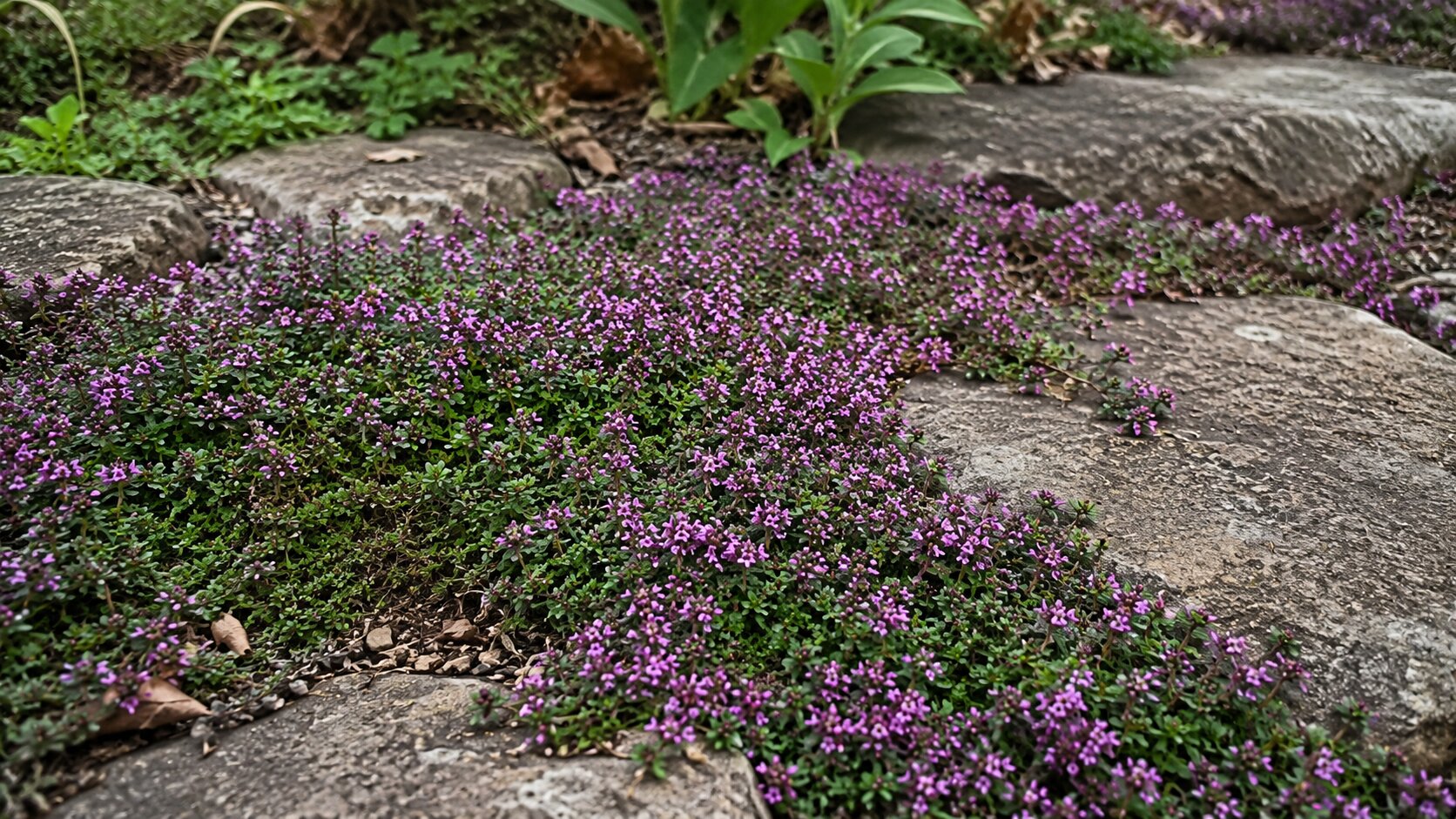
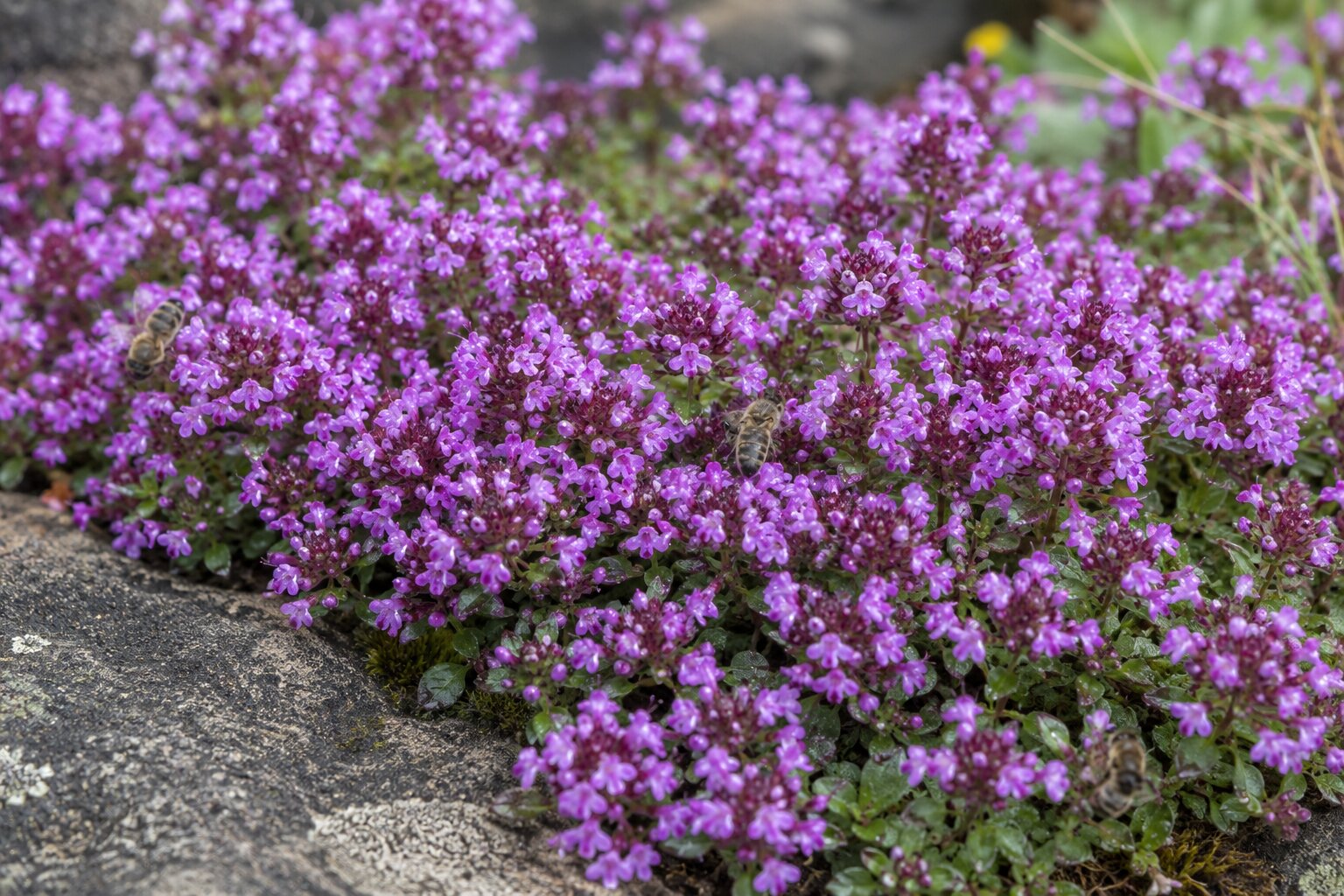
For most of the year red creeping thyme is a low, dense, evergreen-ish green carpet a couple of inches tall. Then, in early-to-mid summer, it disappears under a sheet of tiny magenta-red flowers alive with bees — the single most dramatic bloom of any walkable lawn alternative.
It works as a full lawn substitute in sunny, well-drained spots, as a fragrant filler between stepping stones and pavers (it releases scent when brushed or stepped on), and as a tough, no-mow cover for hot banks and gravel gardens.
Pet-safe and pollinator-friendly
Creeping thyme — including red-flowered varieties — is not listed as toxic by the ASPCA, and it’s a magnet for bees. That combination makes it a favourite for pet households that also want to support pollinators. Note the bloom does draw bees, so mow it back before barefoot season if stings are a concern.
Planting & care
Site. Full sun and fast-draining, lean soil are non-negotiable — thyme rots in wet or heavy clay and thins in shade. Improve drainage with grit or sand before planting.
Establish. Sow seed at about ⅛ lb per 5,000 sq ft (or set plugs 6–12 in apart for faster cover); seed germinates in roughly 14–21 days at 60–70°F. Keep lightly moist until established, then cut water right back — thyme prefers it dry.
Maintain. No mowing is needed; a light shear after flowering keeps it tidy and dense. No fertiliser. It fills in over a season or two into a solid carpet.
Other creeping thymes
Red creeping thyme varieties
“Red creeping thyme” is sold under several named cultivars, each with a different look and use. All are low, fragrant, drought-tolerant and walkable except where noted:
- ThymeWalk red creeping thyme — the flagship crimson-flowered carpet.
- WhiteWalk (‘Album’) — a white-flowered form.
- ElfWalk (‘Elfin’) — the smallest, tightest mat, best for paving joints.
- Magic Carpet — bright-pink bloom.
- Woolly thyme (Thymus pseudolanuginosus) — a genuinely different species: silver and soft, but it rots in wet ground.
What to weigh
Red creeping thyme is full-sun only and won’t carry a shady or wet yard — wrong site is the usual cause of failure. It takes light-to-moderate foot traffic but not concentrated dog runs, it’s slow to fill from seed (plugs are faster), and the summer bloom means bees. For shade or heavy traffic, see the shade and high-traffic guides instead.
Where the red bloom actually earns its place
Because the flower color is the whole point of choosing red over another creeping thyme, where you plant it matters more than with a plain-green variety. It reads best against light-colored hardscape — pale gravel, light pavers, or a stone path — where the magenta bloom has genuine contrast rather than disappearing against dark mulch or soil. Along a sunny path edge or cascading over a low retaining wall, the bloom is visible at a distance in a way a flat lawn planting isn’t.
For a mixed-color effect, pairing red creeping thyme with a white- or pink-flowering variety in adjoining patches creates a genuine color-block planting rather than a single uniform carpet — since all creeping thymes share the same sun and drainage requirements, mixing colors costs nothing in care complexity.
Common problems and what they usually mean
- Patchy after a full season. Normal for seed-grown thyme — full coverage is usually a second-year result. If patches persist into year two, check for shade creeping in or a low spot holding water, since both stall establishment indefinitely, not just slow it.
- Fewer flowers than expected. Usually too much fertility or too much water — red creeping thyme blooms hardest when treated a little leanly, the opposite of a pampered lawn.
- Dieback after winter. More often a drainage problem than a cold-hardiness one. It’s rated to zone 3, but roots sitting in water during winter thaw-freeze cycles kill it faster than the cold itself.
- Bees are a concern for barefoot use. Mowing or shearing off the spent blooms after the main flush reduces bee activity on the surface without removing the plant itself.
Common questions
Is red creeping thyme the same plant as regular creeping thyme?
Seed or plugs — which is faster?
Can I mix it with other thyme varieties?
Does it need full sun, or will part shade work?
Keep going
Plant a crimson thyme carpet
Pet-safe, no-mow, drought-proof.
Thyme is sold both ways. Pick the one that matches the job.
As a single cultivar: ThymeWalk red creeping thyme (the flagship), WhiteWalk (‘Album’, white), ElfWalk (‘Elfin’ — the smallest, for tight paving joints), Magic Carpet (bright pink) or wooly thyme (Thymus pseudolanuginosus — a genuinely different species, silver and soft, but it rots in wet ground).
Or blended, when the mix does the job better: for a walkable lawn, ThymeTurf puts thyme with fine fescue and bluegrass — the grass carries the traffic, the thyme carries the scent. For a path or paving joints, the fragrant steppable path mix is built for exactly that. To trial varieties first, the variety collection — and given how unreliable thyme’s common names are, that is the honest way to choose.
Compare every thyme variety →Where this comes from
- Penn State Extension — Thymus praecox grows 2–3 inches tall and works as a ground cover; culinary thyme is the separate T. vulgaris
- University of Minnesota Turfgrass Science — creeping thyme spreads by stolons and rhizomes, and its blooms feed small native bees and butterflies
- USDA NRCS Plant Database — distribution, hardiness and habit for Thymus