
Description
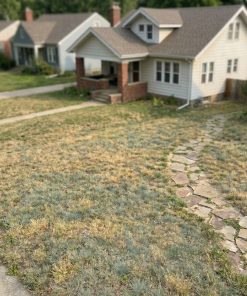
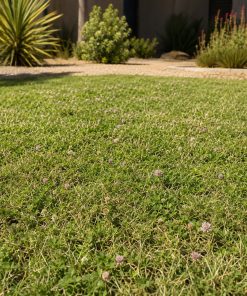
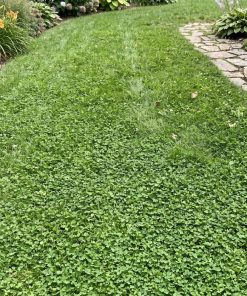
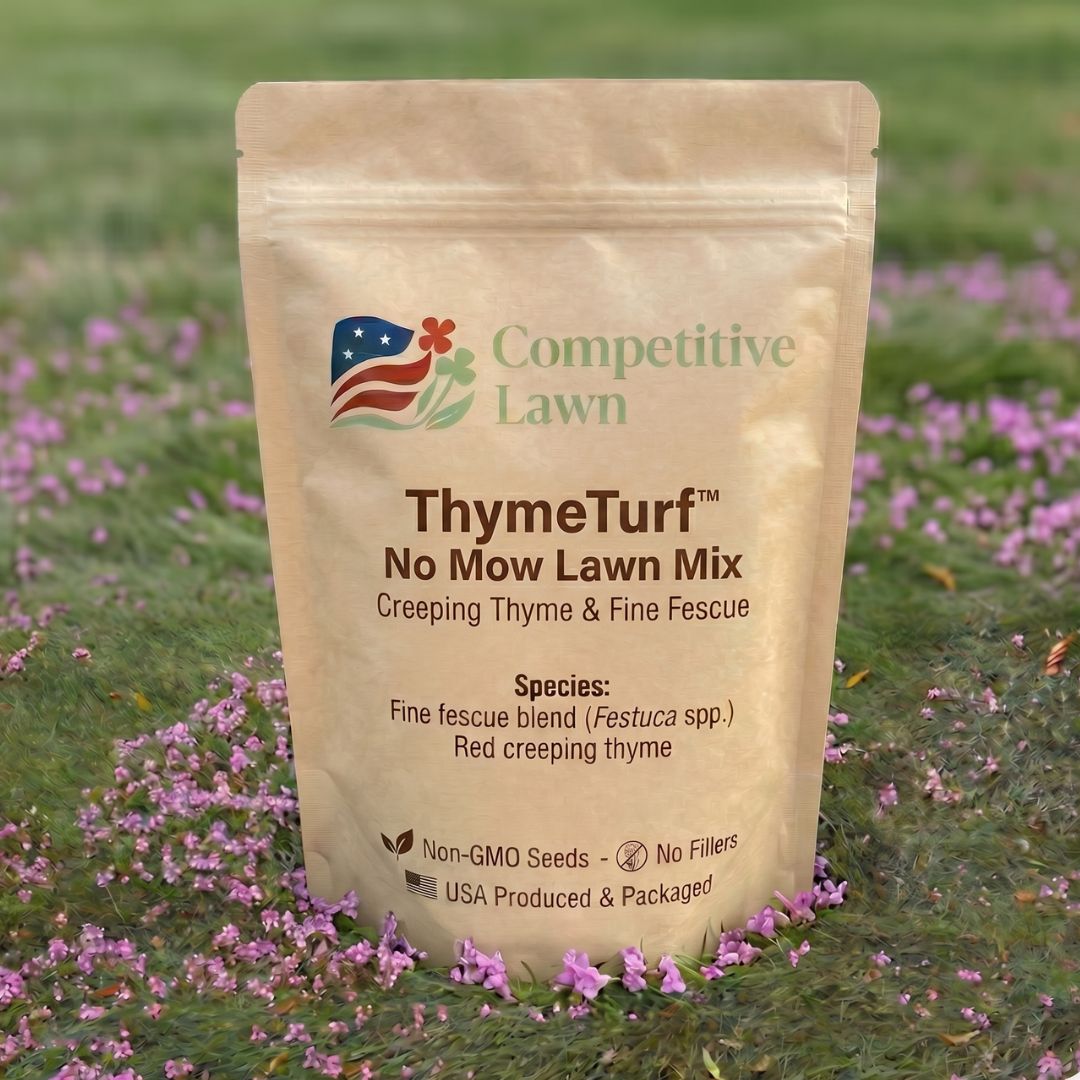
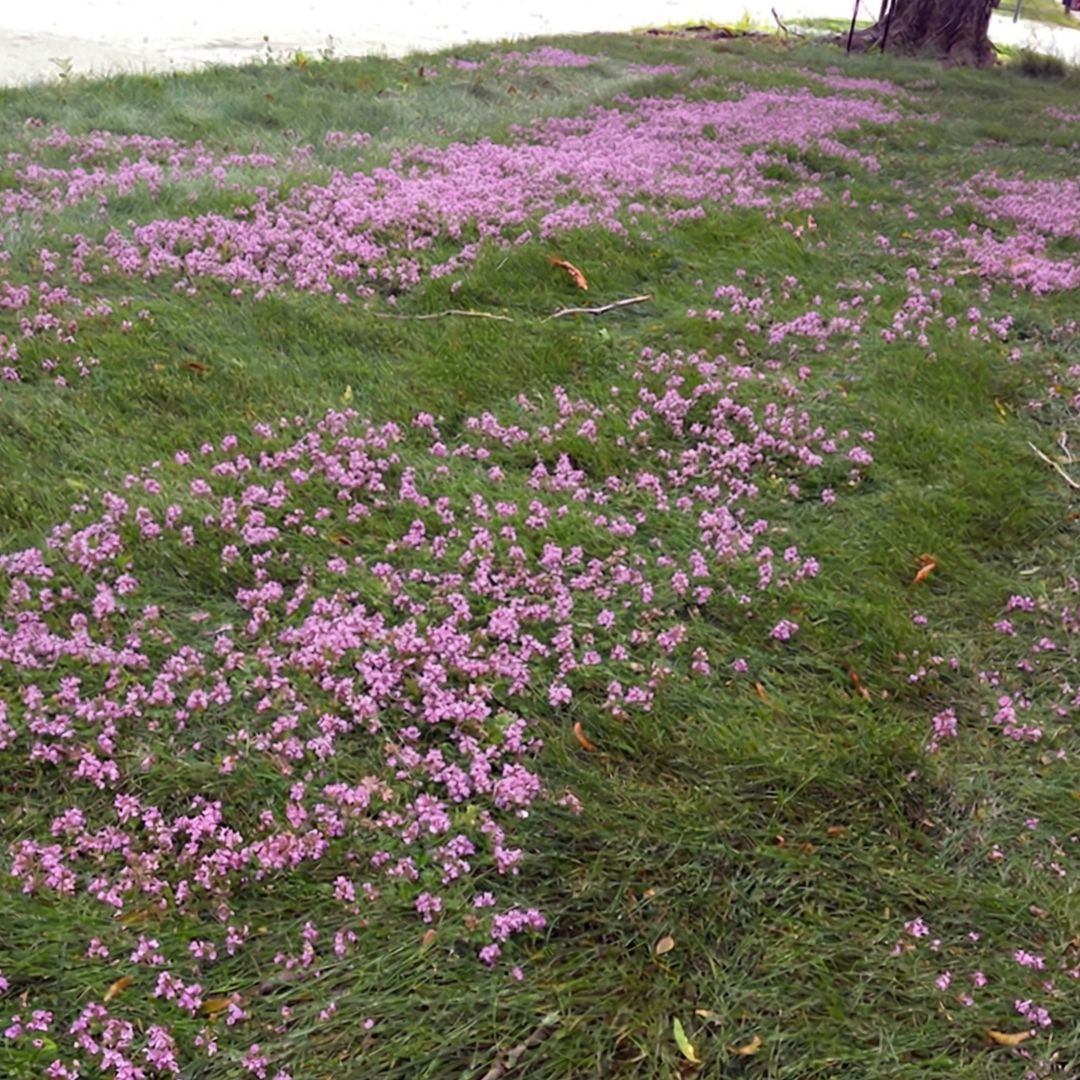
ThymeTurf is a premium creeping thyme lawn seed mix combining red creeping thyme (Thymus serpyllum) with fine fescue — non-GMO, USA-grown seed that establishes a flowering, fragrant, no-mow lawn that blooms pink-purple June through August and requires 0–2 mows per year. Fine fescue provides the cool-season lawn structure and drought tolerance; red creeping thyme fills the surface with dense, bee-attracting flowering ground cover. The result is the most visually distinctive low-maintenance lawn available for full-sun Zones 4–9.
ThymeTurf Seed Specifications
| Species | Common Name | Zone | Role in Mix | ASPCA |
|---|---|---|---|---|
| Festuca spp. (fine fescue blend) | Fine Fescue | 4–7 | Structural backbone; naturally low-growing (3–5 in); fine dark green blades; drought-tolerant once established; shade-tolerant down to 4 hrs sun; no fertiliser required | Non-toxic |
| Thymus serpyllum | Red Creeping Thyme | 4–9 | Flowering ground cover — pink-purple bloom Jun–Aug; dense mat habit fills gaps between fescue; fragrant when walked on; drought-tolerant; pollinator forage for bees and butterflies; releases aromatic oils underfoot | Non-toxic |
ASPCA confirmed: Both fine fescue and Thymus serpyllum are non-toxic to dogs, cats, and horses per ASPCA Animal Poison Control. ThymeTurf is soft underfoot and safe for pets.
Why Choose a Creeping Thyme Lawn Mix
Red creeping thyme (Thymus serpyllum) is one of the most compelling lawn alternatives available — a low-growing, woody perennial herb that forms a dense, weed-suppressing mat, blooms pink-purple for six weeks in summer, releases a pleasant herbal fragrance when walked on, and tolerates foot traffic better than most flowering ground covers. The NC State Extension documents T. serpyllum as a reliable, fully perennial ground cover for Zones 4–9 that requires no fertiliser, little irrigation once established, and no regular mowing. On its own it establishes slowly and can leave gaps in the first season. Combined with fine fescue — which germinates in 7–14 days and covers the ground quickly — it produces a complete flowering lawn in one season.
Fine fescue is the ideal companion for creeping thyme. Both species are naturally low-growing, both tolerate drought, both need no fertiliser, and both perform in full sun with minimal water. Fine fescue provides the green, grass-textured backdrop that gives the lawn a conventional appearance between thyme bloom cycles; creeping thyme provides the flowering colour and fragrance that fine fescue alone cannot. UMN Extension documents fine fescue as requiring significantly less water than Kentucky Bluegrass after establishment — making ThymeTurf one of the most water-efficient full-coverage lawn options available for cool-season zones.
The result is a lawn that looks green and full year-round, turns pink-purple for six weeks in summer, smells of thyme when walked on, attracts bees and butterflies throughout the bloom period, and requires 0–2 mows per year with no synthetic fertiliser or regular irrigation after establishment. For homeowners in Zones 4–9 with full sun, this is the most distinctive low-maintenance lawn available.
ThymeTurf vs ThymeWalk — Which Is Right?
| Property | ThymeTurf Fine Fescue + Thyme Mix | ThymeWalk Pure Creeping Thyme |
|---|---|---|
| Establishment speed | Fast — fescue covers in 7–14 days | Slow — thyme takes 1–2 seasons to fill |
| Appearance between blooms | Green grass lawn with thyme mat | Low thyme mat — less grass-like |
| Traffic tolerance | Good — fescue adds traffic resilience | Light traffic only |
| Bloom coverage | Partial — thyme fills gaps in fescue | Maximum — wall-to-wall thyme bloom |
| Mowing | 0–2× per year | 0× — never mow |
| Best for | Lawn-like appearance, faster coverage, slopes | Maximum bloom, pathways, rock gardens |
Best Uses for ThymeTurf
| Application | Performance | Notes |
|---|---|---|
| No-mow or low-mow flowering lawn | Excellent | The primary use case. Fine fescue tops out at 3–5 inches unmowed. Mow 0–2 times per year or leave entirely. No fertiliser, minimal irrigation after establishment. |
| Pollinator and bee garden lawn | Excellent | Red creeping thyme blooms Jun–Aug with dense pink-purple flowers highly attractive to bumblebees, honeybees, and butterflies. The most visually dramatic pollinator lawn available. |
| Drought-tolerant lawn — low water use | Excellent | Both species drought-tolerant once established. Fine fescue requires significantly less water than Kentucky Bluegrass. Thyme survives extended dry periods. Ideal for water-restricted areas and western states. |
| Slopes and erosion control | Excellent | Fine fescue’s deep root system anchors slopes; thyme’s mat habit covers bare soil between fescue plants. Fast germination from fescue prevents wash-out while thyme establishes. |
| Pet-friendly lawn | Excellent | Both species ASPCA non-toxic. Soft and fragrant underfoot. Handles light to moderate pet traffic. The aromatic thyme oils are released when walked on — pleasant for humans, generally not bothering to dogs. |
| Shade sites — under 4 hours sun | Not suitable | Red creeping thyme requires full sun — a minimum of 6 hours per day. It fails in shade. ThymeTurf is a full-sun product only. For shaded sites see GroundKeep No-Mow Mix. |
Zone & Climate Compatibility
| Zone | Performance | Notes |
|---|---|---|
| Zone 4–6 | Excellent | Both species cold-hardy to Zone 4. Fine fescue stays semi-evergreen in mild winters. Thyme dies back slightly in hard winters but returns reliably. Seed Apr–May or Aug–Sep. |
| Zone 6b–8 | Excellent | Peak performance for both species. Longest bloom season. Fall seeding (Aug–Sep) preferred for strongest establishment. Full coverage and first bloom by the following summer. |
| Zone 8b–9 | Very Good | Thyme thrives; fine fescue may semi-dormant in peak summer heat. Thyme sustains the ground cover through summer. Seed Oct–Nov for best establishment. The correct mix for California, Oregon, and Washington low-mow lawns. |
Seeding Rates
Sow 1–1 per 1,000 sq ft for new lawns on bare soil. For overseeding into existing grass, sow per 1,000 sq ft. The fine fescue and red creeping thyme are pre-blended and ready to broadcast. Best planted in fall (Aug–Oct) for strongest establishment.
| Size | Coverage (1–1/1,000 sq ft) | Best For |
|---|---|---|
| Small Bag | 270 sq ft | Test patch · border · stepping stone area |
| Medium Bag | 1,325 sq ft | Small front or back yard · slope |
How to Plant ThymeTurf
Fine fescue germinates in 7–14 days. Red creeping thyme germinates more slowly at 14–21 days. Both need soil temperatures of 50–65°F. Fall seeding (Aug–Oct) gives the strongest establishment — plants root over winter and begin spreading in spring.
- Prepare the seedbed. For bare soil, rake smooth and firm lightly. For overseeding, mow existing grass to 1.5 inches and rake out thatch to expose soil. On slopes, roughen the surface to prevent seed wash-out.
- Broadcast at the surface. Sow 1–1 per 1,000 sq ft for new lawns. For overseeding, sow per 1,000 sq ft. Do not bury — both species require surface light contact to germinate. Thyme seed in particular is very small and will not germinate if covered.
- Rake lightly for soil contact. One pass with a leaf rake is sufficient. On slopes, lightly tamp to prevent wash-out.
- Water lightly and consistently. Keep the surface moist with two light waterings per day for 14–21 days. Fine fescue appears first at 7–14 days and covers the surface while thyme germinates over the following weeks. Do not let the surface dry between waterings until both species are established.
- Hold mowing for 6–8 weeks. Allow fine fescue to root fully before first mow. Set blades to 3 inches minimum — never scalp. Do not mow thyme below 2 inches as it damages the woody base.
- Mow 0–2 times per year thereafter. Fine fescue tops out at 3–5 inches. Thyme stays at 1–3 inches. Mow once after the thyme bloom cycle in late August if a tidy appearance is wanted. Leave unmowed for maximum wildlife and ecological value.
For the full no-mow establishment guide and zone-by-zone timing see our No-Mow Lawn Guide →. For pure creeping thyme without the fescue mix see ThymeWalk Red Creeping Thyme Seeds →
Sources
- NC State Extension — Thymus serpyllum plant profile (growth habit, bloom, Zone hardiness): plants.ces.ncsu.edu
- UMN Extension — Fine Fescue Lawns (water use reduction, mowing requirements, drought tolerance): extension.umn.edu
- Xerces Society — Creeping thyme pollinator forage value (bees and butterflies): xerces.org
- ASPCA Animal Poison Control — Festuca spp. and Thymus serpyllum non-toxicity: aspca.org
Related guides:
Related products: