
Description
ⓘ Yellow Rattle seed must be sown in late summer or autumn (August–November) to receive natural cold stratification over winter. Spring-sown seed will not germinate without prior cold treatment. Use fresh seed — yellow rattle loses viability quickly. Always sow the year of purchase.
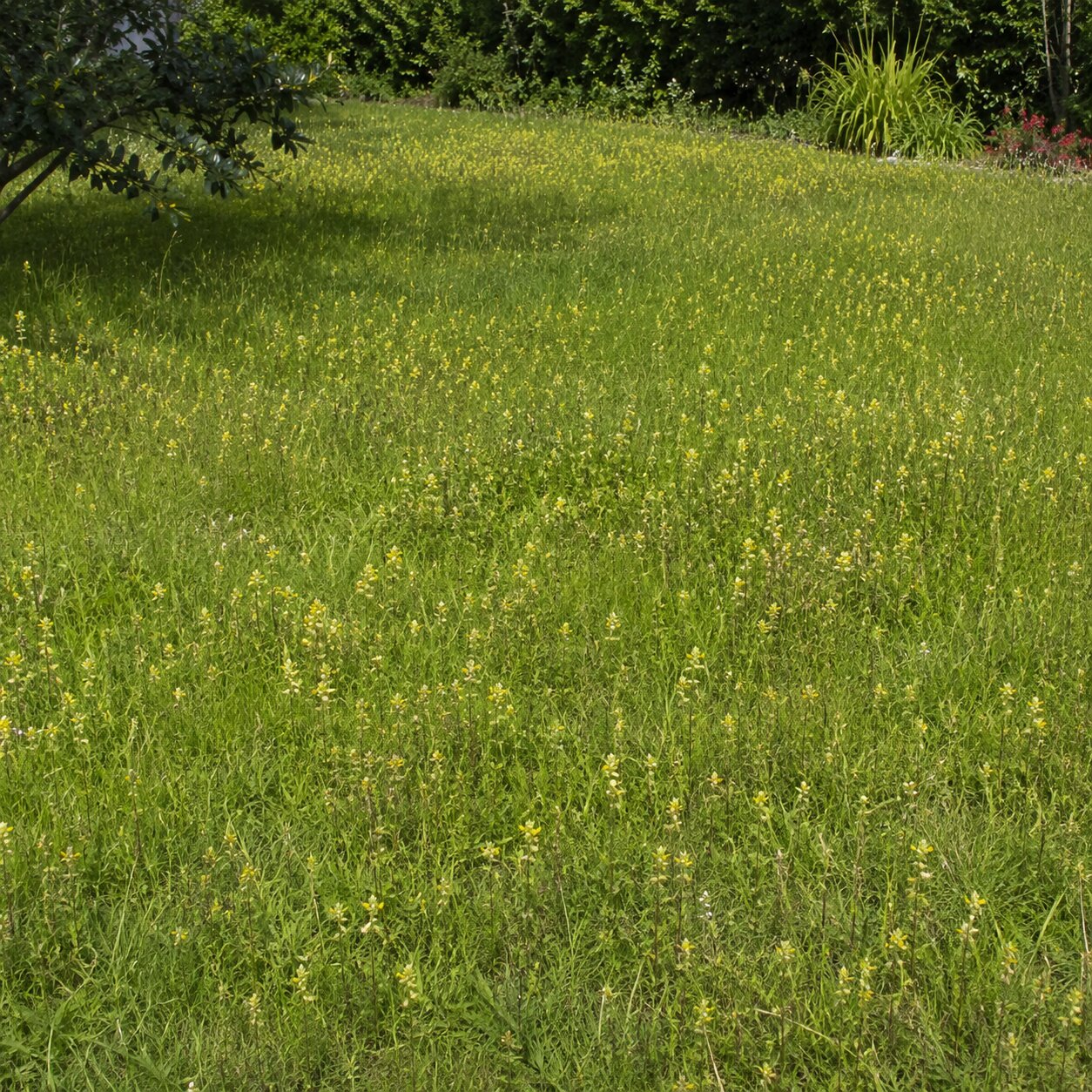
Yellow Rattle Seeds is 100% Rhinanthus minor — Yellow Rattle, the meadow maker. A semi-parasitic annual that parasitises grass roots, weakening grass to allow wildflowers to outcompete it naturally. The most ecologically effective tool available for grassland wildflower restoration without chemicals. Zones 3–8.
How Yellow Rattle Works
Yellow Rattle is not a wildflower you plant for its own beauty alone — though its yellow flowers are attractive and its bee value is genuine. Its primary function is ecological engineering: it sends root-like structures (haustoria) into the roots of neighbouring grasses, extracting water and nutrients and reducing the grass’s competitive vigour by up to 50%.
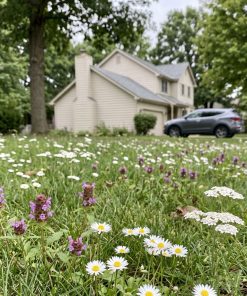
The result, over 2–4 years of consistent annual reseeding, is a grass sward that is weaker, more open and less dominant — giving slower-growing wildflowers the light and space to establish without being outcompeted. This is why it is called the meadow maker. It is used in ecological restoration projects across the UK and increasingly in the US to convert grass-dominated fields into wildflower meadows.
Who Should Use Yellow Rattle Seeds
| Use case | Yellow Rattle appropriate? |
|---|---|
| Converting a grassy lawn or field edge into a wildflower meadow | Yes — primary use case |
| Reducing grass vigour without herbicide | Yes |
| Adding to SunMeadow or WildLawn for long-term meadow development | Yes — excellent companion |
| Seeding a bare-ground wildflower bed | No — requires existing grass to parasitise |
| Replacing a ryegrass-dominated lawn | Partial — works more slowly on aggressive grasses |
| A walkable lawn (primary surface) | No — this is a meadow tool, not a lawn plant |
What to Expect: The Multi-Year Process
ⓘ Yellow Rattle is an annual — it completes its full life cycle in one year. It only persists through self-seeding. To maintain it, you must not cut the meadow before late July — the seeds must ripen in the dry pods before any cut removes them.
| Year | What happens |
|---|---|
| Autumn sow year 0 | Seed sown August–November. Remains dormant through winter. |
| Spring year 1 | Yellow rattle germinates with other meadow plants. Yellow flowers appear May–June. |
| July year 1 | Seed pods rattle when shaken — ripe seed inside. Do not mow until August. |
| August year 1 | Cut and remove all cuttings. Seed has dispersed. Some grass weakening visible. |
| Year 2 | Increased rattle population. Grass noticeably thinner in rattle patches. Wildflowers beginning to exploit the gaps. |
| Year 3–4 | Established population. Grass vigour significantly reduced across the sward. Wildflower diversity increasing. |
Sowing Guide
The critical rule: no mowing before sowing, no mowing before July
- When: Sow in late summer or autumn — August through November. Do NOT sow in spring without prior cold treatment.
- Prepare: Scalp the existing grass as short as possible with all cuttings removed. Rake lightly to scratch the soil surface — yellow rattle needs good seed-to-soil contact.
- Sow: Broadcast at 1 oz per 1,000 sq ft. Do not bury — surface sow and roll or tamp.
- Do not water: autumn rain and natural moisture handles establishment.
- In spring: Do not mow until plants have set and shed seed (late July to August). Then cut and remove all cuttings.
- Repeat: Allow self-seeding every year. Removing cuttings after the July cut is essential to prevent soil fertility building up — high fertility suppresses yellow rattle.
Spring sowing (less reliable — only if autumn was missed)
- Place seed in a sealed bag with slightly damp sand.
- Refrigerate for 4 weeks (minimum) or freeze for 1 week.
- Remove and sow immediately in April on a cold, moist seedbed.
- Expect lower germination rates than autumn-sown seed.
Soil & Site
| Factor | Notes |
|---|---|
| Grass host | Must have existing grass present — yellow rattle cannot grow without a grass host |
| Soil fertility | Low to moderate preferred. High fertility suppresses yellow rattle effectiveness. |
| Sun | Full sun — does not establish well in shade. |
| Soil moisture | Average — tolerates both dry and moist conditions |
| Grass type | Best on fine fescues and meadow grasses. Less effective on ryegrass. |
Frequently Asked Questions
Will it kill my grass entirely?
No — yellow rattle weakens grass by reducing vigour, not killing it. The effect is a thinner, less competitive sward that allows wildflowers to establish. Your lawn will look less dense and manicured, not dead.
Can I use it on my front lawn?
Yellow rattle is a tall annual (up to 20 inches) and cannot be mowed before late July without losing the seed crop. It is best suited to dedicated meadow areas, back gardens left partially unmowed, field edges and open spaces where a naturalistic aesthetic is intended.
Is it safe for pets?
Yellow rattle is generally considered non-toxic to dogs, cats and livestock.