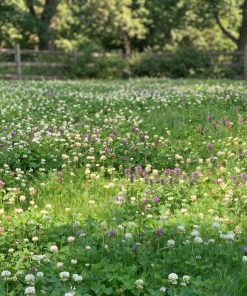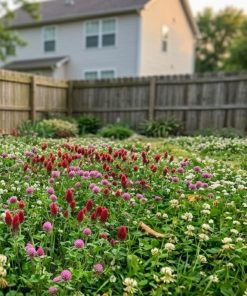
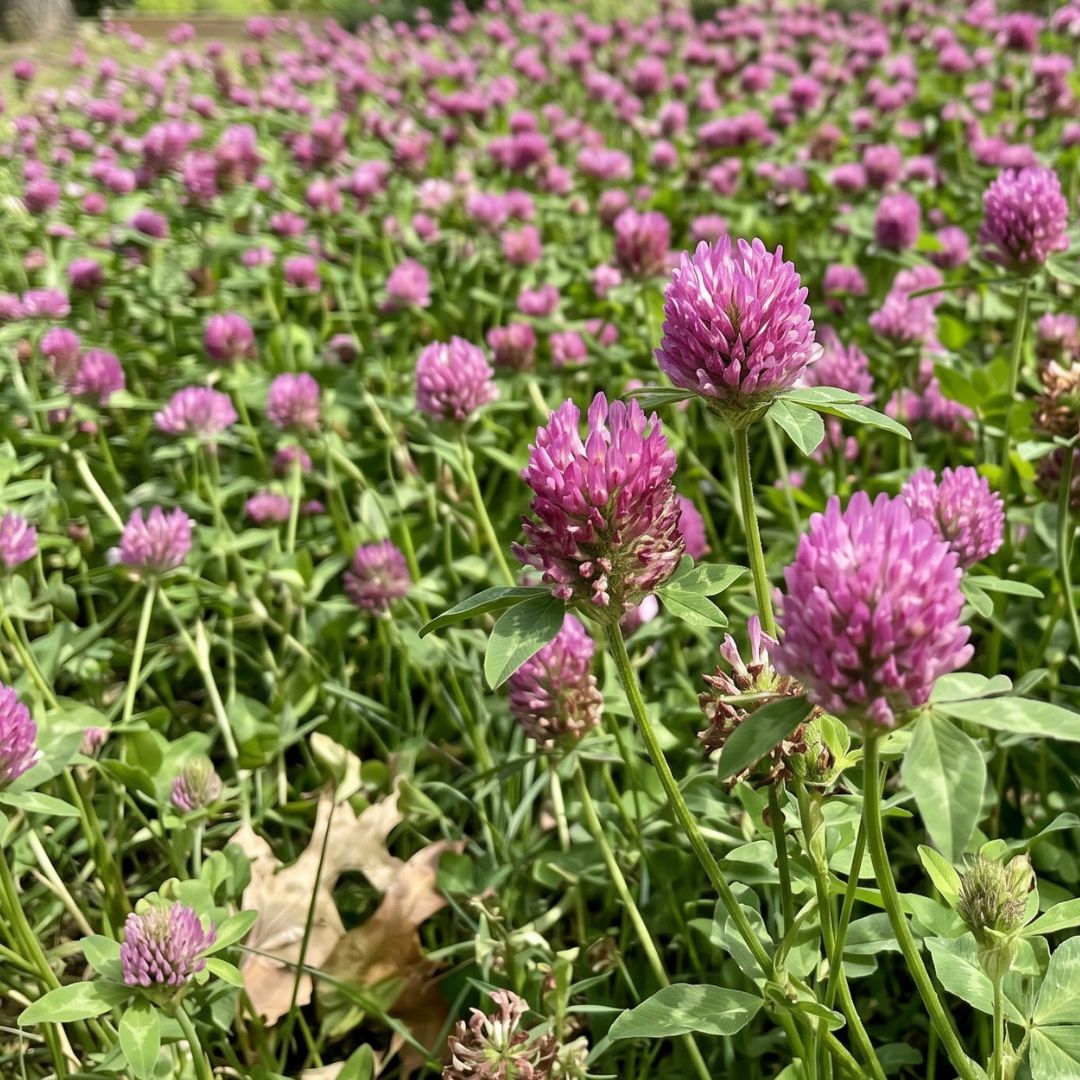
Description
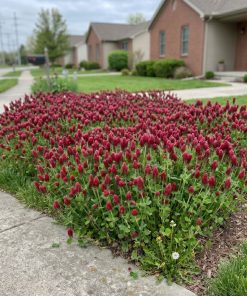
RedLeaf is 100% Medium Red Clover (Trifolium pratense) — a bold, biennial perennial that reaches 12–24 inches and blooms prolifically from year 2 onward. This is not a mown lawn seed. It converts corners, field edges, slopes and unmowed areas into wildlife habitat dense with bumblebees, butterflies and beneficial insects. Non-GMO. USA-grown. Pre-inoculated with Rhizobium for immediate nitrogen fixation. Zones 3–9.
RedLeaf Seed Specifications
| Species | Common Name | Type | Height | Bloom | Zone | ASPCA |
|---|---|---|---|---|---|---|
| Trifolium pratense | Medium Red Clover | Biennial / Short-lived perennial | 12–24 inches | Rose-magenta, May–September | 3–9 | Non-toxic ✓ |
What RedLeaf Is — And What It Isn’t
Red clover is the tallest and most dramatic of the clovers in our range. It grows 12–24 inches and produces upright, rose-magenta flower heads from late May through September. Unlike white Dutch clover or microclover, it is not designed to be mown — and it performs best when left to grow freely. The right applications are: unmowed corners, field edges, orchard understory, meadow borders, steep slopes where grass is thin, and any area you want to convert to managed wildlife habitat.
Bumblebees — which have a longer tongue than honeybees — are the primary pollinator of red clover. A single half-acre planting of red clover is documented to support multiple bumblebee colonies simultaneously, making RedLeaf one of the highest-impact habitat seed investments available.
Establishment: Biennial Behaviour
Red clover behaves as a biennial: it establishes in year 1 and blooms prolifically in year 2. Some plants flower lightly in their first autumn if sown early. Once established, it self-seeds freely and persists indefinitely without reseeding.
| Timeline | What to expect |
|---|---|
| Days 7–14 | Germination at 50°F+ soil temperature |
| Month 1–3 | Low rosette of trifoliate leaves, 4–8 inches |
| Year 1 (autumn) | Light flowering possible in warm zones if sown early spring |
| Year 2 (May) | Full bloom begins — dense, knee-high, rose-magenta |
| Year 2 (Sept) | Seed set and natural reseeding; cut to 4 inches to reset |
| Year 3+ | Self-sustaining stand through reseeding |
Planting Guide
When to plant
| Region | Spring window | Autumn window |
|---|---|---|
| Zones 3–5 (Cold) | April–June (soil 50°F+) | August–September |
| Zones 6–7 (Transition) | March–May | September–October |
| Zones 8–9 (Warm) | February–April | October–November |
How to sow
- Prepare soil: mow or cut existing vegetation to 2 inches. Rake or scratch the surface lightly — red clover needs soil contact, not burial.
- Sow rate: per 1,000 sq ft for a pure stand; per 1,000 sq ft when interseeding into existing thin grass.
- Sow depth: surface or no deeper than ¼ inch. Press seed in firmly — do not cover deeply.
- First season: do not mow. Let the plants establish through their rosette stage.
- From year 2: one cut in early October after seed set resets the stand and stimulates dense regrowth.
Soil, Sun & Zone Notes
| Factor | Requirement |
|---|---|
| Sun | Full sun preferred; tolerates light shade (4+ hrs) |
| Soil pH | 6.0–7.0 ideal; tolerates 5.5–7.5 |
| Drainage | Well-drained to average; does not tolerate waterlogged soil |
| Soil fertility | Low to moderate — red clover fixes its own nitrogen |
| Zones | 3–9 perennial; may winter-kill in Zone 3 but reseeds reliably |
| Drought | Moderate drought tolerance once established |
Frequently Asked Questions
Will red clover spread and take over?
Red clover spreads through seed, not runners. It does self-seed freely, but does not spread aggressively into surrounding areas the way some ground covers do. It is easy to manage with a single annual cut after seed set.
Can I mix RedLeaf with other clover products?
Yes — RedLeaf pairs well with HearthClover (white Dutch clover) for a mixed-height flowering zone: HearthClover provides the low ground layer, RedLeaf adds the upright bloom layer above it. The TriLeaf blend already incorporates red clover alongside white and strawberry clover.
Is red clover safe for dogs?
Yes. Red clover (Trifolium pratense) is listed as non-toxic to dogs and cats by the ASPCA. It is soft underfoot and does not pose a hazard to pets.
Why is there a pre-inoculant mention?
Red clover is a legume that relies on Rhizobium bacteria in root nodules to fix atmospheric nitrogen. Our seed is pre-coated with the correct Rhizobium inoculant. In soils where legumes have not been grown recently, this significantly improves establishment and yield in year 1.