
Description
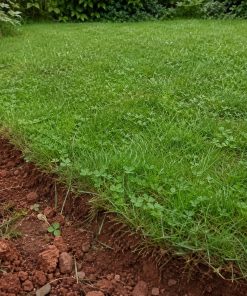
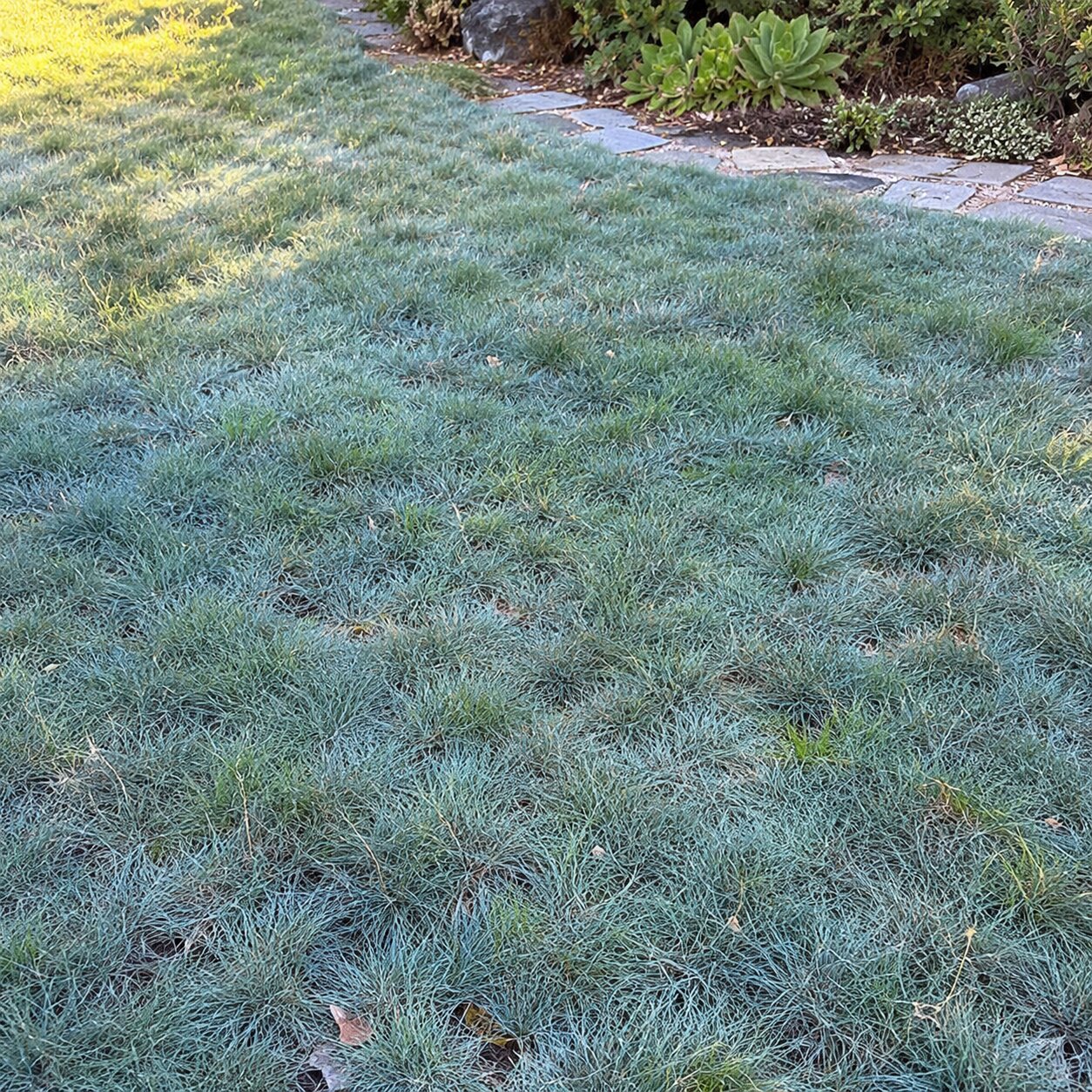
SheepGuard is 100% Festuca ovina (Sheep Fescue) — the most drought-tolerant of all the fine fescues. It establishes in poor, dry, sandy or gravelly soil, survives harsh winters and long dry periods, and produces a fine-textured blue-green lawn that requires far less mowing and zero irrigation once established. Not a spreading turf — a bunchgrass with a naturally tufted character. Zones 3–8.
SheepGuard Specifications
| Species | Type | Height | Leaf texture | Colour | Zone | Drought survival |
|---|---|---|---|---|---|---|
| Festuca ovina | Cool-season bunchgrass | 6–24 inches (unmowed) | Very fine | Blue-green to silver-blue | 3–8 | Survives on 8–10 inches annual rainfall |
Where SheepGuard Excels
Sheep fescue occupies a specific niche in the fine fescue family. It is not the right grass for a traditional manicured lawn or a high-traffic backyard — for those applications, DroughtGuard (hard fescue blend) or NoMowLawn (multi-species fine fescue) are better fits. SheepGuard is built for the most demanding conditions: extreme drought, thin or infertile soil, rocky slopes and xeriscape situations where every other grass fails.
| Condition | SheepGuard | Hard Fescue (DroughtGuard) | NoMowLawn |
|---|---|---|---|
| Drought tolerance | Highest — 8–10 in/yr | High — 12–15 in/yr | High — 12–15 in/yr |
| Poor/gravelly soil | Excellent | Good | Moderate |
| Heavy traffic | Not suitable | Moderate | Low-moderate |
| Mowing requirement | Infrequent/none | 1–2×/yr | 1–2×/yr |
| Appearance unmowed | Tufted, naturalistic | Soft, informal | Fine, dense |
| Shade tolerance | Moderate | Good | Good |
| Best use | Xeriscape, slopes, naturalized areas | Low-water lawns | No-mow eco-lawns |
The Bunchgrass Character
Sheep fescue is a bunchgrass, meaning it grows in individual tufts rather than spreading by stolons or rhizomes. At a dense seeding rate and regular low mowing, it produces a fine, uniform lawn. Left unmowed, it forms graceful arching clumps 6–24 inches tall with a naturalistic, ornamental quality — particularly effective on slopes, in rock gardens, and in xeriscape designs where the blue-green colour and fine texture are featured. It does not fill in bare patches by spreading, so good seedbed preparation matters.
Establishment Timeline
| Timeline | What to expect |
|---|---|
| Days 7–14 | Germination. Fine seedlings emerge — keep moist but not wet. |
| Month 1–2 | Individual tufts visible. Weed competition is the key risk at this stage — prepare a clean seedbed. |
| Month 3–6 | Plants fully established. Drought hardening begins — reduce watering. |
| Year 1 end | Established stand. Infrequent mowing optional from this point. |
| Year 2+ | Fully drought-hardy. Self-sustaining on natural rainfall. One optional mow per year. |
Planting Guide
Seedbed preparation is critical
Because sheep fescue does not spread by stolons, bare patches do not fill in on their own. A clean, weed-free seedbed and even sowing gives the best result. Weed competition in establishment year 1 is the primary risk.
- Remove existing vegetation completely. For new lawns: till to 4–6 inches, remove debris, rake level.
- Do not fertilise before or during establishment. Sheep fescue prefers lean, low-fertility soil.
- Sow at per 1,000 sq ft. Sow at ¼ inch depth — press seed in firmly.
- Water gently to keep moist for 7–14 days. Once germinated, reduce watering gradually.
- First mow (optional): when plants reach 6 inches, mow to 4 inches to encourage tillering and density.
- After establishment (year 2+): zero irrigation needed in most US climates. Mow once in late spring if a tidy look is desired.
When to plant
| Region | Spring | Autumn (preferred) |
|---|---|---|
| Zones 3–5 | April–May | August–September |
| Zones 6–7 | March–April | September–October |
| Zone 8 | February–March | October |
Autumn seeding is preferred in most regions — cooler soil temperatures favour germination and reduce weed competition.
Soil & Site
| Factor | Requirement |
|---|---|
| Sun | Full sun to light shade (3–4 hrs). More shade than most drought grasses tolerate. |
| Soil | Sandy, gravelly, shallow, poor or infertile — sheep fescue thrives where other grasses fail. |
| pH | 5.5–7.5. Tolerates mildly acidic to slightly alkaline soils. |
| Drainage | Well-drained to dry. Will not tolerate waterlogged soil. |
| Rainfall | 8–10 inches minimum annual — the lowest threshold of any fine fescue. |
| Traffic | Light only. Not suitable for sports or play areas. |
| Fertiliser | None needed or wanted. Fertilising encourages weeds and weakens drought hardiness. |
Frequently Asked Questions
Why does it look clumpy?
Sheep fescue is a bunchgrass — tufted growth is its natural form. Mowing at 3–4 inches once or twice a year produces a more uniform texture. Left unmowed, the arching clumps are an intentional aesthetic choice, particularly effective in dry gardens and on slopes.
Is it native?
Sheep fescue (Festuca ovina) is a European species widely naturalised across North America and included in most US seed mixes for low-maintenance and xeriscape applications. It is not a native prairie grass — RootNative or BuffaloLawn are the correct choices for strict native lawn projects.
Can I mix it with wildflowers?
Yes — sheep fescue is an excellent companion for drought-tolerant wildflowers. Its fine texture and blue-green colour provide a neutral backdrop, and its slow growth prevents it from shading out wildflower species the way coarser grasses can.