
Description
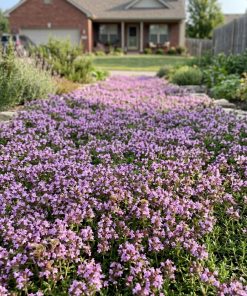
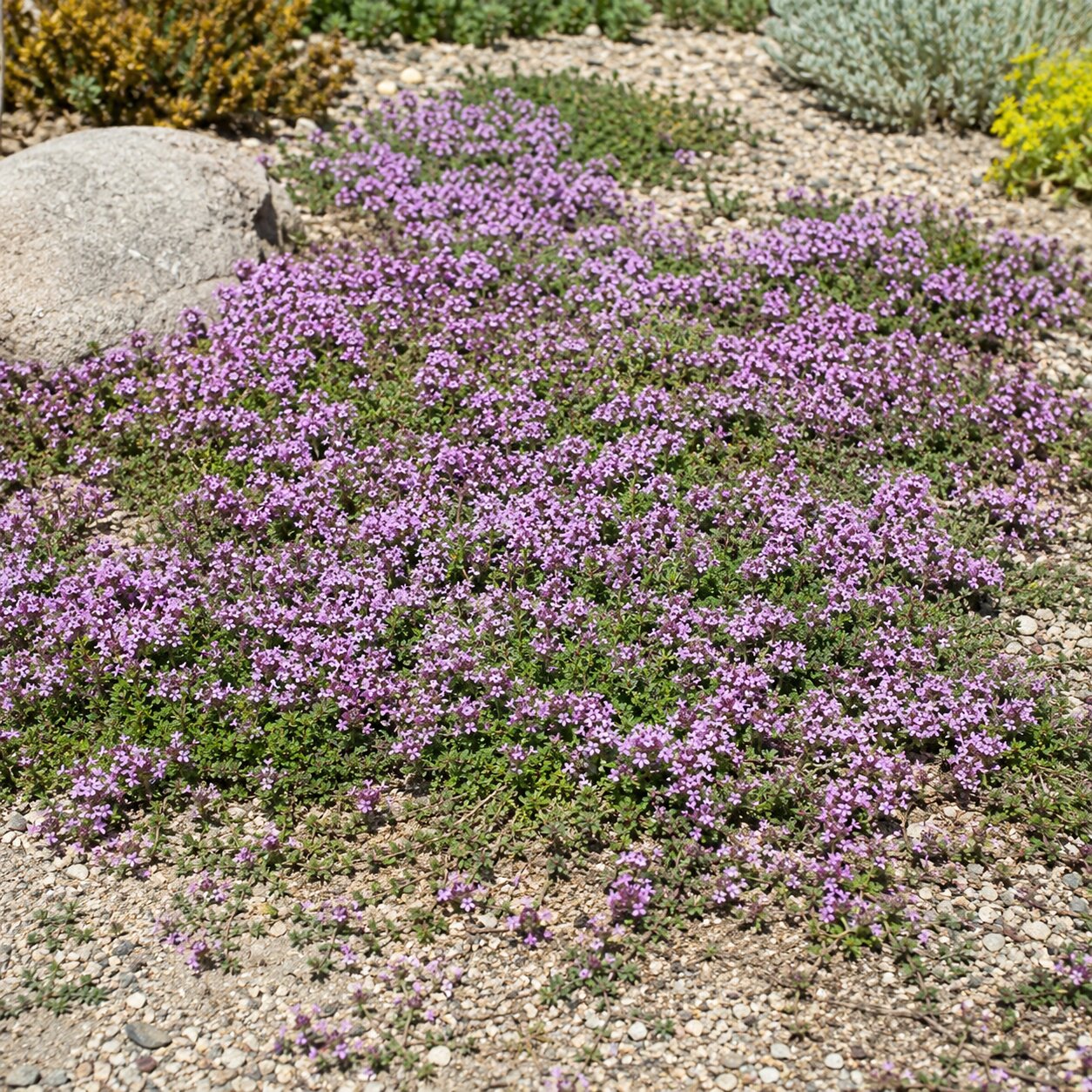
Breckland Thyme (Thymus serpyllum) is the specialist for lean, gritty, sun-baked ground. Wiry and drought-tough, it forms a fine, scented, low mat in sandy, sharply drained soils and rock gardens where most plants — grass included — give up.
Seed specifications
| Species | Common name | Leaf / blade | Zone | Height | Bloom | ASPCA |
|---|---|---|---|---|---|---|
| Thymus serpyllum | Breckland thyme | Tiny leaf | 4–9 | 2–4 in | Mauve, summer | Non-toxic |
ASPCA: All Thymus species are listed by the ASPCA as non-toxic to dogs, cats, and horses.
Why choose Breckland Thyme Seed
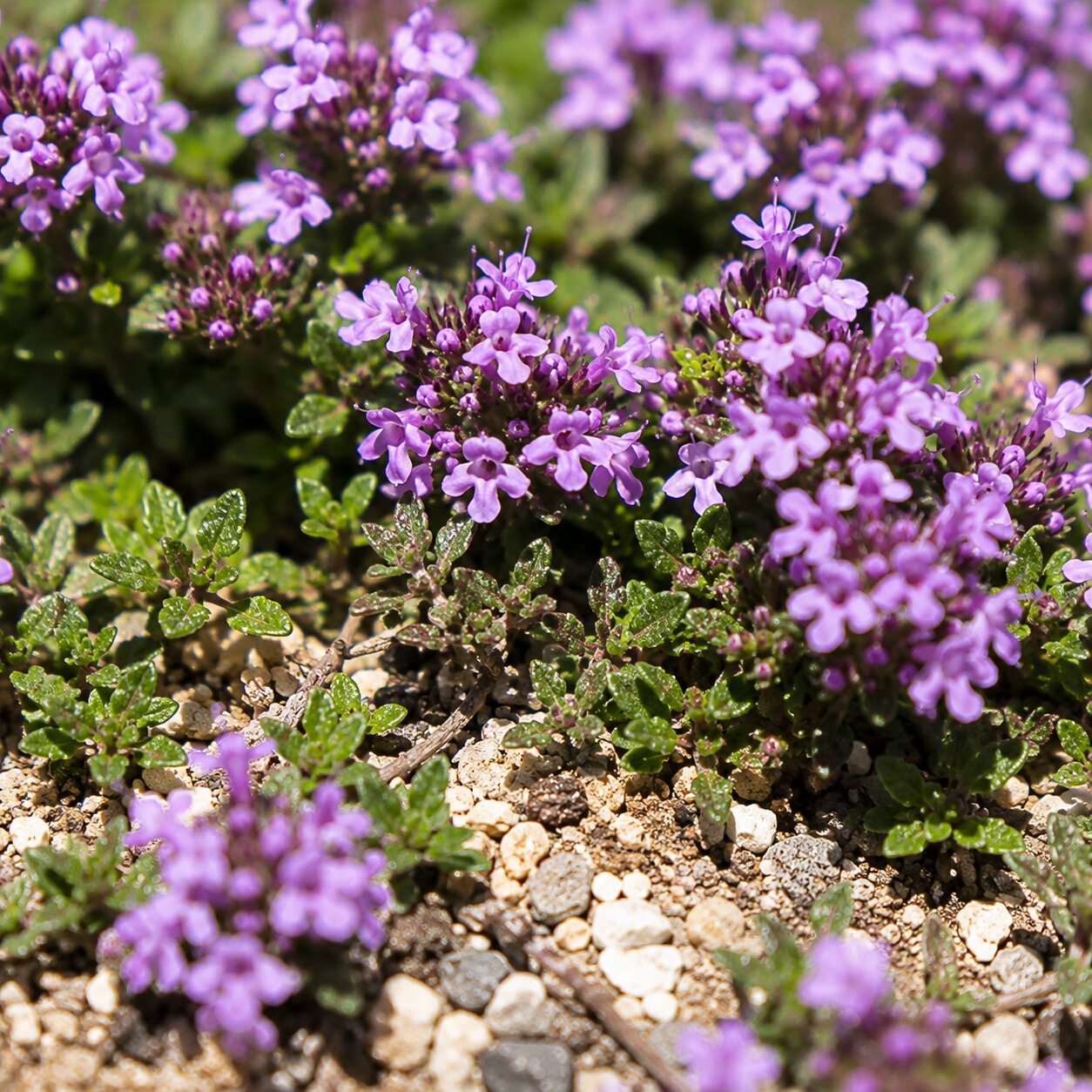
Breckland thyme takes its name from the dry, sandy Breckland heaths, and that is exactly its niche: lean, gritty, free-draining ground in full sun. It forms a fine, wiry, low mat and flowers in mauve through summer.
It is among the most drought-tolerant of the creeping thymes and thrives in the sharp-drainage conditions of rock and gravel gardens. Like its relatives it germinates in about 14–21 days from surface-sown seed and follows the slow-Year-1, fast-Year-2 establishment pattern.
Choose it for hot, dry, sandy sites and rockeries rather than rich or damp ground, where it becomes open and short-lived. Its summer flowers support bees, and all Thymus species are ASPCA non-toxic.
Best uses
| Application | Suitability | Notes |
|---|---|---|
| Rock and gravel gardens | Excellent | Loves gritty, sharply drained soil. |
| Hot, dry, sandy sites | Excellent | Highly drought-tolerant once established. |
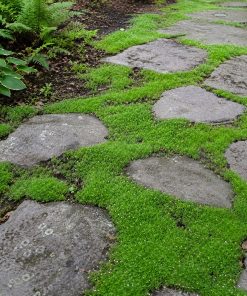
| Between pavers | Very Good | Fine, low mat for sunny gaps. |
| Pollinator planting | Very Good | Summer flowers attract bees. |
| Lean, poor soils | Excellent | Thrives where richer plants fail. |
| Rich, wet, or shaded soil | Poor | Needs lean soil, sun, and drainage. |
Creeping thyme varieties compared
| Variety | Height | Look | Best for |
|---|---|---|---|
| Red creeping | 2–4 in | Magenta bloom | Bold colour, paths |
| Elfin | 1–2 in | Tightest, slow | Paver gaps |
| Wooly | 1–3 in | Silver, fuzzy | Texture, rockeries |
| White | 2–3 in | White bloom | Contrast, borders |
| Mother of thyme | 2–4 in | Purple-pink, vigorous | Dependable cover |
Zone & climate compatibility
| Zone | Performance | Notes |
|---|---|---|
| Zone 4–5 | Very Good | Hardy but slower to establish; give it full sun and sharp drainage. |
| Zone 6–7 | Excellent | Ideal range; strong bloom and fast Year-2 spread. |
| Zone 8–9 | Very Good | Thrives with drainage; avoid soggy soil and excessive summer irrigation. |
How to sow Breckland Thyme Seed
- Prepare a lean, gritty, weed-free bed in full sun. Thyme wants sharp drainage and a neutral-to-alkaline pH (about 6.5–8.0); work in grit if your soil holds water.
- Mix the fine seed with sand. Blend the tiny seed with dry, coarse sand at roughly 1 part seed to 4 parts sand so it broadcasts evenly.
- Surface-sow — do not cover. Scatter over the surface and press in; thyme seed is photoblastic and needs light to germinate. A useful rate is about 1/ per 5,000 sq ft (double for faster cover).
- Mist to keep moist. Water with a fine mist so seed is not washed away, keeping the surface damp until germination — typically 14–21 days at 60–70°F.
- Expect a slow first year. Year 1 is root-building with roughly 30–50% cover; Year 2 fills to 70–90% and blooms; Year 3 is a dense, self-maintaining mat.
- Sow in late spring once soil has warmed, or start indoors and set out plugs 8–12 in apart for faster establishment.
Care & maintenance
- Do not overwater established thyme; it prefers lean, dry conditions and rots in soggy soil.
- Give one post-bloom trim in mid-to-late summer to keep the mat tidy and dense.
- Weed by hand in Year 1 while the mat closes; once dense it suppresses most weeds itself.
- No feeding needed — rich soil and fertiliser make thyme leggy and open.
Sources
- NC State Extension — Thymus serpyllum profile: plants.ces.ncsu.edu
- Penn State Extension — establishing ground covers: extension.psu.edu
- Colorado State University Extension — ground covers: extension.colostate.edu
- ASPCA — toxic and non-toxic plants: www.aspca.org
Related thyme seed: Thymewalk Red Creeping Thymes Thymeturf Creeping Thyme Grass Lawn
Learn more: Creeping thyme lawn guide How fast does creeping thyme grow?
Explore more: Shop all eco-lawn seed Compare seed by need