
Description
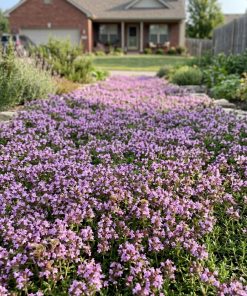
ElfWalk is 100% Thymus serpyllum ‘Elfin’ — the dwarf cultivar of creeping thyme, growing only 2–3 cm (about 1 inch) tall. It is the most compact, densest and most traffic-tolerant of all seeded thyme varieties, specifically suited to paver gaps, path edges and stepping stone courses. Evergreen. ASPCA non-toxic to dogs, cats and horses. Zones 4–9.
ElfWalk Specifications
| Species | Cultivar | Height | Spread per plant | Bloom | Zones | Traffic tolerance |
|---|---|---|---|---|---|---|
| Thymus serpyllum | ‘Elfin’ | 2–3 cm (about 1 inch) | 30–45 cm (12–18 inches) | Pale lavender-pink, June–July | 4–9 | Highest of all creeping thymes |
The ElfWalk Difference: Smallest Thyme, Densest Mat
All creeping thymes are low-growing, but ‘Elfin’ is in a category of its own. At 2–3 cm, it grows approximately half the height of red creeping thyme and wild thyme. The leaves are tiny — smaller than a match head — and the stems interlock into a dense cushion that hugs the ground more closely than any other variety. This tight structure is what makes it the most traffic-tolerant: individual stems are shorter and better protected underfoot.
| Variety | Height | Best use | Bloom intensity | Traffic tolerance |
|---|---|---|---|---|
| ElfWalk (T. serpyllum ‘Elfin’) | 2–3 cm | Pavers, paths, small areas | Subtle pale lavender | Highest |
| SilkWalk (T. serpyllum) | 4–8 cm | Larger lawns, naturalising | Purple-pink | High |
| Thymewalk (T. praecox ‘Coccineus’) | 5–8 cm | Full lawn replacement | Bold magenta-red | Moderate-high |
| Thymeturf (Fescue + Thyme blend) | 6–10 cm | Large lawn areas with thyme | Moderate pink | Moderate |
Ideal Applications
- Paver gaps: fills the spaces between paving stones, flagstone and concrete pavers with a fragrant, weed-suppressing living mat.
- Stepping stone paths: sown directly into prepared soil alongside stepping stones — plants spread to meet the stone edges.
- Gravel areas: establishes in gravel gardens and dry courtyards where grass will not grow.
- Rock gardens: spills over rocks and fills crevices naturally — its compact habit fits tight spaces.
- Path edges: creates a defined, low aromatic border alongside formal paths.
- Small defined areas: where a wilder thyme like SilkWalk or Thymewalk might spread too far.
What to Expect: Establishment Timeline
Important: ‘Elfin’ is the slowest-establishing creeping thyme from seed. Its dwarf habit means initial growth is very gradual. Do not expect rapid coverage — the payoff is the densest, flattest mat available once established.
| Timeline | What happens |
|---|---|
| Days 14–28 | Germination — longer than other thymes due to dwarf cultivar characteristics. Keep soil moist. |
| Months 2–4 | Tiny rosettes visible. Very sparse appearance — normal at this stage. |
| Year 1 end | Individual plants established, 5–10 cm across. No meaningful coverage yet. |
| Year 2 | Lateral spread between plants begins. Gaps closing. First proper bloom. |
| Year 3 | Dense mat forming. Coverage between pavers largely complete. |
| Year 4+ | Full closure. Self-sustaining. No reseeding or intervention needed. |
Planting Guide
Surface sow — no burial
- Paver gaps: remove existing weeds and debris from gaps. Fill with a sharp sand/compost mix to 2 cm below paver surface. Scatter seed, press firmly, mist to settle.
- Bare ground: clear all vegetation. Rake to a fine tilth. Scatter at per 1,000 sq ft. Roll or tamp. Mist daily for 3–4 weeks.
- Gravel: pull back gravel to expose soil in target areas. Sow on exposed soil. Pull gravel back lightly around (not over) seed.
- Do not bury: elfin thyme seed requires light for germination. Any soil covering will significantly reduce germination rates.
When to plant
| Region | Spring | Autumn |
|---|---|---|
| Zones 4–6 | May–June (soil 60°F+) | August–September |
| Zones 7–8 | April–May | September–October |
| Zone 9 | March–April | October |
Soil & Conditions
| Factor | Requirement |
|---|---|
| Sun | Full sun — 6+ hours essential. Will not establish in shade. |
| Drainage | Excellent drainage required. Elfin thyme rots in wet conditions faster than other varieties. |
| Soil | Lean, gritty, sandy or rocky preferred. Avoid heavy clay without amendment. |
| pH | 6.0–8.0 — tolerates slightly alkaline soils and limestone. |
| Moisture | Drought-tolerant once established. Regular watering during establishment year only. |
| Mowing | None required. Never mow — the ultra-dwarf habit is the product. |
Frequently Asked Questions
Why is it slower than other thymes?
The dwarf cultivar ‘Elfin’ has a naturally slow growth rate — this is what produces the tight, dense mat that makes it so effective between pavers. If you need faster coverage over a larger area, SilkWalk or Thymewalk are quicker to establish.
Can I use it alongside other thyme products?
Yes — a common approach is to use ElfWalk in paver gaps and path areas where foot traffic is heaviest, and Thymewalk or SilkWalk in the wider lawn area. The varieties complement each other visually and bloom at slightly different times.
Is it safe for pets?
Thymus serpyllum is confirmed non-toxic to dogs, cats and horses by the ASPCA.