The ecology of a living lawn
What an alternative lawn does beyond looking good — for pollinators, birds, soil, water and the wider food web. Evidence-based, sourced, and honest about what's strongly supported versus still debated.
Where to start
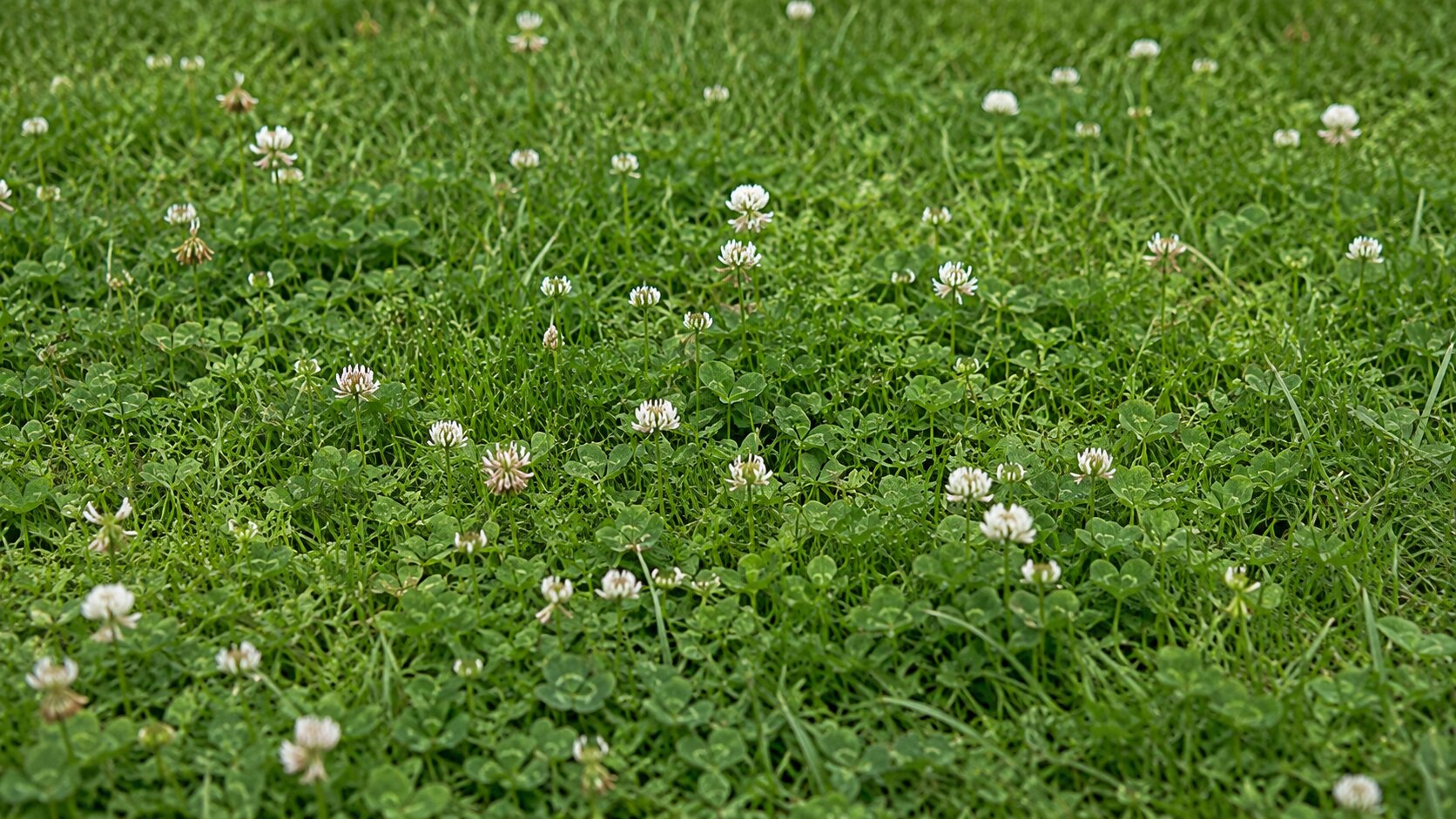
A lawn is an ecosystem, even when it's mostly grass. These pages cover what changes when you add clover, fescue, natives or thyme — the documented gains for biodiversity and water, and the claims (like carbon storage) where the science is still contested. We cite the sources and flag the uncertainty.
What an alternative lawn does for the environment
Lawns are not a small footprint. A NASA-led analysis (Milesi et al., 2005, Environmental Management) estimated turfgrass covers roughly 40 million acres of the United States — about three times the area of irrigated corn — which makes the conventional lawn the single largest irrigated “crop” in the country. That scale is exactly why small changes, repeated across millions of yards, add up to a real ecological result.
Pollinators respond fast
You do not need to rip out a lawn to help bees. In a two-year USDA Forest Service study of suburban yards (Lerman et al., 2018, Biological Conservation), simply mowing every two weeks instead of weekly let low flowers like clover bloom and measurably increased bee abundance — and those ordinary lawns hosted 93 bee species, with supplemental records reaching 111. Adding flowering lawn plants such as white clover and self-heal turns that further: earlier lawn-flora work in Kentucky (Larson et al., 2014) recorded more than 20 bee species foraging on clover and dandelion alone.
Water and chemical inputs drop
Outdoor watering accounts for an estimated 50–75% of a household’s summer water use, most of it keeping thirsty turf green. Deep-rooted fescues, clover and natives hold their colour on far less, and a clover component fixes its own nitrogen — cutting the fertilizer, and the fertilizer runoff, that a pure-grass lawn depends on.
Which lawn delivers which benefit
| If your goal is… | Plant | Why |
|---|---|---|
| Feed pollinators | Wildflower & bee lawns, clover | Season-long bloom; documented bee forage |
| Stop watering so much | Fine fescue, natives | Deep roots, drought-tolerant, low input |
| End fertilizer & runoff | Clover lawns | Fixes its own nitrogen |
| Green deep shade / bare soil | Live moss, ground covers | Thrive where grass fails; no mowing |
Explore lawn ecology
Common questions
Is a lawn really bad for the environment?
A conventional, frequently-mowed and irrigated lawn has a large footprint — turfgrass is the biggest irrigated “crop” in the US (Milesi et al., 2005). But a lawn is also an opportunity: mowing less and adding clover or native plants converts that same ground into pollinator habitat.
What’s the single easiest ecological win?
Mow less often. The USDA Forest Service found mowing every two weeks instead of weekly increased bee abundance without any replanting (Lerman et al., 2018).
Do lawn alternatives really use less water?
Yes. Outdoor irrigation is 50–75% of summer household water use; deep-rooted fescues, clover and natives stay green on far less than standard turf.
Does an eco-lawn store carbon?
Somewhat, but it’s easy to overstate. Turf can act as a carbon sink, yet mowing, fertilizer and irrigation emissions offset a meaningful share of it. We treat it as a modest co-benefit, not the headline.
- Milesi, C. et al. (2005). Mapping and Modeling the Biogeochemical Cycling of Turf Grasses in the United States. Environmental Management 36(3):426–438.
- Lerman, S.B. et al. (2018). To mow or to mow less: lawn mowing frequency affects bee abundance and diversity in suburban yards. Biological Conservation 221:160–174 (USDA Forest Service).
- Larson, J.L. et al. (2014). Pollinator assemblages on dandelions and white clover in urban and suburban lawns. Journal of Insect Conservation.
Go deeper
Dig into the research, or see which lawns support the most life.
Go deeper: the history of the American lawn, and how you can fund habitat through habitat sponsorship.
Browse the full Lawn Ecology & Environment section
How-to guides
- Native Plant Lawn: Turf to Wildflowers and Groundcovers
- Wildflower Lawn for Pollinators: Bees and Butterflies
Comparisons
More in this section
- Biodiversity Benefits of a Living Lawn
- Bird-Friendly Yards: How to Feed the Birds
- Butterfly Habitat: Host and Nectar Plants
- Campus Naturalization: Beyond the Lawn
- Carbon and Lawns: The Real Footprint
- Climate Adaptation: Lawns for a Warmer World
- Corporate Campus Habitat: From Lawn to Habitat
- Drought Resilience: The Ecology of Tough Lawns
- Ecosystem Services: What a Living Lawn Gives
- Faith Grounds Habitat: Land for Wildlife
- Food Web Support: How Native Plants Feed Wildlife
- HOA Community Conversion: Native Landscapes
- Habitat Corridors: Connecting Yards for Wildlife
- Keystone Plants: The Highest-Value Natives
- Lawn to Meadow: Converting at Any Scale
- Leaving the Leaves: Winter Habitat
- Measuring Impact: Is Your Yard Working?
- Municipal Naturalization: Public Land
- Pollinator Habitat: Building It in Your Yard
- Reducing Fertilizer: A Cleaner, Cheaper Lawn
- Reducing Pesticides: Protecting Pollinators
- Restoration vs Naturalization: The Difference
- School Grounds Habitat: Learning and Wildlife
- Soil Health: The Living Foundation of a Lawn
- Stormwater Runoff: How Lawns Shed Water
- Urban Heat Island: Do Lawns Cool?
- Water Quality: Lawns, Fertilizer, and Runoff