Every lawn can be habitat
Lawn alternatives don’t just save water and mowing — planted at scale, they rebuild the flowering, pollinator-friendly ground that conventional turf erased.
The idea
The American lawn covers tens of millions of acres of largely lifeless turf. Habitat sponsorship is our commitment to flip some of that back — supporting pollinator and native-plant habitat as more yards convert to living lawns. Want to take part or partner with us? Reach out and we’ll share the current program.
Lawns took the meadow’s place
Turf grass is one of the largest irrigated “crops” in the United States, yet it offers next to nothing for bees, butterflies and the birds that depend on them. As flowering meadows and native ground were paved and mown away, the pollinators that need them declined with them — a loss documented by groups like the Xerces Society.
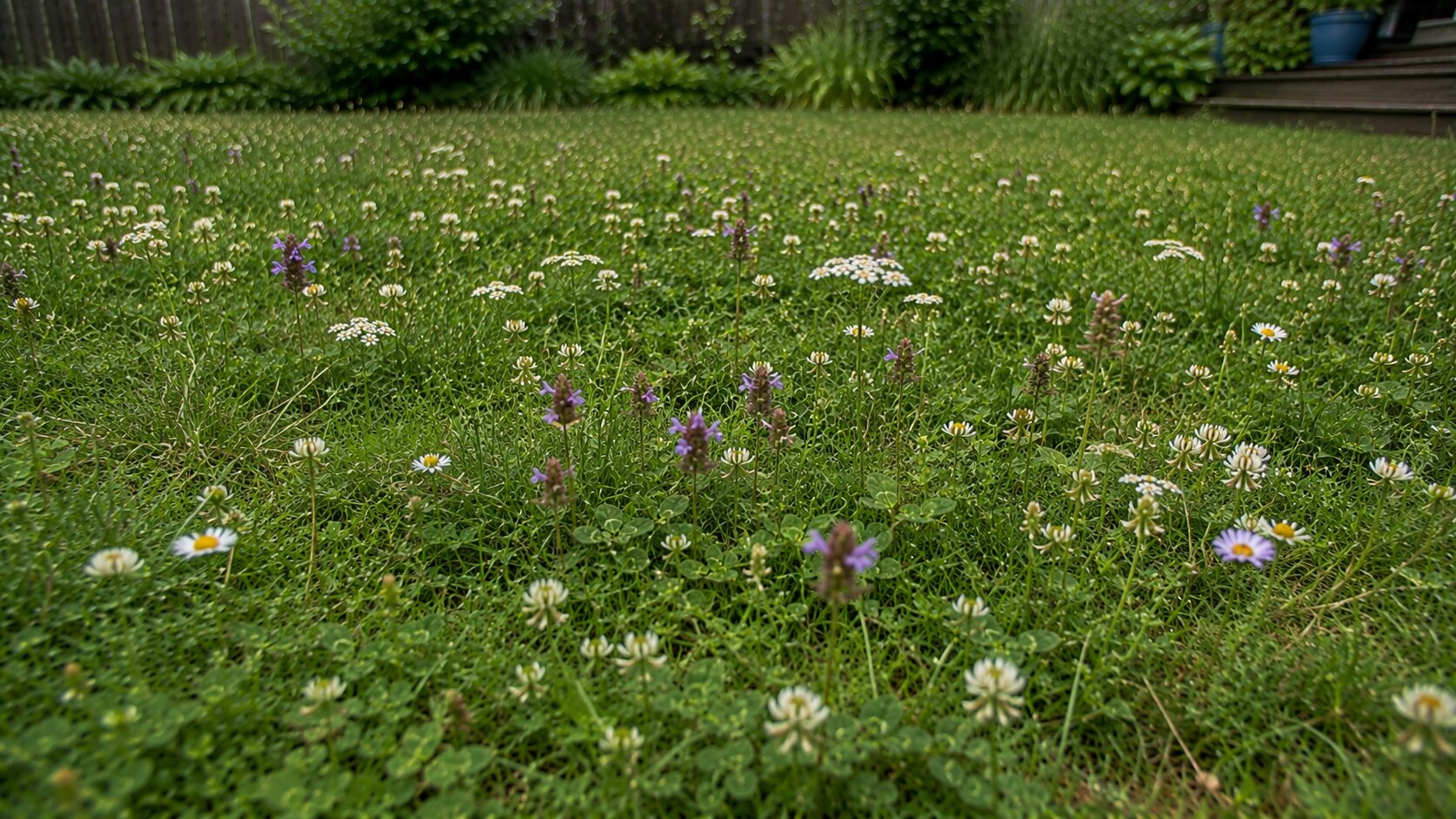
Lawn alternatives are a direct, household-scale fix. A clover or bee lawn, a native-grass yard, a wildflower strip — each one returns nectar, pollen and nesting ground. Multiply that across a street, a town, a region, and ordinary yards become a connected habitat network.
Turning lawns into habitat
Program details on request
We keep the specifics of the current sponsorship program — how contributions are directed, our habitat partners and reporting — honest and up to date by sharing them directly. Contact us to take part or to propose a partnership.
The first habitat is your own yard
The simplest way to help is to convert your own lawn. Even a partial switch — a clover blend, a no-mow fescue border, a pocket meadow — adds habitat immediately and needs less water and fuel than the turf it replaces. Our guides and tools walk you through it.
Build habitat with us
Plant your own, or partner on something bigger.