
Fine Fescue: The grass that asks for less
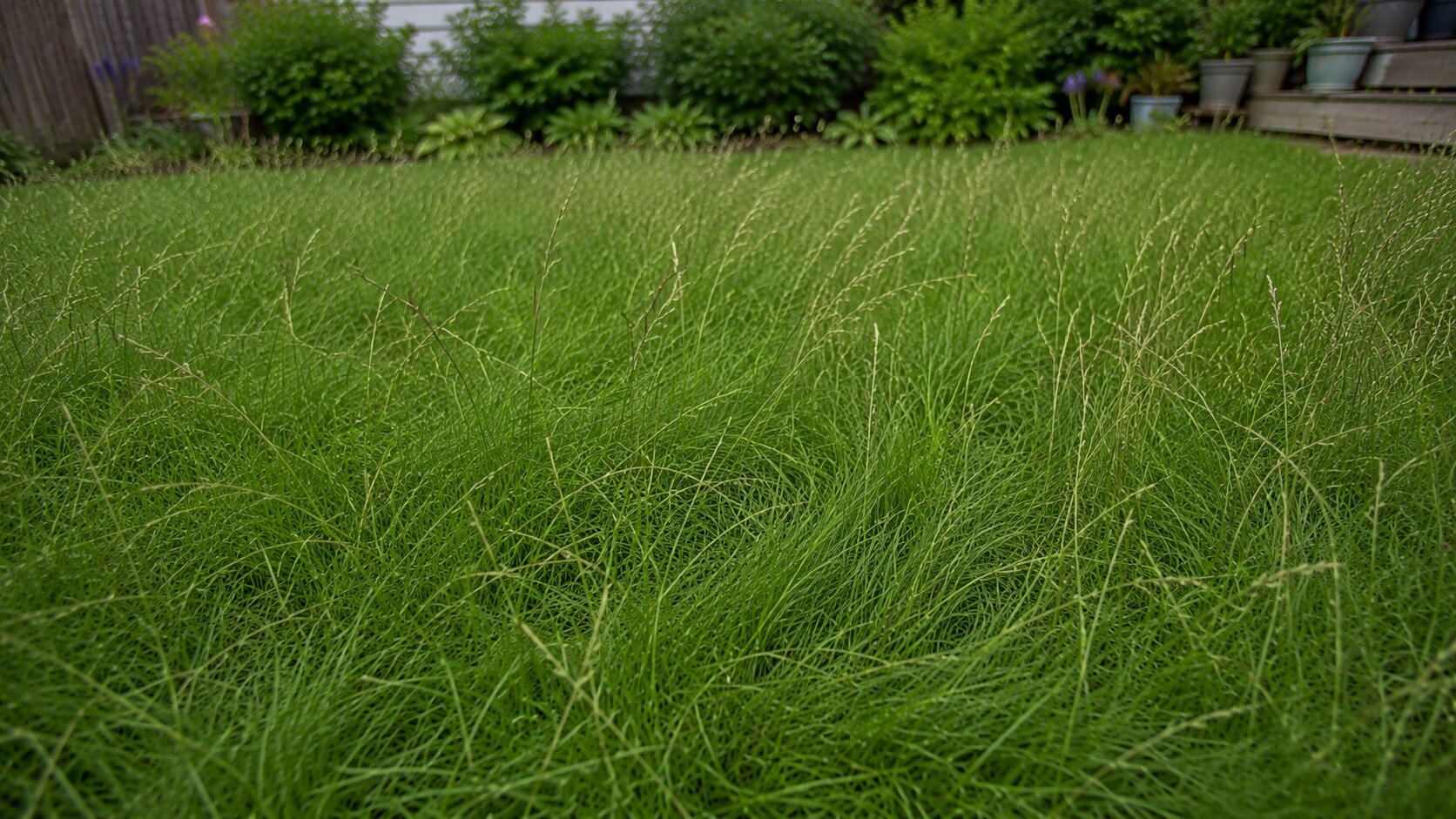
The most shade-tolerant cool-season grasses — left long, they become a soft, no-mow meadow lawn.
The short version
Fine fescues (Festuca rubra, brevipila, ovina) are the low-input champions of cool-season grass: best-in-class shade tolerance, low fertiliser need (½–2 lb N/1,000 ft²/yr), and deep drought roots. Mow them and you get a normal-looking lawn; leave them at 6–8 inches and they flop into a soft no-mow lawn.
What a fine-fescue lawn is
Fine fescues are narrow-leaved cool-season grasses built for neglect. They thrive in USDA zones 3–7, tolerate lean, sandy, low-fertility soil, and have the best shade tolerance of any cool-season turf — so they cover the spots Kentucky bluegrass gives up on.
Their signature trick is the no-mow lawn: left uncut, fine fescue grows to 6–8 inches and falls into soft, flowing waves you mow just once or twice a year. Mown short, the same seed makes a conventional-looking low-maintenance lawn.
The four fine fescues
Pet safety: fine fescue is not a listed toxic plant
As a turf grass, fine fescue isn’t on the ASPCA toxic-plant list, which makes it a sound pet-safe base — often blended with white clover for a soft, durable, dog-friendly lawn. As with any lawn, discourage pets from eating large amounts of any plant or fresh seed.
How to choose
Shade? Creeping red and chewings fescue hold up best under trees.
Drought and pure neglect? Hard and sheep fescue have the deepest roots and lowest needs.
Truly no-mow? Use a fine-fescue blend — mixing species spreads the risk across different stresses and gives the best year-round look.
How the four fine fescues actually differ
- Creeping Red Fescue (Festuca rubra). The only one of the four that spreads by rhizomes rather than staying in a bunch — it actively knits bare spots closed on its own, which makes it the best single choice for shaded, patchy areas under trees. Trade-off: the spreading habit means it can migrate into garden beds if not edged.
- Chewings Fescue (Festuca rubra subsp. commutata). A tight, upright bunch-type — no rhizomes, so it stays exactly where it’s sown. Fine-textured and dense, it tolerates lower mowing heights better than the others, making it the pick when you want fescue’s low-input traits but a tidier, more conventional look.
- Hard Fescue (Festuca brevipila). Bunch-type like Chewings, but selected specifically for very low fertility and very low water — the go-to when the site is genuinely poor soil or a slope you don’t want to irrigate at all.
- Sheep Fescue (Festuca ovina). The most drought-extreme of the four, with a distinctive blue-green color and the lowest maintenance ceiling of any fescue here — often the choice for the driest, leanest sites where even hard fescue would appreciate more water.
In practice, most no-mow fescue lawns use a blend of two or more of these rather than a single species — each one fails slightly differently under stress, so mixing spreads that risk and keeps more of the lawn looking good through a rough season.
Planting & care
Sow about 5 lb per 1,000 sq ft (≈4.5 lb PLS for a no-mow stand), ideally in late summer to early autumn so roots establish before heat. Germination takes 7–14 days. Fine fescue wants little: no routine fertiliser beyond ½–2 lb N per 1,000 sq ft a year, and minimal water once established.
A no-mow fescue lawn is cut once or twice a year (late spring and/or autumn). A mown version is cut high (3–4 in) and infrequently.
What to weigh
Fine fescue is low-to-moderate on foot traffic and can thin under heavy summer use or in hot, humid southern summers — it’s a cool-season grass best suited to zones 3–7. In a no-mow planting it looks meadowy, not manicured, which not every household (or HOA) wants.
Common problems and what they usually mean
- Thinning in mid-summer heat. Fine fescue is a cool-season grass and naturally slows or goes semi-dormant in prolonged heat, especially further south — this is normal stress response, not necessarily death, and it typically recovers as temperatures drop.
- Fungal patches in humid climates. Dense, unmown fine fescue in consistently humid regions can develop fungal disease (red thread and similar) — better airflow (an occasional higher mow rather than letting it go fully unmown) reduces this risk in genuinely humid zones.
- Bare patches under heavy use. Fine fescue is low-to-moderate on traffic tolerance — a worn path across a no-mow area usually means that specific route needs a stepping-stone path or a more traffic-tolerant species, not more fescue seed.
- A “weedy” look that isn’t actually weeds. An unmown fine fescue stand genuinely looks different from a manicured lawn — wavy, informal, meadow-like. Confirm with a neighbor or local extension office before assuming a normal no-mow stand is a weed problem.
Common questions
Which fine fescue should I actually buy?
How is this different from tall fescue?
Will it survive in the South?
Is it safe for pets?
Do I need to fertilize a no-mow fescue lawn?
Other lawn types
Where this comes from
- University of Minnesota Extension — fine fescue & no-mow trials
- Purdue Extension TURF
- USDA PLANTS — Festuca species
- ASPCA
A single species is an ingredient. The blend is the answer.
Nomowlawn No Mow Eco Lawn — 4 fine fescues. The no-mow lawn. Groundkeep No Mow Lawn Mix — fine fescue + white clover. No-mow with nitrogen fixation built in. Buy the blend when the job needs more than one plant — the grass carries the wear, the clover feeds it, the flowers feed the bees. Buy the single species when you want one plant, one look, one job.
Explore the full Fine Fescue & No-Mow Lawns library
Species & varieties
- Chewings Fescue Lawn: Complete Guide
- Chewings Fescue: The Complete Species Guide
- Creeping Red Fescue Lawn: Complete Guide
- Creeping Red Fescue Lawn: Shade-Tolerant, Low-Mow and Self-Maintaining
- Fine Fescue Lawn: The Complete Low-Mow Eco Grass Guide
- Hard Fescue Lawn: Complete Guide
- Sheep Fescue: The Ultra-Drought Fine Fescue for Lawns, Slopes and Poor Soils
- What Does Sheep Fescue Look Like?
In-depth guides
Choosing & buying
How-to guides
Care
- Chewings Fescue Lawn Care Guide
- Creeping Red Fescue Lawn Care Guide
- Hard Fescue Lawn Care Guide
- How to Plant a Chewings Fescue Lawn
- How to Plant a Creeping Red Fescue Lawn
- How to Plant a Hard Fescue Lawn
- How to Plant a Sheep Fescue Lawn: Step by Step
- Sheep Fescue Germination Time and Temperature
- Sheep Fescue Seeding Rate: How Much Seed You Need
- When to Plant Sheep Fescue: Fall, Spring and by Climate
Comparisons
- Chewings Fescue vs a Traditional Grass Lawn
- Creeping Red Fescue vs a Traditional Grass Lawn
- Hard Fescue vs a Traditional Grass Lawn
- Sheep Fescue Lawn Pros and Cons: An Honest Weigh-Up
- Sheep Fescue vs Hard Fescue: The Ultra-Drought Choice
- Sheep Fescue vs a Traditional Grass Lawn: How to Choose
By site & situation
- Chewings Fescue Lawn: Pros and Cons
- Creeping Red Fescue Lawn: Pros and Cons
- Growing Sheep Fescue by Region: Where It Thrives
- Hard Fescue Lawn: Pros and Cons
- Sheep Fescue with Wildflowers: An Ultra-Low-Maintenance Meadow