
Description
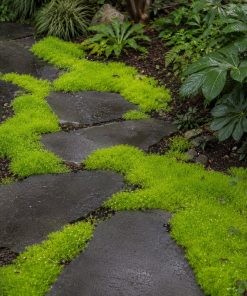
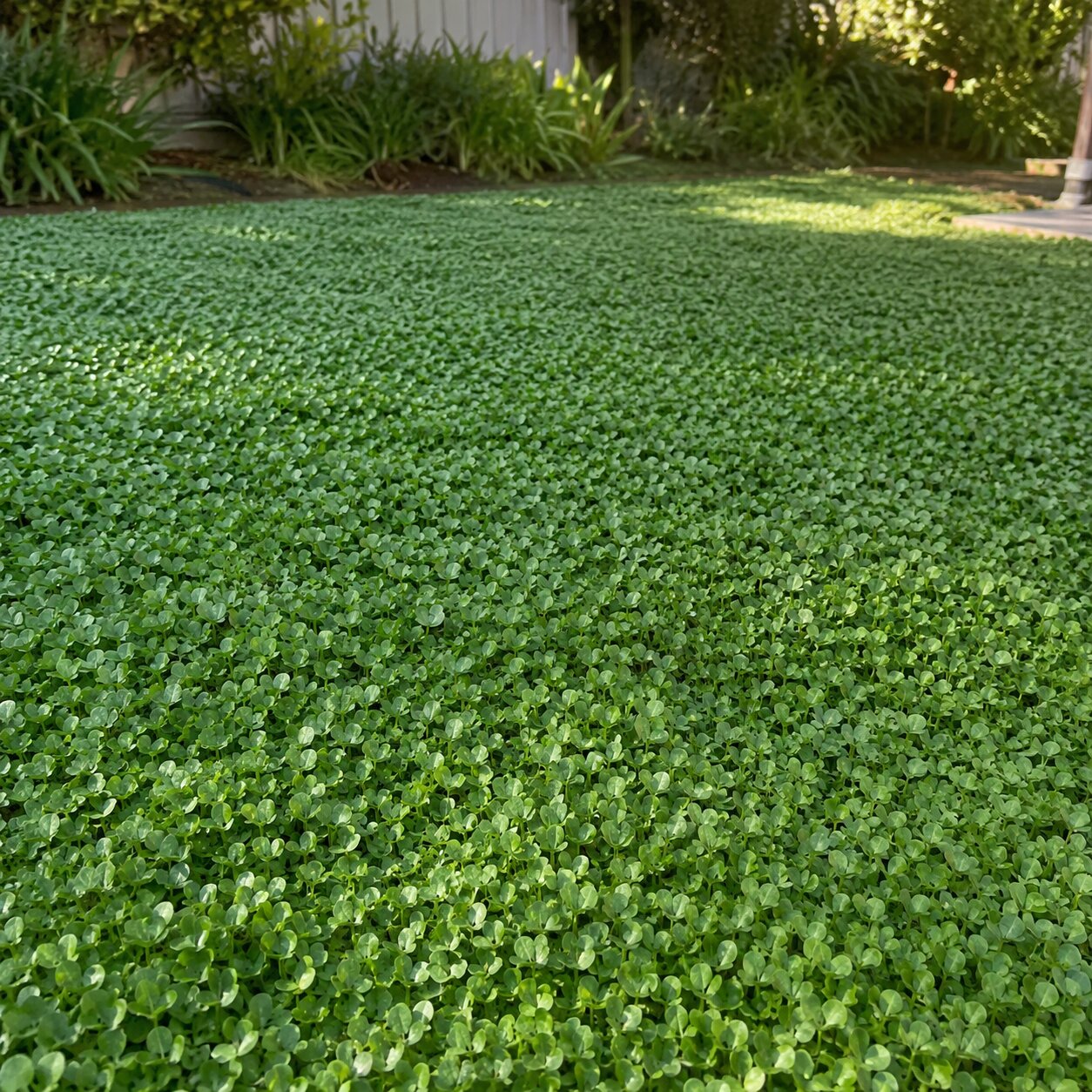
Dichondra (Dichondra repens) is a warm-climate lawn with a difference — a dense, low mat of round, kidney-shaped leaves that reads as a lush green carpet without the mowing. It suits sun to part shade in frost-free and mild climates and can be left unmown for a full look.
Seed specifications
| Species | Common name | Leaf / blade | Zone | Height | Bloom | ASPCA |
|---|---|---|---|---|---|---|
| Dichondra repens | Dichondra | Round leaf | 8–11 | 1–2 in | Insignificant | Not toxic-listed |
ASPCA: Dichondra repens is not on the ASPCA list of plants toxic to dogs and cats.
Why choose Dichondra Lawn Seed
Dichondra is not a grass but a low, spreading broadleaf that forms a dense, bright-green mat of distinctive round, kidney-shaped leaves. That texture is its appeal: a soft, lush, uniform lawn surface quite unlike bladed turf.
It performs in warm and mild climates — University of California guidance places it in warm regions in sun to part shade — and spreads to knit a mow-optional ground cover. Leave it unmown for a full, cushiony look, or mow occasionally for a tidier finish.
Dichondra is frost-tender, so it is a warm-zone choice (roughly Zones 8–11); it stops growing in cold and is not for hard-freeze winters. It establishes fast from seed sown into warm soil. Dichondra repens is not on the ASPCA list of plants toxic to dogs and cats.
Best uses
| Application | Suitability | Notes |
|---|---|---|
| Warm-climate lawns | Excellent | Lush, low ground cover in Zones 8–11. |
| Mow-optional lawns | Excellent | Looks full left unmown; mow for a tidy finish. |
| Sun to part shade | Very Good | Adaptable to light levels in warm climates. |
| Soft, ornamental ground cover | Excellent | Distinctive round-leaf texture. |
| Low-traffic areas | Very Good | Walkable but not a sports surface. |
| Cold-winter regions | Poor | Frost-tender; not for cold northern lawns. |
Dichondra vs a grass lawn
| Property | Dichondra | Grass lawn |
|---|---|---|
| Leaf | Round, kidney-shaped | Blades |
| Mowing | Optional | Regular |
| Climate | Warm, frost-free | Wide range |
| Look | Lush, dense, soft | Traditional turf |
| Water | Moderate in heat | Varies |
Zone & climate compatibility
| Zone | Performance | Notes |
|---|---|---|
| Zone 8 | Very Good | Grows well in the warm season; may brown in an unusually cold snap. |
| Zone 9–10 | Excellent | Ideal; lush and near-evergreen in sun to part shade. |
| Zone 11 | Excellent | Year-round growth; water through dry heat to keep it dense. |
How to sow Dichondra Lawn Seed
- Prepare a fine seedbed in a warm spot. Dichondra is frost-tender; rake to a fine, firm, weed-free surface in sun to part shade.
- Sow at about 1– per 1,000 sq ft and press in; barely cover the seed. Warm soil (65°F+) speeds germination.
- Keep moist. Water lightly and often to keep the surface damp until seedlings establish, usually 7–15 days in warmth.
- Feed lightly if needed. A light feed supports fill-in; mow occasionally for a tidy finish or leave unmown for a lush look.
- Watch for frost. Growth stops in cold; in cooler zones treat it as a warm-season cover.
- Sow in late spring to summer once all frost risk has passed and soil is warm.
Care & maintenance
- Keep it warm and watered through establishment; it fills in fast in heat.
- Mow occasionally or not at all; a light trim keeps a tidy finish.
- Feed lightly for a lush, dense mat in the growing season.
- Protect from frost — growth stops in cold and it is not for hard-freeze winters.
Sources
- University of California ANR — dichondra: ucanr.edu
- UC IPM — dichondra in lawns: ipm.ucanr.edu
- USDA PLANTS Database: plants.usda.gov
Related ground cover: Groundkeep No Mow Lawn
Explore more: Shop all eco-lawn seed Compare seed by need