
Pro resources
Writing Plant Specs
What a defensible eco-lawn planting spec actually needs to include — and what most templates leave out.
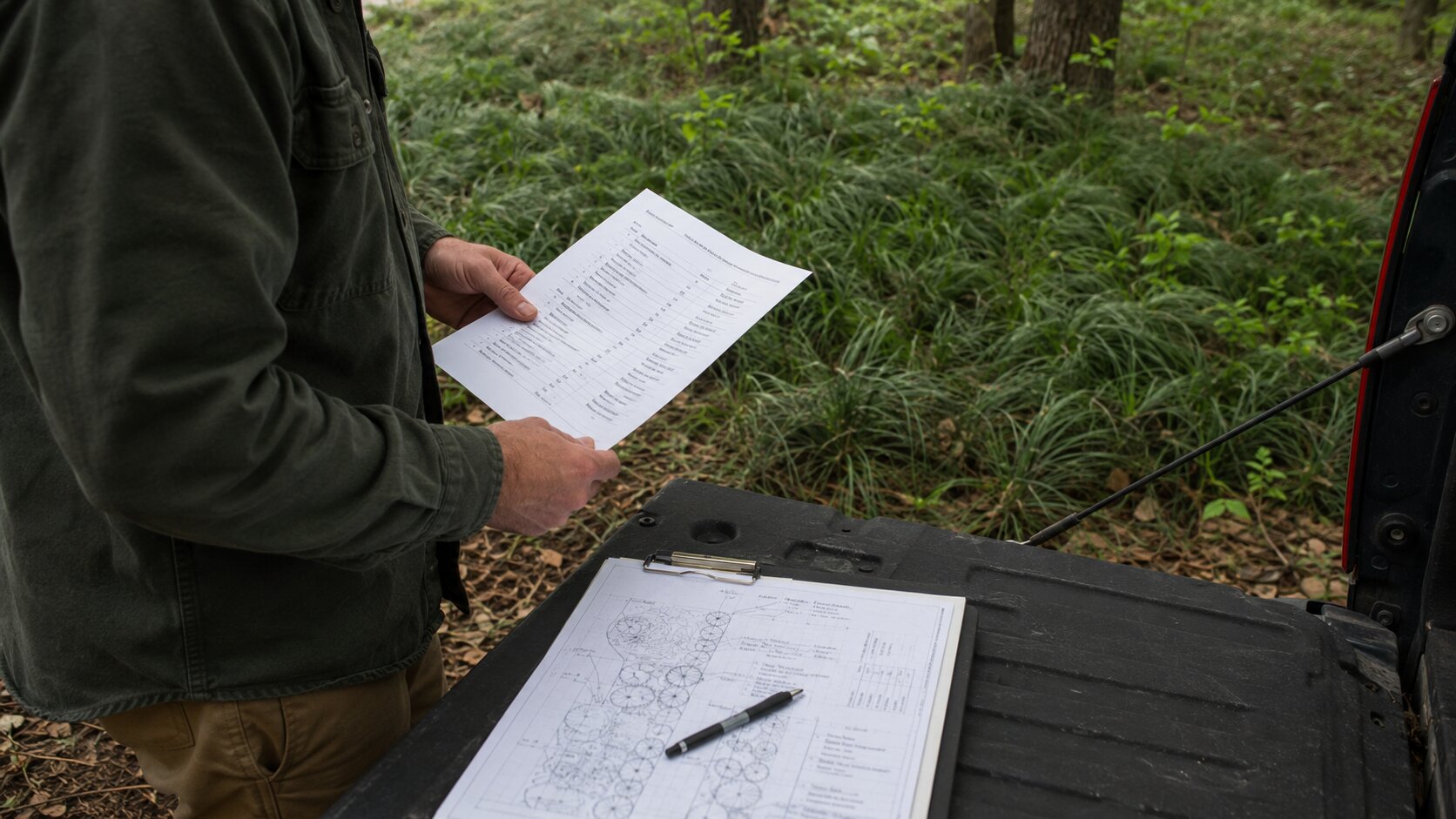
Beyond just the species name
- Botanical name, not just common name. Common names vary regionally and by supplier — the botanical name is what actually gets sourced correctly.
- Seeding rate with basis. State the rate AND whether it is pure live seed (PLS) or bulk — see seeding rate library and the PLS calculator for the distinction, which matters for sourcing accuracy.
- Zone and site-condition fit. A spec that names a species without confirming it suits the actual site conditions (sun, soil, traffic) is the most common gap we see.
- Establishment window. A timing requirement, not just a planting method, keeps installers from sowing outside the viable window.
Pull directly from our sourced data
Our reference section — seeding rates, germination data, zone maps, toxicity tables — is built to be spec-ready and is the same data we use internally, not marketing copy.
Contractor FAQ
Do you provide plant specs for submittals?
Yes — submittal-ready plant and seeding specifications for landscape architects and GCs. Request a spec.
What’s included in a spec?
Species and mix, seeding rate, seedbed prep, establishment and acceptance criteria.
Is there specialised spec language?
Yes — the erosion-control spec covers slope and stabilisation work.
How do I estimate quantities for the spec?
The seed calculator gives per-species rates; confirm against the product page.