
Seasonal Scheduling for Conversions
The planting window matters more than almost anything else for a conversion project — how to build it into your schedule.
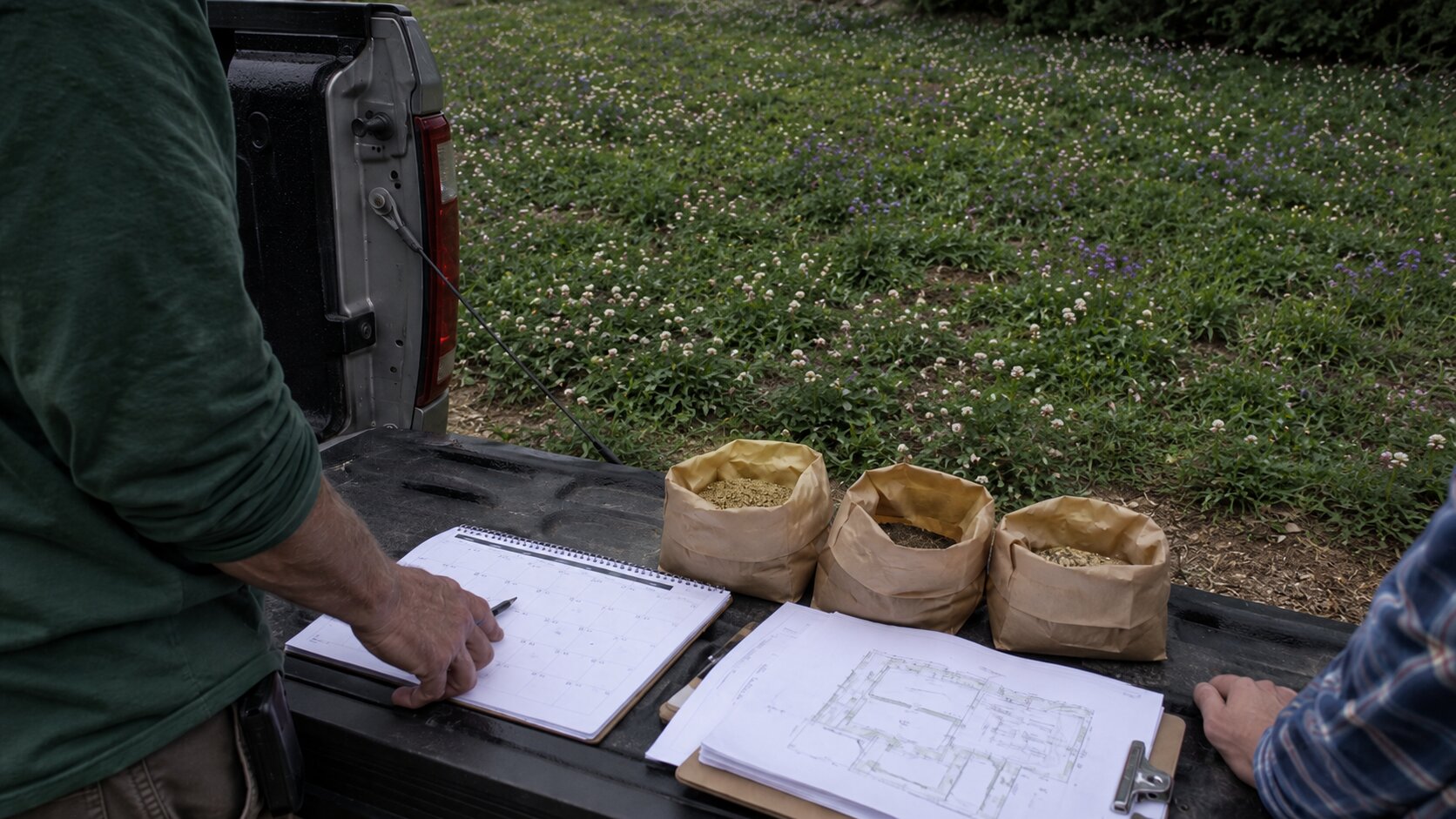
Miss the window, miss the season
- Cool-season species. Fine fescue and clover establish most reliably in late summer to early fall, with spring as a secondary window — see the planting calendar by zone.
- Warm-season species. Buffalograss and other warm-season natives need warm soil to germinate — sowing too early wastes a season, not just delays it.
- Client-facing scheduling. Setting client expectations around the ACTUAL planting window, not the date they want work done, avoids off-season sowing that fails and reflects on the contractor, not just the seed.
Sequencing a season
If you are scheduling several conversion jobs across a single planting window, let us know your rough calendar — bulk delivery timing works better when we know the sequence in advance.
Contractor FAQ
When should conversions be scheduled?
Generally spring and early fall, when soil is warm and moisture reliable — exact windows depend on species and USDA zone. Use the planting-date calculator.
Can I install year-round?
Prep can happen most of the year; sowing timing drives establishment success. Plan backwards from the sowing window.
How do I sequence multiple jobs?
Stagger prep ahead of each zone’s sowing window; talk to us about a seasonal plan.
Where do I confirm the right window?
The planting-date calculator maps it to your zone.
Building a season’s planting schedule?
We can help you sequence it around real windows.