
Description
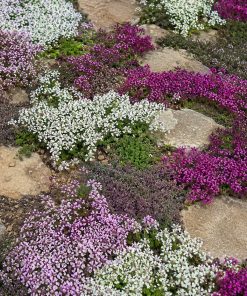
SilkWalk is 100% Thymus serpyllum — Wild Thyme or Mother of Thyme — the species with the longest history as a fragrant no-mow ground cover. Each plant produces a dense mat of tiny aromatic leaves at 2–4 inches and covers itself in purple-pink flowers from June to September. Non-GMO. ASPCA non-toxic to dogs, cats and horses. Zones 3–9.
SilkWalk Specifications
| Species | Common names | Height | Bloom | Zones | ASPCA | Fragrance |
|---|---|---|---|---|---|---|
| Thymus serpyllum | Wild Thyme, Mother of Thyme, Breckland Thyme | 2–4 inches | Purple-pink, June–September | 3–9 | Non-toxic ✓ | Strong herbal — intensifies underfoot |
SilkWalk vs Thymewalk — Which to Choose
Both are creeping thyme lawn products. The difference is species and flower colour.
| SilkWalk | Thymewalk | |
|---|---|---|
| Species | Thymus serpyllum (Wild Thyme) | Thymus praecox ‘Coccineus’ (Red Creeping Thyme) |
| Bloom colour | Purple-pink to lavender | Deep magenta-red — bolder |
| Height | 2–4 inches | 2–3 inches — slightly lower |
| Heat tolerance | Better in Zones 8–9 | Best in Zones 3–7 |
| Appearance | Wilder, more naturalistic | More cultivated, uniform bloom |
| Best for | Zone 8–9 lawns, wilder aesthetic, naturalising | Bold statement lawn, Zones 3–7 |
Choose SilkWalk if you prefer a naturalistic, wilder aesthetic or are in Zone 8–9 where T. praecox strains in heat. Choose Thymewalk for the most dramatic bloom display in cooler zones.
What to Expect: The Three-Year Plan
| Year | What happens |
|---|---|
| Year 1 | Germination in 14–21 days. Scattered seedlings establish — looks sparse. This is normal. The root system is building underground. |
| Year 2 | Lateral spread begins. Individual plants join up. Patchy ground cover with first decent bloom display. |
| Year 3 | Mat closes. Dense, weed-suppressing, fragrant ground cover. Zero mowing required. Self-sustaining. |
| Year 4+ | Fully established. Annual light trim after bloom (optional) keeps it tidy. No reseeding needed. |
Planting Guide
Surface sow only — thyme seed needs light to germinate
- Prepare: remove all existing grass and weeds. Thyme cannot compete with established grass — start on cleared, raked ground.
- Sow: scatter seed on the surface at per 1,000 sq ft. Do not bury. Use a saltshaker or fine-setting spreader.
- Press: roll or tamp firmly. Every seed must contact soil — but no soil should cover them.
- Water: mist gently, keeping surface moist for 14–21 days. Do not flood — thyme dislikes waterlogged conditions.
- Wait: year 1 will look sparse. Do not reseed. The roots are establishing for year-2 spread.
When to plant
| Region | Spring | Autumn |
|---|---|---|
| Zones 3–5 | May–June (soil 60°F+) | August |
| Zones 6–7 | April–May | September |
| Zones 8–9 | March–April | October |
Soil & Site Requirements
| Factor | Requirement |
|---|---|
| Sun | Full sun — minimum 6 hours. Will not establish in shade. |
| Drainage | Well-drained to dry. Will rot in wet or waterlogged soil. |
| Soil quality | Lean, low-fertility soil preferred. Do not fertilise. |
| Soil pH | 6.0–8.0. Tolerates slightly alkaline soils. |
| Foot traffic | Moderate — handles light daily foot traffic. Not for sports lawns. |
| Mowing | None required. Optional light trim after bloom in late summer. |
| Drought | Highly drought-tolerant once established (year 2+). |
Frequently Asked Questions
Is it safe for dogs?
Thymus serpyllum is confirmed non-toxic to dogs, cats and horses by the ASPCA Animal Poison Control Center. It is one of the safest ground covers available for households with pets.
Can I sow it into existing grass?
Not directly. Thyme cannot compete with established grass. For overseeding an existing lawn: mow as low as possible, scarify heavily to expose bare soil, and sow at double the standard rate. Full grass removal gives significantly better results.
Does it stay green in winter?
Yes in Zones 6–9 — T. serpyllum is evergreen in mild winters. In Zones 3–5 it may die back partially but regrows from the woody stems in spring.
Is it edible?
Yes — Thymus serpyllum is edible and mildly flavoured. It is less intensely flavoured than culinary thyme (T. vulgaris) but can be used in teas and light flavouring.